
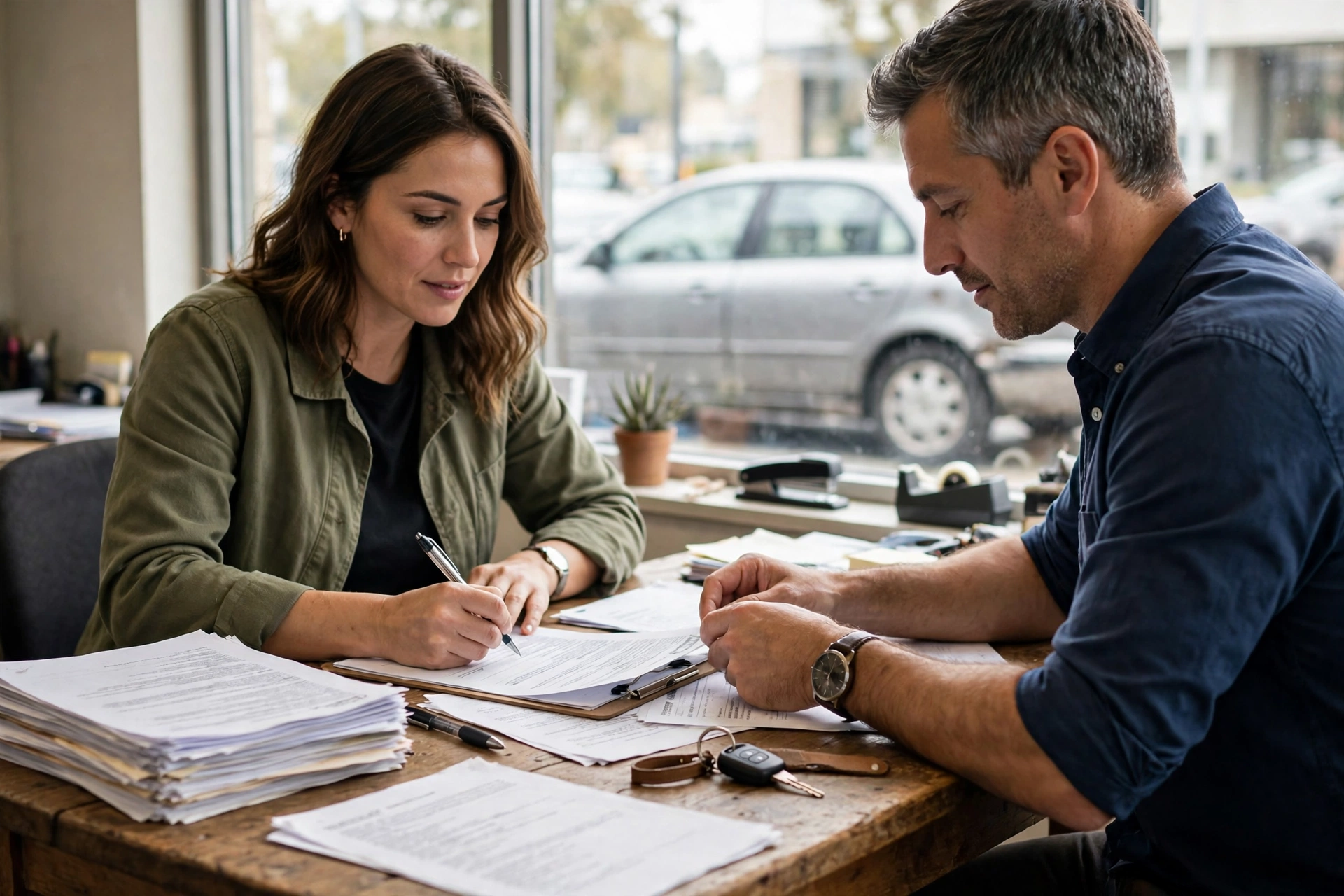
The documents needed to buy a used car are the vehicle title, a bill of sale, your photo ID, proof of insurance, and a registration application. A vehicle history report, loan paperwork, an emissions certificate, and an odometer disclosure are also needed in many sales. Knowing the documents needed to buy a used car before you meet the seller protects you from scams, delays at the DMV, and the worst outcome of all: paying for a car you cannot legally register or drive.
Table of Contents
In short, the paperwork proves three things: the seller owns the car, you paid for it, and the state has a record of the transfer. If any one of those three is missing, the sale can stall. This guide walks through each of the nine documents, explains who provides it, and shows how the list changes when you buy from a dealer instead of a private seller.
The 9 Documents Needed to Buy a Used Car
Work through this list before you hand over any money. Gather the documents needed to buy a used car in a folder the day before the sale, and check each one off as you receive it. A missing paper is far easier to fix before payment than after the seller has your cash.
1. The Vehicle Title
The title is the single most important of the documents needed to buy a used car. It is the legal proof of ownership, issued by the state, and it names the car’s owner. Before you pay, check that the seller’s name on the title matches their photo ID, that there is no lien listed, and that the title is not marked salvage or rebuilt unless you know what that means and accept it.
Never buy a car when the seller cannot show you the title, or when the title is in someone else’s name. That situation is called title jumping, and it is illegal in most states. If the seller says the title is lost, they should apply for a replacement before you buy, not after.
2. Bill of Sale
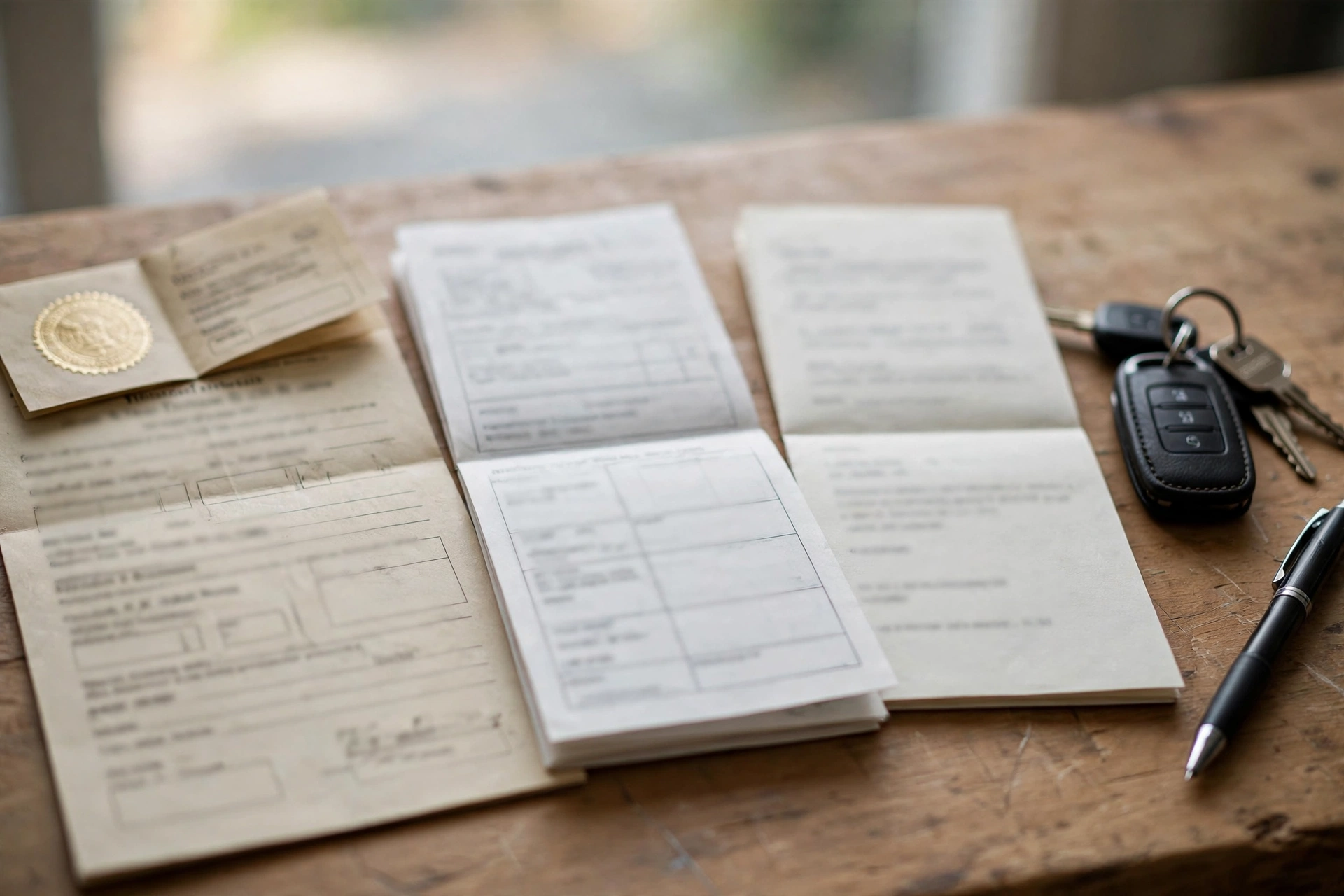
A bill of sale is one of the documents needed to buy a used car that proves the money changed hands. It should list the buyer and seller names, the sale price, the date, the vehicle identification number (VIN), the year, make, model and odometer reading, and both signatures. Some states require a bill of sale for registration, and even where it is not required, it protects you if the seller later disputes the price or the date of the sale.
Keep a copy for yourself and give the seller one too. A simple written bill of sale is enough in most states, and many DMV websites offer a free form you can print.
3. Vehicle History Report
A history report is not legally required, but it belongs on any list of the documents needed to buy a used car. A report from Carfax or AutoCheck shows accidents, flood damage, salvage titles, odometer rollbacks, and open recalls. Ask the seller for one, or buy it yourself using the VIN before you pay.
A clean report does not replace a physical inspection, so run through a used car inspection checklist in person as well. Together, the report and the inspection catch most of the problems that a shiny paint job hides.
4. Your Photo ID
Among the documents needed to buy a used car, your ID is the simplest and the easiest to forget. Bring a valid driver’s licence or state-issued photo ID. The dealer or seller needs it to fill in the title transfer and bill of sale, and the DMV will ask for it again when you register the car. If someone else is buying the car for you, they cannot sign the title in your name without a power of attorney, so bring the actual buyer.
5. Proof of Insurance
Proof of insurance is one of the documents needed to buy a used car that many buyers forget until they are standing at the dealer’s desk. Most states will not let you register a car without insurance, and you cannot legally drive it home without coverage. Call your insurer before the sale and ask them to add the car to your policy from the purchase date, or arrange a new policy if this is your first car. Bring the insurance card or the digital proof on your phone.
6. Loan or Financing Paperwork
If you are financing the car, your lender’s paperwork joins the documents needed to buy a used car. Bring your loan approval letter, the lender’s name and address, and any pre-approval documents. The lender usually pays the seller directly and keeps the title until the loan is paid off, so make sure the title transfer names the lender as the lienholder. If you are paying cash, bring proof of funds such as a cashier’s check or bank transfer confirmation, and avoid carrying large amounts of cash.
7. Registration Application
The registration application is one of the documents needed to buy a used car in almost every state. It is the form that moves the car into your name and gets you licence plates. Dealers usually handle this form for you and charge a fee for it. Private sellers do not, so you must take the signed title and the application to the DMV yourself, usually within 10 to 30 days depending on your state. Late registration can mean fines, so check your state’s deadline before you buy.
8. Smog or Emissions Certificate
In some states, a smog or emissions certificate is among the documents needed to buy a used car. California, for example, requires a smog check before most private-party sales, and the seller is normally responsible for providing it. Other states require an emissions test at registration. Ask the seller whether the car has passed its most recent test, and check your state DMV website to see whose job the certificate is. Buying a car that fails emissions can leave you with a repair bill before you can register it.
9. Odometer Disclosure Statement
The odometer disclosure is the last of the documents needed to buy a used car on this list, but it matters. Federal law requires the seller to state the car’s mileage in writing when the car is less than 20 years old. On many titles the disclosure is a section on the back of the title itself, and the seller signs it during the transfer. If the mileage on the title does not match the odometer, stop and ask why before you pay.
Documents Needed to Buy a Used Car from a Dealer vs a Private Seller
The documents needed to buy a used car from a dealer are mostly handled for you. The dealer prepares the title transfer, the bill of sale, the registration application, and the financing paperwork, and charges a documentation fee for the service. Your job is to bring your ID, proof of insurance, and payment, then read every document before you sign it. Never sign a blank form, and check that the sale price and fees on the contract match what you agreed.
Buying from a private seller is cheaper but the paperwork is yours to manage. The seller should hand you the signed title, a bill of sale, and any service records they have. You handle the registration, the insurance, and the title transfer yourself. This is where most mistakes happen, so use the checklist in this guide and take your time. It also helps to negotiate the price before you talk paperwork, so read our guide on how to negotiate the price with confidence.
What to Do After the Sale
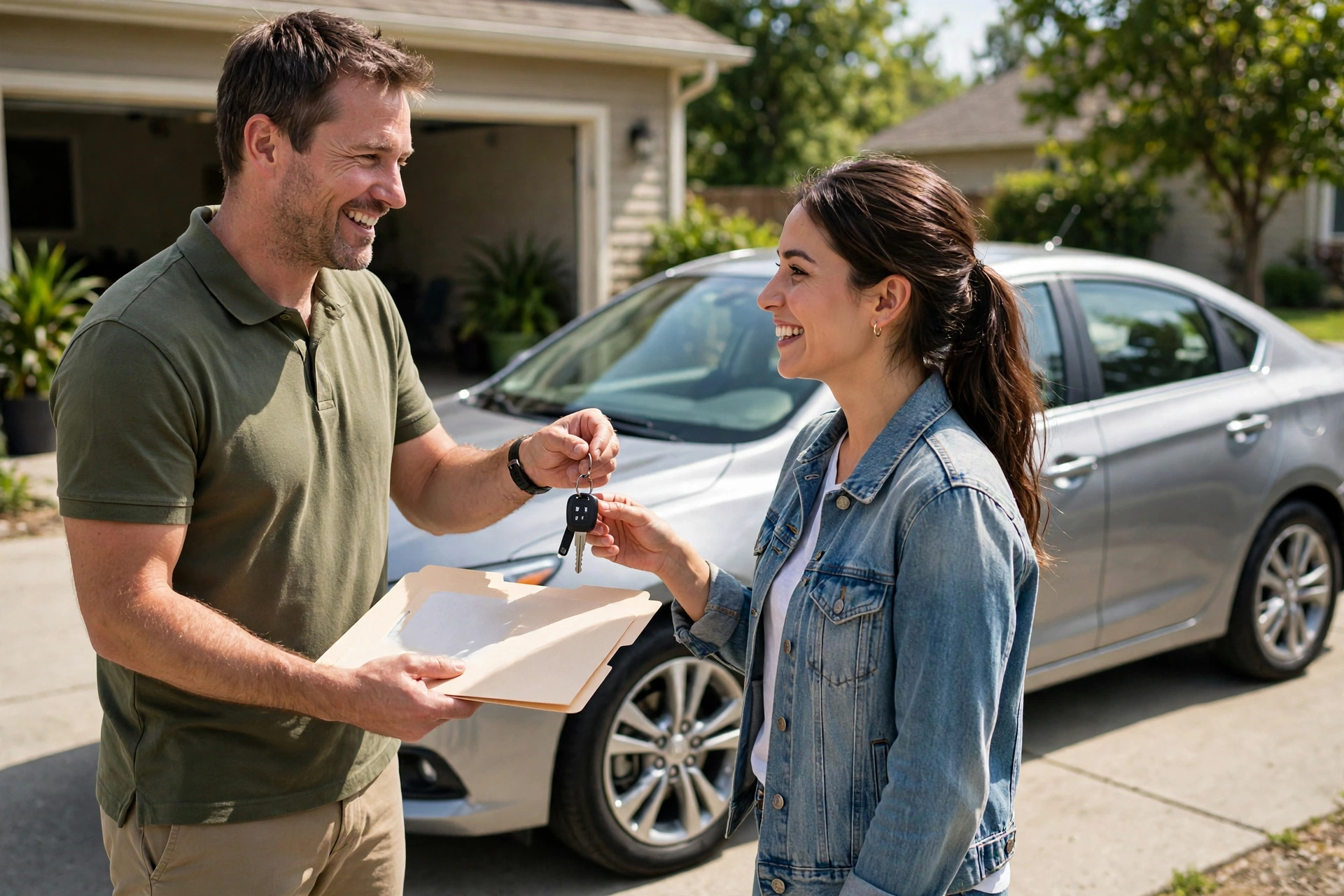
Once the papers are signed, finish the job the same week:
- Transfer the title. Sign the back of the title and take it to the DMV with your ID and registration application.
- Register the car. Pay the registration fee and any sales tax, and get your plates or temporary tags.
- Notify your insurer. Confirm the car is on your policy from the purchase date.
- File the seller’s release of liability. In many states the seller files this form to prove they no longer own the car. If your state uses one, make sure it is filed.
- Check for open recalls. Use the VIN to check for open recalls on the NHTSA website and book any free recall repairs.
- Plan your first service. Add the car to your car maintenance schedule by mileage so oil changes and inspections happen on time.
Quick Summary
- The documents needed to buy a used car are the title, bill of sale, photo ID, proof of insurance, and registration application.
- Add a vehicle history report, loan paperwork, emissions certificate, and odometer disclosure where they apply.
- Check that the seller’s name on the title matches their ID and that no lien is listed.
- Dealers handle most paperwork for a fee; private-seller purchases put the paperwork on you.
- Transfer the title and register the car within your state’s deadline, usually 10 to 30 days.
- Never pay before you have seen the title and the VIN matches the car.
Frequently Asked Questions
What documents do I need to buy a used car from a private seller?
You need the signed vehicle title, a bill of sale, your photo ID, proof of insurance, and a registration application. A vehicle history report and an emissions certificate are also smart to have. The seller provides the title and bill of sale; you bring your ID, insurance, and payment.
Can I buy a used car without a title?
You should not. Without a title you cannot prove the seller owns the car, and most DMVs will not register it in your name. If the title is lost, the seller should get a duplicate from the DMV before the sale. Walk away from any seller who promises to send the title later.
Do I need insurance before I buy a used car?
Yes, in practice. You need proof of insurance to register the car in most states, and you cannot legally drive it home without coverage. Call your insurer before the sale and add the car to your policy from the purchase date.
How long do I have to register a used car after buying it?
It depends on your state, but the deadline is usually 10 to 30 days after the sale. Check your state DMV website for the exact number. Missing the deadline can mean late fees, and driving with expired temporary tags can mean a ticket.
What is the most important document when buying a used car?
The vehicle title. It is the legal proof of ownership, and without a clean title in the seller’s name you cannot register the car. Check the title first, then the bill of sale, then the history report. If you are new to buying, start with our guide to the best used cars for first-time buyers to choose the right car before you worry about the paperwork.
Conclusion
With the documents needed to buy a used car in hand, the purchase itself is straightforward: check the title, sign the bill of sale, transfer the registration, and insure the car before you drive it home. The paperwork feels like a chore, but each document protects you from a real problem, from buying a stolen car to paying tax on a car you cannot register. Gather the documents needed to buy a used car before you meet the seller, take your time with every signature, and you will drive away knowing the car is truly yours.
[…] read our guide to the documents needed to buy a used car so you arrive at the dealership with everything the lender will ask […]