

Knowing when to change tyres for winter can keep you safe on cold, wet roads. This guide explains tread depth, tyre pressure and the signs that your tyres are ready for winter.
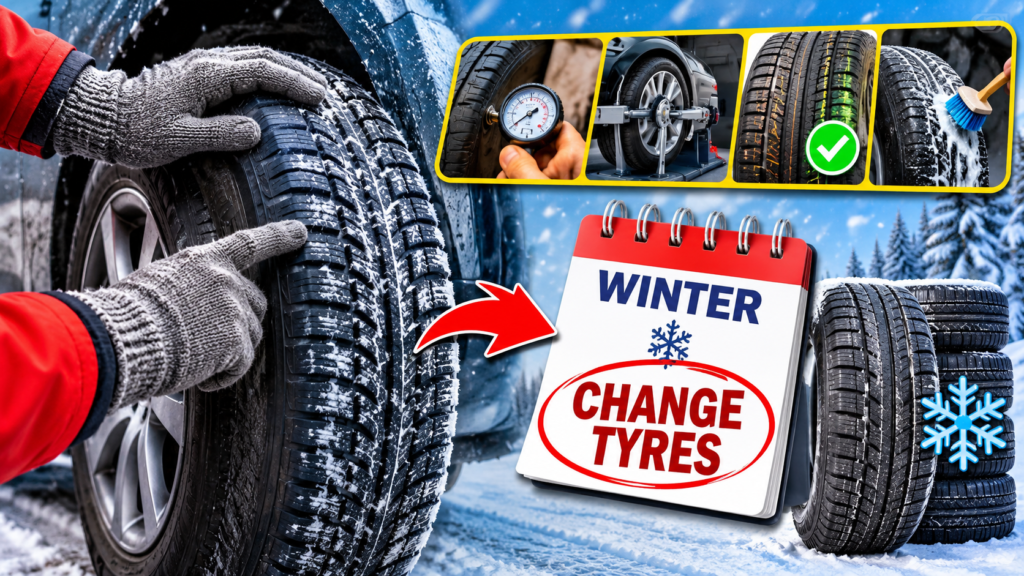
Table of Contents
Winter tyre care is the main thing you need to think about right now if you want to stay safe on wet and icy roads. Cold weather drops the air pressure in your wheels fast, and worn rubber will not stop your Car when you need it most. Consumer Reports says you must check your tread depth right now before the heavy snow arrives.
You need deep tread grooves to push slush and water away from the road so your car does not slide. If your tread is too low, you risk sliding into a ditch or hitting another driver.
Why Winter Tyre Care Matters Right Now
Road safety drops fast when the temperature falls below seven degrees. Your rubber gets hard, and old tread cannot grip the cold pavement. You might think you can wait another month, but a sudden frost catches many drivers off guard every single year.
Consumer Reports recently warned that safe winter driving starts with proper tread depth. If you drive on bald rubber, your stopping distance doubles on icy streets. That means you need twice as much space to stop behind a truck. You can read more about keeping your vehicle safe during a winter tyre check before bad weather hits your town.
Fleet companies face huge costs when trucks break down on the highway. A single roadside tyre change can cost up to six hundred thousand pounds in delays and repair bills. Business owners make simple mistakes like waiting too long to call a mobile fitter or ignoring slow leaks. You want to avoid these expensive mistakes on your own personal vehicle maintenance routine to save your hard earned cash.

How To Check Your Tread Depth At Home
You do not need fancy tools to test your rubber in your own driveway. Grab a common coin and place it upside down into the main grooves of your tread. If you can see the top of the design, your rubber is too worn down for snow. You need to buy a fresh set right away.
Most modern wheels have built in wear bars hiding inside the deep grooves. When these bars sit flat with the rest of the rubber, your tyre life is over. Ignoring this sign leads to failed inspections and dangerous skids on the highway. Taking time for a proper tyre safety inspection takes less than five minutes of your weekend.
Measuring your tread with a simple gauge gives you an exact millimetre reading. Good winter rubber usually starts at eight millimetres of depth. Once you drop down to four millimetres, snow performance drops off a cliff. You should plan your replacement before the first big storm.
Why Fleets Are Moving To LRR Tyres
Big transport companies are always looking for ways to cut fuel and upkeep costs. Transport Topics reports that many fleets are now exploring the benefits of low rolling resistance tyres. These special designs help heavy trucks roll easier with less engine strain.
Less engine strain means you burn less gas on long cross country trips. While these designs are popular for commercial freight, regular drivers can also benefit from fuel saving designs. You can learn more about how fuel economy in automobiles changes based on your wheel choice.
Fleet managers spend hours picking the right rubber compound for their heavy buses and delivery vans. The market for truck and bus radial tyres keeps growing as companies demand longer lasting products. You can apply these same smart shopping habits to your own hatchback or sedan.
What Is The Cost Of Ignoring Tyre Maintenance?
Waiting too long to replace worn rubber always costs more money in the long run. A new set might cost a few hundred dollars, but a crash costs thousands in insurance hikes and repairs. Smart drivers budget for new rubber every three to five years depending on their mileage.
Air pressure also drops about one psi for every ten degree drop in outside temperature. You must check your air pressure every month at the local gas station pump. Keeping your tyres filled to the correct factory psi stops uneven wear and saves your tread. A quick top up prevents blowouts on fast moving interstates.
Professional mechanics suggest rotating your wheels every six thousand miles to keep the wear even. Front wheels wear out faster because they steer the car and take most of the braking force. Doing a regular rotation helps you get the most miles out of every single dollar you spend.
How To Choose The Right Replacement Tyres
Shopping for fresh rubber can feel confusing with so many choices on the market. Always check the sticker inside your driver side door jamb for the correct size. Never guess the numbers or buy a different size just because it looks sporty.
Some drivers spend extra money on smaller wheels to improve comfort and lower replacement costs. The Autopian recently noted that buyers are paying extra for smaller wheel setups on new electric vehicles. Smaller wheels often mean thicker sidewalls, which gives you a softer ride over bumpy potholes.
Always look for the three peak mountain snowflake symbol stamped on the sidewall for true winter performance. All season tyres work fine in light rain, but they struggle in deep snow and packed ice. Pick a trusted brand that fits your local climate and your daily driving habits.
When Should You Finally Change Your Tyres?
Do not wait until you get stuck in a snowbank to think about your wheels. Change them as soon as the local morning temperature stays below seven degrees for a full week. Getting ahead of the winter rush saves you from long lines at the local repair shop.
Keep your old summer rubber stored in a cool and dry garage away from direct sunlight. Proper storage keeps the rubber from cracking during the hot summer months. You can read more about keeping your car in top shape with a proper service (motor vehicle) schedule at your local garage.
Take care of your wheels today and they will take care of you on your next icy commute. Check your pressure, measure your tread, and stay safe out there on the road.
How To Store Your Out Of Season Rubber
When you swap your wheels for the cold months, you need to store the extra set the right way. Never leave your rubber sitting out in the hot sun or rain because ultraviolet rays destroy the compound. Clean off all the road salt and dirt with soap and water before you put them away. Stack them flat on top of each other or hang them on special wall hooks to stop them from getting out of round.
Some car owners use dark plastic bags to keep dust off their wheels during the off season. Make sure you squeeze all the air out of the bag before you tie it shut. A cool basement or a dry shed makes the best storage spot for your valuable rubber.
Quick Winter Driving Tips For Beginners
Driving on snow and ice takes a lot of care and a gentle touch with your pedals. You should always keep a list of emergency items in your trunk just in case you get stuck on a lonely road.
- A heavy wool blanket to keep you warm if your engine quits
- A small folding shovel to dig your wheels out of snowdrifts
- A working flashlight with fresh batteries for dark nights
- A bag of sand or cat litter to help your rubber grip under the tread
- A sturdy ice scraper to clear your windows before you drive away
Always slow down way before you reach a stop sign or a red light. Gentle steering keeps your car from sliding out of control when the pavement turns to glare ice. Give yourself plenty of time to reach your job so you never have to rush.
Frequently Asked Questions About When to Change Tyres for Winter
How do I decide when to change tyres for winter? Deciding when to change tyres for winter depends on temperature and tread depth. Most drivers switch once temperatures stay below 7°C, before the first snow arrives.
What temperature is a guide for when to change tyres for winter? Below 7°C is a good guide for when to change tyres for winter, because summer rubber hardens and grips less in the cold. A tyre shop can confirm the timing for your car.
How do I check tread depth before deciding when to change tyres for winter? Use a coin or a tread gauge to check depth before you decide when to change tyres for winter. Replace tyres below 3 mm, and look for the three-peak mountain snowflake symbol on winter tyres.
Should I ask a mechanic about when to change tyres for winter? Yes, ask a mechanic about when to change tyres for winter if you are unsure about tread, pressure or storage. A quick check can confirm whether your tyres are safe for cold roads.
What should I do with summer tyres after deciding when to change tyres for winter? After you decide when to change tyres for winter, store summer tyres in a cool, dry garage away from sunlight. Clean them first and keep them in bags or on a rack.
When is it too late to think about when to change tyres for winter? It is too late to think about when to change tyres for winter once snow has already arrived and your tyres are worn. Plan in early autumn so you are not rushed in freezing weather.
[…] If you live where snow stays on the ground for months, consider winter tyres. Their softer rubber stays flexible in the cold, and their tread pattern grips snow far better than all-season tyres. Four is much safer than two. For more on seasonal tyre care, see our guide to tyre care for winter. […]