
A used car can be the best deal you ever get — or the most expensive mistake you ever make. The difference is almost always the inspection. This used car inspection checklist walks you through 25 simple checks, from the bodywork to the test drive, so you know exactly what to look for when buying a used car — before any money changes hands. Bring it with you on your phone, take your time, and never let a seller rush you through it.
Table of Contents
Before You See the Car: History and Paperwork
A good inspection starts before you even meet the seller. The first five checks on this used car inspection checklist cost little or nothing, and they can save you from a car with hidden finance, a crash history or a clocked odometer.
- Run a vehicle history check with the VIN — the first step on this used car inspection checklist. It shows accidents, previous owners, mileage records and whether the car was ever written off or stolen.
- Ask for the full service history. A car with stamps from a main dealer or a trusted garage is worth more than one with no records at all.
- Check for outstanding recalls. A quick search by VIN on the manufacturer’s site or the national recall database tells you if safety work is still open. (See our report on the Hyundai recall to understand why this matters.)
- Ask the seller the right questions before you travel: How long have you owned it? Why are you selling? Has it ever been in an accident? Is there outstanding finance? Keep these questions on your used car inspection checklist — the answers often reveal more than the advert does.
- Compare the asking price with similar cars of the same age and mileage. If the price is far below the market, ask yourself what the seller is not telling you.
Exterior Checks: Body, Paint and Glass
Walk slowly around the car in daylight as you work through this used car inspection checklist — never inspect a car at night or in the rain, when dents and paint problems hide easily.
- Look down each side of the car from the front and rear. Wavy panels or uneven gaps between doors and wings usually mean accident repair.
- Check for paint mismatch between panels, overspray on rubber seals, and rust around the wheel arches, sills and the bottom of the doors.
- Open and close every door, the bonnet and the boot. They should shut with a clean, even sound — no sagging or grinding.
- Inspect the windscreen and windows for chips and cracks. Even a small chip in the driver’s line of sight can fail an inspection and cost you a new screen.
- Check that all lights work — headlights, indicators, brake lights, reverse lights and fog lights — and look for condensation or cracks inside the lamp units.
Tyres and Wheels
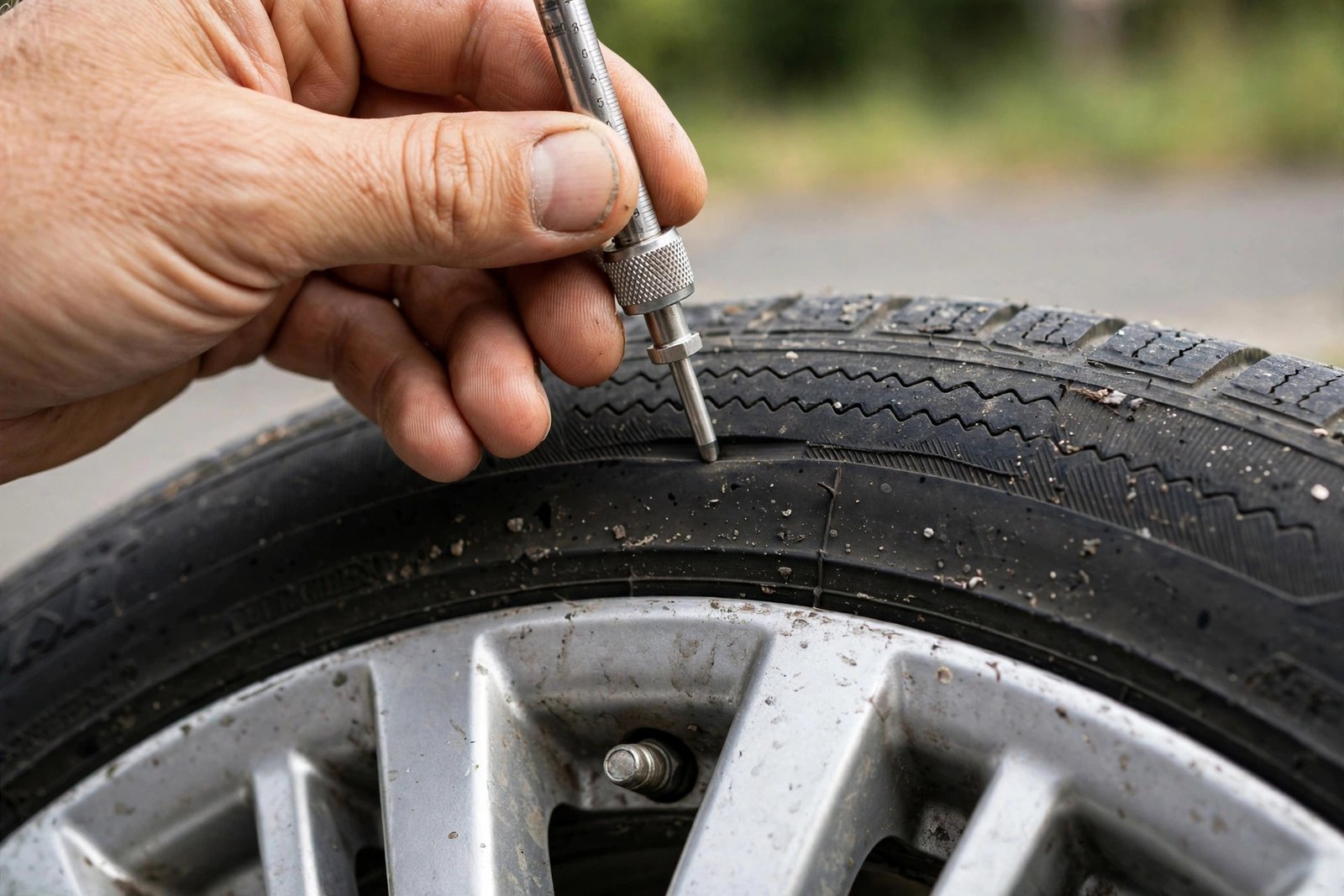
Tyres tell you a lot about how a car has been treated, and replacing four of them is not cheap — so this used car inspection checklist gives them their own section.
- Measure the tread depth on all four tyres. The legal minimum is 1.6mm, but anything under 3mm will need replacing soon.
- Look for uneven wear. Bald edges point to bad wheel alignment, while a worn centre suggests the tyres were over-inflated.
- Check that all four tyres are the same brand and type. A mix of cheap and premium tyres is a sign the owner cut corners.
- Inspect the alloy wheels for kerb damage and cracks, and don’t forget the spare wheel — or the repair kit, if the car has no spare.
- If a tyre pressure warning light is on during your visit, don’t ignore it. Read our guide on tyre pressure warning lights to know what it can mean.
Under the Bonnet: Engine and Fluids
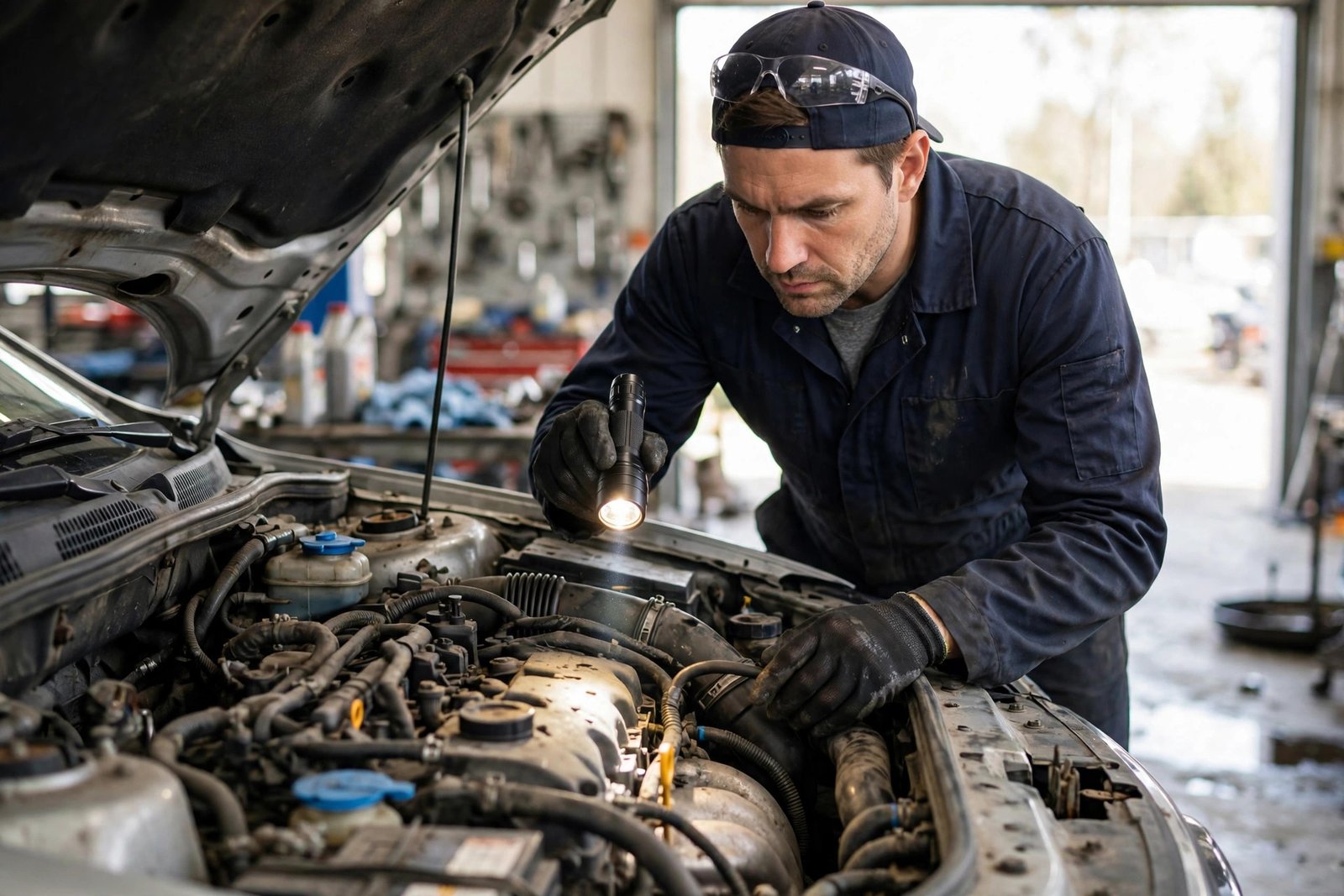
Ask the seller not to warm the engine up before you arrive. This step of the used car inspection checklist matters because a cold start reveals far more than a hot one — smoke, rattles and hard starting all show up cold.
- Pull the oil dipstick. The oil should be amber or dark brown and smooth, not black and gritty, and never milky — milky oil can mean coolant is leaking into the engine.
- Check the coolant level and colour, the brake fluid and the power steering fluid. Low or dirty fluids suggest skipped servicing.
- Look for leaks under the engine and around hoses. A few drops of water from the air conditioning are normal; oil or coolant are not.
- Check the battery terminals for corrosion and the battery case for swelling. If you want to know the early signs of a failing battery, read our guide to car battery warning signs.
- Start the engine from cold and listen. It should settle into a smooth idle within a minute. Blue smoke means burning oil, white smoke can mean coolant trouble, and black smoke points to a fuelling problem.
Interior and Electronics
Sit in every seat, press every button and switch everything on as you work through this used car inspection checklist. Sellers rarely volunteer that the air conditioning or the heated seats don’t work.
- Check the seats, seatbelts and carpets for stains, tears and damp smells — damp can mean a leaking seal or a flooded car.
- Turn the key to ignition and watch the dashboard. Every warning light should come on and then go out. A light that never appears may have been removed to hide a fault.
- Test the air conditioning on cold, the heater on hot, all the windows, the mirrors, the wipers and the central locking.
- Try the infotainment screen, Bluetooth, reversing camera and parking sensors. Repairs to these systems are often expensive.
- Compare the mileage on the dashboard with the service history and the wear on the steering wheel, pedals and driver’s seat. Heavy wear with low mileage is a red flag for a clocked odometer.
The Test Drive: What to Feel and Listen For
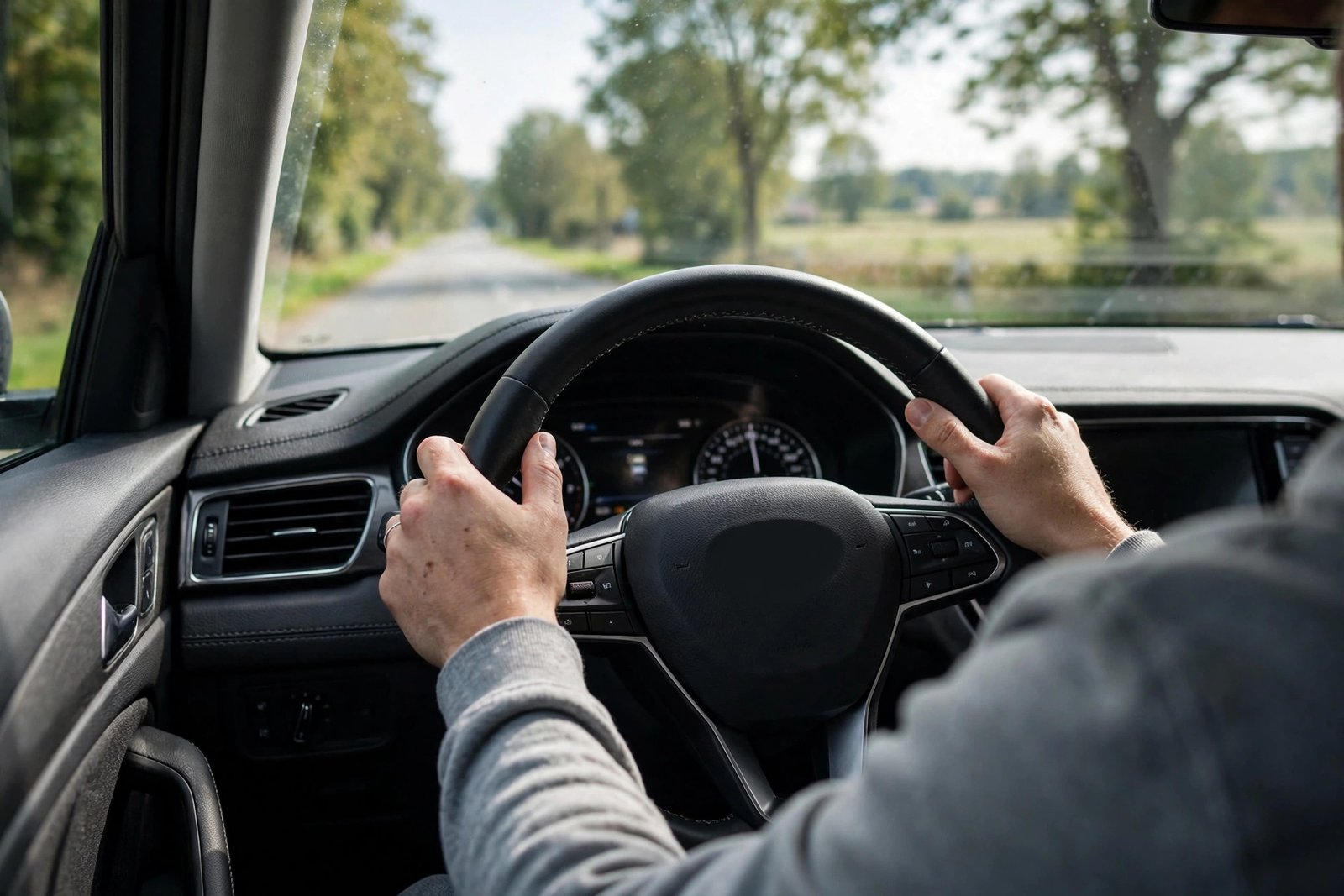
Never buy a car without driving it — the test drive is a key part of this used car inspection checklist — and drive it the way you will actually use it, not just around the block.
- Drive on different roads as part of this used car inspection checklist: slow streets, a bumpy road and, if possible, a faster dual carriageway. Listen for knocks, rattles and whining that change with speed.
- Test the brakes firmly at low speed in a safe place. The car should stop in a straight line with no vibration or pulling to one side.
- Check the steering. It should feel firm and centred, with no play, shaking or drifting.
- Try every gear, including reverse. Changes should be smooth — grinding, slipping or jerking are expensive problems.
- Turn the radio off for part of the drive. You need to hear the engine, the tyres and the suspension, not the speakers.
Final Paperwork Checks Before You Pay
You have checked the car — now check the paperwork with the same care. The last five items on this used car inspection checklist are the documents that prove the car is legally yours to buy.
- Match the VIN on the car (usually on the dashboard or door frame) with the VIN on the logbook and service records, as the final step of this used car inspection checklist. They must all agree.
- Check the logbook shows the seller as the registered keeper, and count the previous owners.
- Make sure you get two keys, the service book, the owner’s manual and any receipts for recent work.
- Get a written receipt with the date, price, mileage, the car’s registration and both your names. If you buy from a dealer, check whether the sale includes any warranty and get it in writing.
- For the full buying process — negotiating, paying safely and avoiding scams — read our guide on how to buy a used car safely.
Frequently Asked Questions About the Used Car Inspection Checklist
How much does a pre-purchase inspection cost?
A professional pre-purchase inspection usually costs between $100 and $250, depending on the car and your area. It is the best money you can spend on an older car or a private sale — a mechanic on a ramp will spot problems you cannot see on a driveway. That is why this used car inspection checklist ends with a professional check, not just a walk-around.
Should I buy a used car without a mechanic’s inspection?
If the car is nearly new, under warranty and from a main dealer, you can often skip it. For any older car or private sale, pay for the inspection. One missed fault — a worn clutch, a failing gearbox, hidden crash damage — can cost far more than the inspection fee, which is exactly what this used car inspection checklist is designed to prevent.
What is the most important thing to check on a used car?
Three things from this used car inspection checklist matter most: the history (accidents, finance, mileage), a cold-start engine check, and a proper test drive. If any of these three fails, walk away — there is always another car.
How do I check a used car’s history for free?
Start with the free government MOT history service (UK) or the national recall database (US), which need only the registration or VIN. For accidents, finance and theft records you will usually need a paid history report — it is worth the small fee. In the UK, use the free government MOT history service; in the US, the national recall database.
Quick Summary: The Used Car Inspection Checklist at a Glance
This used car inspection checklist, in brief — History and paperwork: VIN history check, service history, recall check, seller questions, market price comparison. Exterior and tyres: panels, paint, glass, lights, tread depth, tyre condition, wheels. Engine: oil, coolant, leaks, battery, cold start. Interior: seats, dashboard lights, air conditioning, electronics, mileage. Test drive: brakes, steering, gears, noise. Final paperwork: VIN match, logbook, two keys, written receipt.
That is the full used car inspection checklist — 25 checks that take about 45 minutes and can save you thousands. No used car is perfect, and small wear is normal, but a car that fails the history, the cold start or the test drive is not your car. If you are still choosing what to buy, our guide to the best used cars under $10000 is a good place to start.
[…] For the full 25-point check, see the inspection checklist. […]
[…] Before you pay, follow our used car inspection checklist. […]
[…] a full step-by-step walkthrough, use our used car inspection checklist — it covers 25 things to check before you […]
[…] For a full step-by-step walkthrough, see our Used Car Inspection Checklist. […]
[…] needs $400 worth of new tyres, that is $400 off your offer, with the estimate to back it up. Our Used Car Inspection Checklist covers 25 things to check before you […]
[…] you are buying a used car, a battery test belongs on your inspection list. Our used car inspection checklist covers the battery and 24 other things to check before you […]
[…] reading: For more help before you buy, see our Used Car Inspection Checklist, learn How to Buy a Used Car Safely, and read How to Negotiate Used Car Price to get the best […]
[…] yourself. What matters is knowing before you buy, not after. Combine the recall check with a full used car inspection checklist and a pre-purchase inspection by an independent mechanic. Read our advice on how to buy a used car […]