
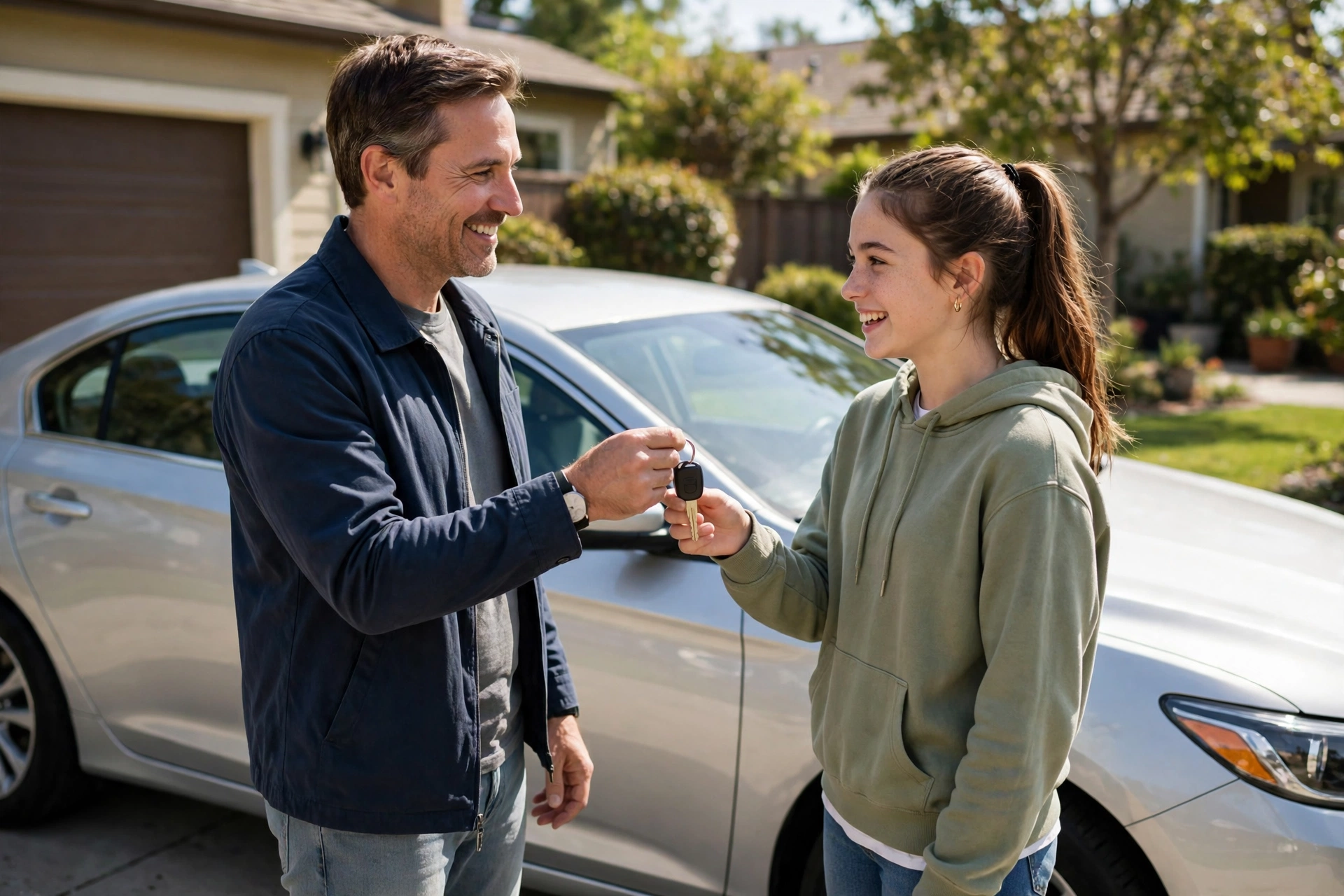
Handing your teenager the keys for the first time is exciting and nerve-wracking in equal measure. Your teen wants freedom and style. You want them to come home safe every single time. Choosing the safest first car for teenager drivers is one of the most important decisions a parent can make, and it matters far more than the badge on the grille or the colour of the paint.
Table of Contents
The short answer is this: the safest first car for teenager drivers is a midsize sedan or small SUV from 2018 or newer, with a Top Safety Pick crash rating, automatic emergency braking, and electronic stability control. It should have enough size and weight to protect its occupants in a crash, but not so much power that it tempts a new driver into trouble.
What Makes the Safest First Car for Teenager Drivers?
Teen drivers crash more often than any other age group. That is not a criticism of your child. It is a fact of inexperience. New drivers are still learning to judge speed, distance, and danger, and they are more easily distracted by friends, phones, and music. The right car cannot replace good habits, but it can forgive a mistake that a weaker car would not.
When you shop for the safest first car for teenager drivers, start with three basics: crash protection, size, and driver-assist technology.
- Crash protection. The car should earn top scores in independent crash tests. A five-star overall rating and a Top Safety Pick award tell you the structure and airbags did their job in controlled tests.
- Size and weight. A midsize car protects better than a tiny one. In a crash between two vehicles, the heavier car usually fares better, and a longer body gives engineers more room to absorb impact energy.
- Driver-assist technology. Features such as automatic emergency braking watch the road and act faster than a new driver can. They are a safety net, not a replacement for attention.
The safest first car for teenager drivers is not the cheapest car on the lot, and it is not the flashiest one either. It is the car that combines solid crash protection with technology that helps a beginner avoid the crash in the first place.
7 Safety Features That Matter Most
These seven features make the biggest difference when you choose the safest first car for teenager drivers. If you are comparing two cars and one has more of these features, it is almost always the safer choice.
1. Automatic Emergency Braking (AEB)
Automatic emergency braking uses radar or cameras to watch the road ahead. If it senses a crash coming and the driver does not brake in time, it brakes on its own. This single feature prevents a large share of rear-end crashes, which are among the most common mistakes new drivers make. Look for AEB that also detects pedestrians, since it works at city speeds where teens do most of their driving.
2. Blind Spot Monitoring
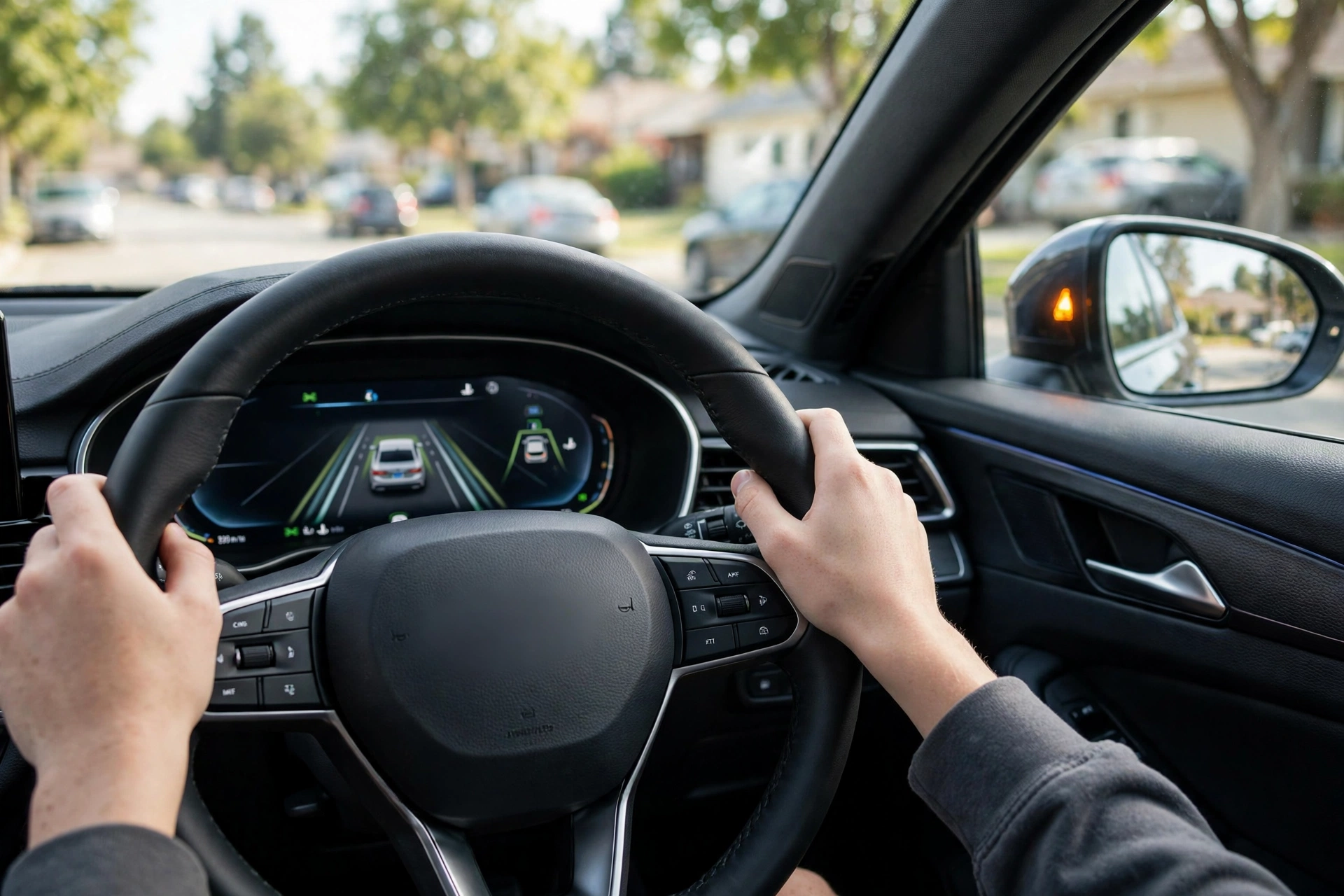
New drivers often forget to check their blind spots, or they check them too late. Blind spot monitoring watches the lanes beside the car and lights a warning in the side mirror when another vehicle is there. Some systems also sound an alert if the driver starts to change lanes anyway. This feature matters most on motorways and dual carriageways, where lane changes happen at speed. It is now common on cars from 2018 onwards, so it should be on your must-have list when shopping for the safest first car for teenager drivers.
3. Lane Keeping Assist
Lane keeping assist watches the road markings and warns the driver if the car starts to drift out of its lane. More advanced versions steer the car gently back to the centre. For a teenager who is still learning to hold a steady line, especially on long or tiring drives, this feature is a genuine help. It is not self-driving, and your teen still needs to keep their hands on the wheel and their eyes on the road. Think of it as a second pair of eyes that never gets tired.
4. Rear Cross-Traffic Alert and a Backup Camera
Reversing out of a driveway or a parking space is harder than it looks, because the driver cannot see what is coming from the sides. A backup camera shows what is directly behind the car, and rear cross-traffic alert warns of cars, cyclists, or pedestrians approaching from either side. Every car sold in the US since 2018 has a backup camera by law, but rear cross-traffic alert is still optional on many models. It is worth seeking out, because parking-lot crashes are common for new drivers.
5. Electronic Stability Control (ESC)
Electronic stability control has been standard on all new cars in the US since 2012, but many older used cars still lack it. ESC senses when a car starts to skid or slide and brakes individual wheels to keep it on its intended path. It is one of the most effective safety advances ever fitted to a car, and it is especially valuable for teenagers, who are more likely to enter a bend too fast or swerve suddenly. If you are looking at an older, cheaper car, check that it has ESC before anything else.
6. Strong Crash-Test Ratings
No feature list replaces a real crash test. Two organisations test cars independently: the Insurance Institute for Highway Safety (IIHS) and the National Highway Traffic Safety Administration (NHTSA). The IIHS awards Top Safety Pick and Top Safety Pick+ to the best performers, while NHTSA gives an overall star rating out of five. The safest first car for teenager drivers will always have a Top Safety Pick award or a five-star NHTSA rating, ideally both. Check the exact year and trim before you buy, because ratings can change between model years.
7. Teen Driver Technology and Speed Alerts
Several car makers now build teen-driver modes into their cars. These let a parent set a top speed, a volume limit for the stereo, and alerts when the car goes over a set speed. Some systems also send a report card showing how the car was driven, including hard braking and fast acceleration. This technology is not about spying on your teenager. It is about setting clear limits while they build experience.
How to Check Crash-Test Ratings Before You Buy
Never take a seller’s word for a car’s safety. Checking the ratings takes five minutes and can save you from a costly mistake.
- Write down the exact year, make, model, and trim of the car you are considering.
- Search the IIHS safety ratings for that exact model year. Look for a Top Safety Pick or Top Safety Pick+ award, and read the individual test results for small-overlap and side impacts.
- Check the NHTSA overall star rating for the same car. Five stars is the best result, and the site also lists any recalls for that model.
- Run the car’s VIN through a free recall check. Our guide to how to check car recalls by VIN explains the five free methods that work.
- Compare two or three cars side by side before deciding. A small difference in crash scores is worth more than a nicer stereo or a bigger set of alloy wheels. If a car has no rating at all, treat that as a warning sign.
Cars and Features to Avoid for a Teen Driver
Knowing what to avoid is just as important as knowing what to buy. The safest first car for teenager drivers is never a high-horsepower sports car, and it is never a tiny two-seater with a short crumple zone.
- High-horsepower sports cars. Speed tempts every new driver, and a powerful engine makes a bad decision far more dangerous. Save the sports car for later.
- Very small cars. A microcar or a tiny hatchback leaves little metal between your teen and the other vehicle in a crash. A midsize sedan or a small SUV is a far better starting point.
- Cars built before 2012. These may lack electronic stability control and side curtain airbags. They are cheap for a reason, and the reason is often missing safety equipment.
- Large trucks and big SUVs. A very large vehicle is harder to park, harder to judge in tight spaces, and more likely to roll over. Bigger is not automatically safer for a beginner.
- Cars with a poor crash history. If a model has repeated recalls or poor test results, cross it off the list, however good the price looks.
If you are comparing budget options, our list of safe used cars for teen drivers shows affordable picks that still meet modern safety standards. Pair that with our used car inspection checklist before you hand over any money.
How to Set Up the Car for Your Teenager
Buying the right car is only half the job. Setting up the safest first car for teenager drivers properly and agreeing on rules makes the car safer from day one.
- Adjust the seat and mirrors together. Your teen should sit upright, reach the pedals comfortably, and see clearly in every mirror before the first solo drive.
- Set the teen driver mode. If the car has one, set the speed limit and alerts together so it feels like a shared decision, not a punishment.
- Agree on the rules in writing. No phone use while driving, no more than one passenger for the first six months, and no driving late at night are sensible starting rules for most families.
- Practise in stages. Start in empty car parks, then quiet streets, then busier roads. Build up to motorways and night driving over weeks, not days.
- Keep the car maintained. Good tyres, working brakes, and clear lights matter more for a new driver than for an experienced one. Follow a simple car maintenance schedule by mileage so nothing important is missed.
A safe car plus clear rules plus steady practice is the combination that keeps a new driver safe.
Quick Summary
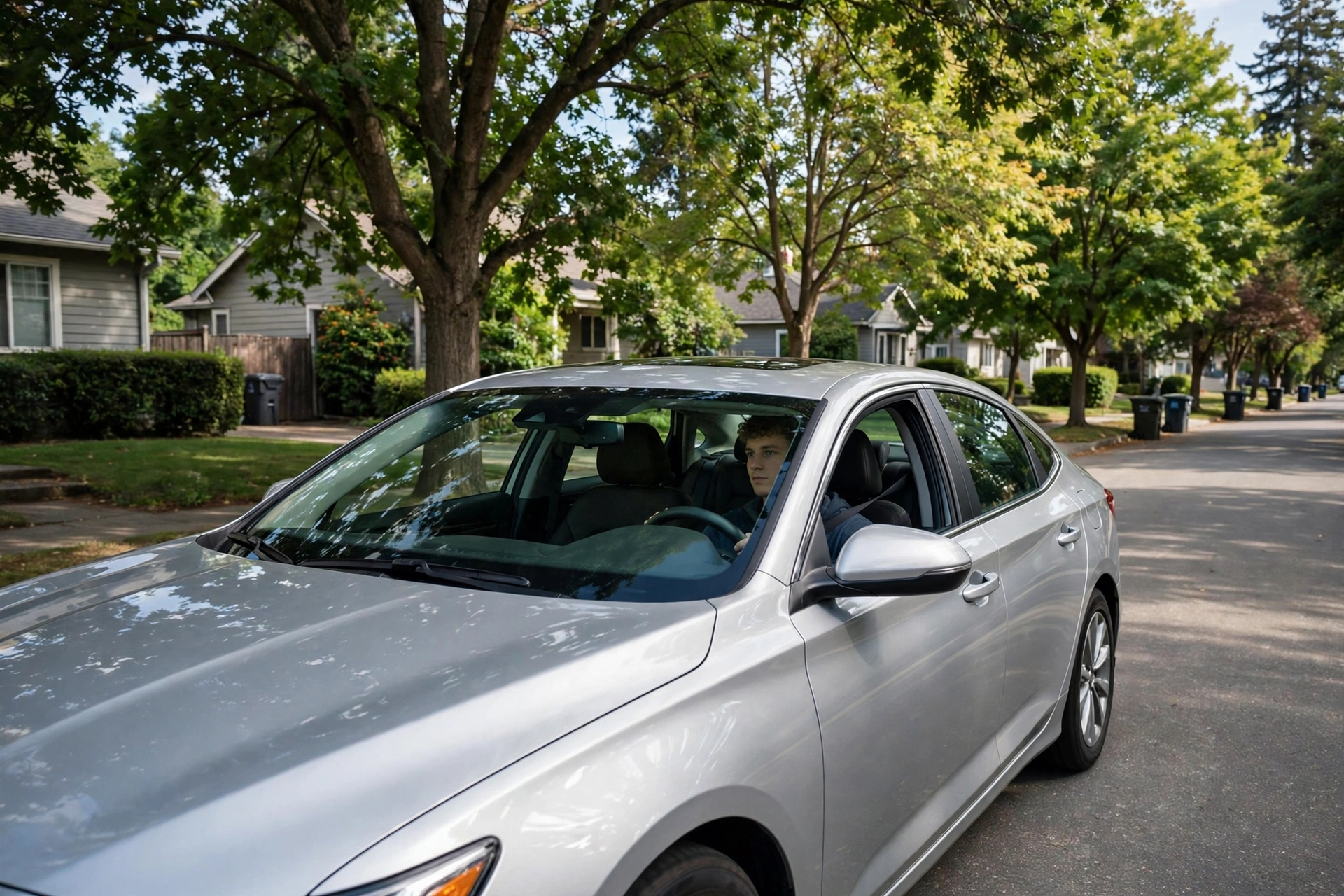
- The safest first car for teenager drivers is a midsize sedan or small SUV from 2018 or newer.
- Look for a Top Safety Pick award or a five-star NHTSA rating before anything else.
- Automatic emergency braking, blind spot monitoring, and electronic stability control are the three must-have features.
- Avoid high-horsepower sports cars, very small cars, and any car built before 2012 without stability control.
- Check crash-test ratings and recalls with the VIN before you buy, and inspect the car in person.
- Set up teen driver mode, agree on written rules, and build driving experience in stages.
Frequently Asked Questions
What is the safest first car for teenager drivers?
The safest first car for teenager drivers is a midsize sedan or small SUV from 2018 or newer with a Top Safety Pick rating, automatic emergency braking, blind spot monitoring, and electronic stability control. Models such as the Honda Accord, Toyota Camry, Mazda3, Subaru Impreza, and Honda CR-V regularly earn top crash-test scores and offer these features as standard or as affordable options.
How much should I spend on my teenager’s first car?
There is no single right figure, but the safest first car for teenager drivers does not have to be new. A well-kept used car from 2018 to 2021 with a strong crash rating and modern driver-assist features often costs far less than a new car while offering nearly the same protection. Spend your money on safety features and condition, not on style or horsepower. Our guide to the best used cars for first-time buyers explains how to judge value and avoid overpaying.
Is a small car safe for a teenager?
A small car can be safe if it has top crash-test ratings and modern safety features, but size still matters. In a crash with a larger vehicle, a heavier car generally protects its occupants better. A compact car such as a Mazda3 or a Honda Civic with a Top Safety Pick award is a reasonable choice. A microcar or a very light two-seater is not.
Should I buy new or used for my teenager?
A used car is usually the smarter choice. New drivers are more likely to have small bumps and scrapes, and a used car costs less to buy and insure. A certified pre-owned car can be a good middle ground, because it has been inspected and often comes with a warranty. Read our comparison of certified pre-owned vs used cars to see which option fits your budget.
Does a bigger car always mean a safer car?
Not always. A bigger car can protect better in a crash with a smaller car, but very large trucks and SUVs are harder for a beginner to handle and more likely to roll over. The sweet spot for a teenager is a midsize sedan or a small SUV: large enough to protect, small enough to control and park easily.
Conclusion
Finding the safest first car for teenager drivers comes down to three things: a strong crash-test rating, the right driver-assist features, and a sensible amount of power. A midsize sedan or small SUV from 2018 or newer, with automatic emergency braking, blind spot monitoring, and electronic stability control, gives your teenager the best chance of walking away from a mistake unharmed.
Take your time, check the ratings, inspect the car properly, and agree on the rules before the first solo drive. The safest first car for teenager drivers is the one that protects your child while they learn — and the peace of mind that comes with it is worth every penny.