
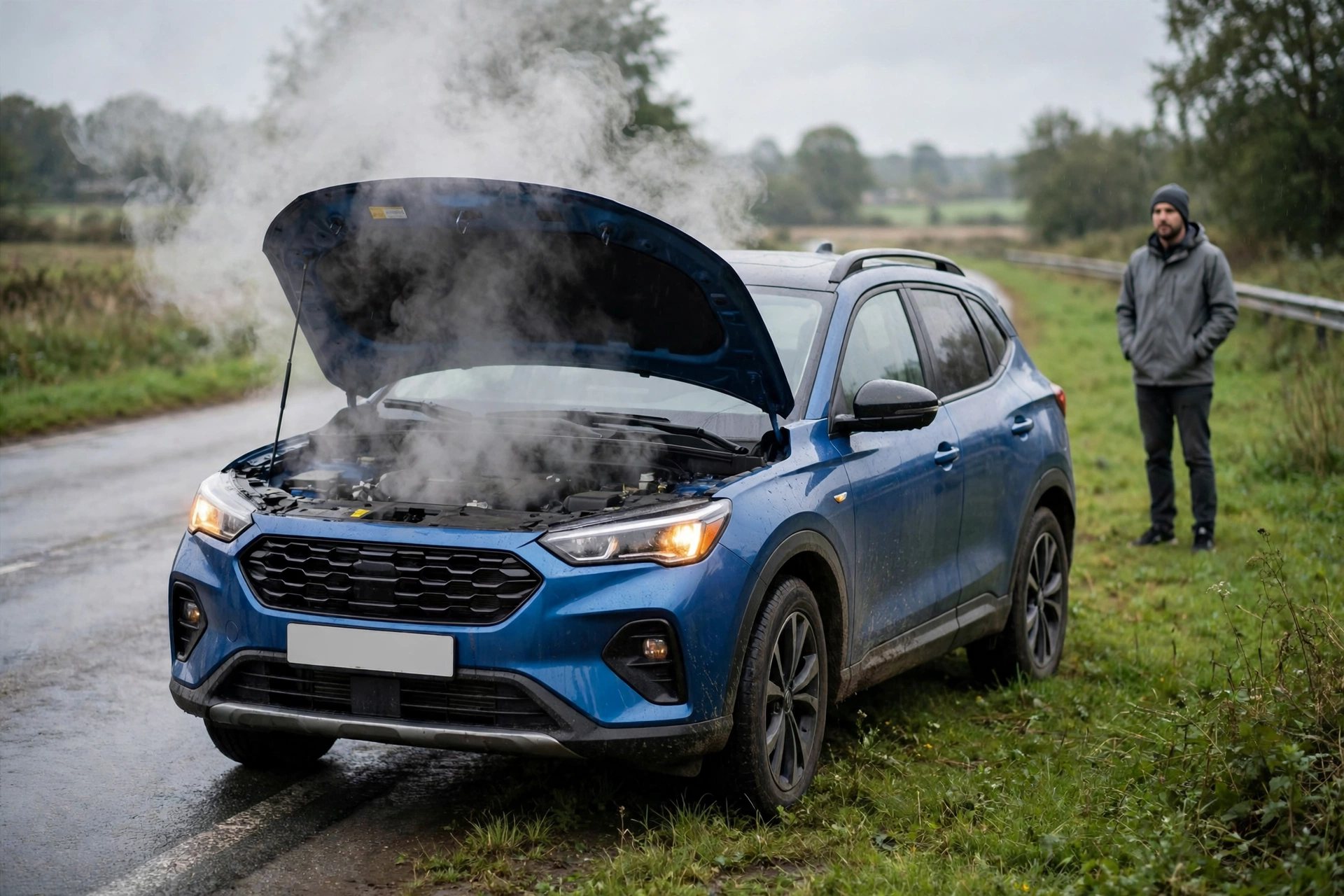
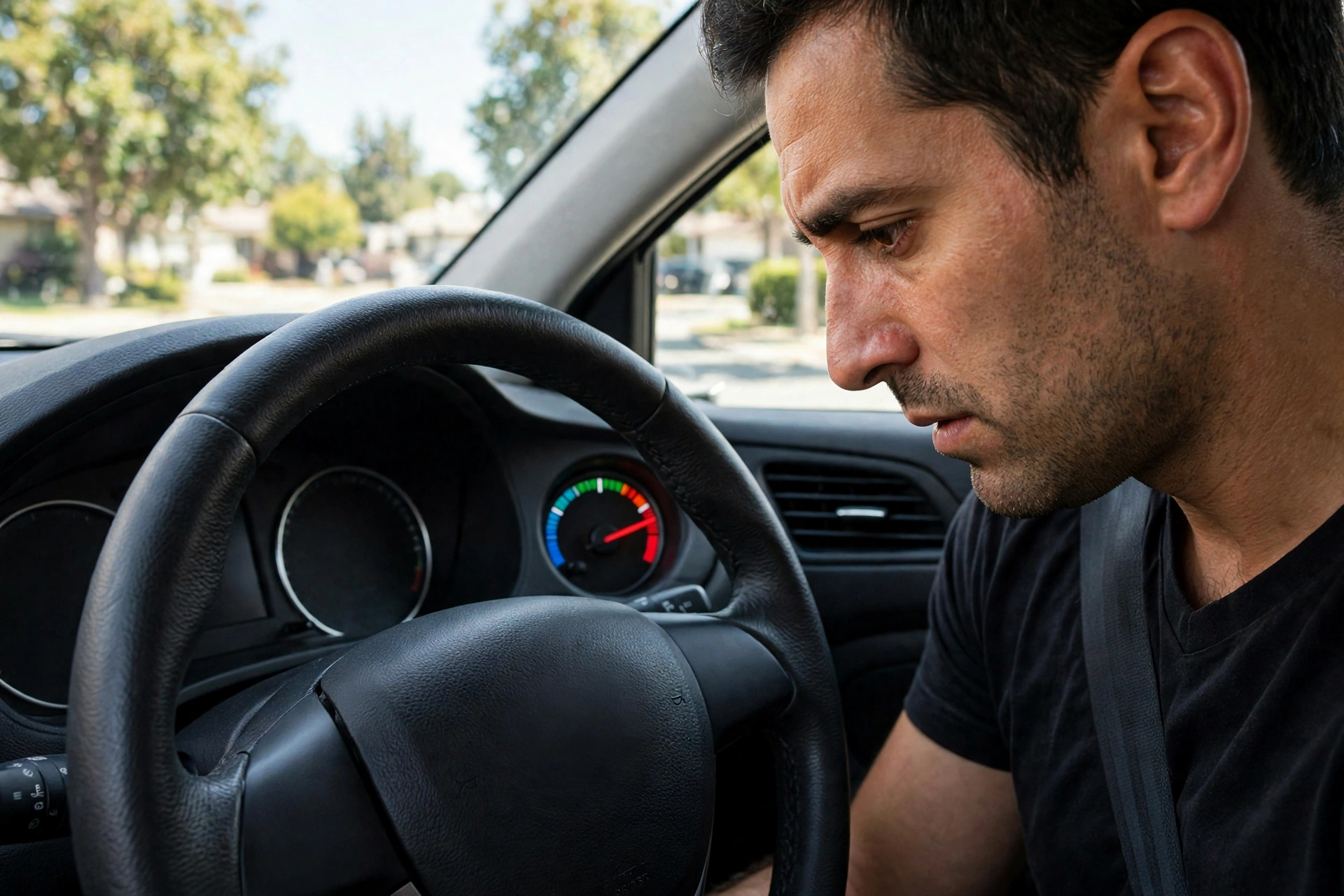
Your temperature gauge is climbing into the red, or steam is starting to rise from under the hood. Knowing what to do when your car overheats can save your engine from serious damage — and keep you safe. The short answer: pull over as soon as it is safe, turn off the engine, and let the car cool for at least 30 minutes before you touch anything under the hood.
Table of Contents
This guide walks you through exactly what to do when your car overheats, step by step, plus the common causes, the mistakes to avoid, and how to stop it happening again.
What to Do When Your Car Overheats: 7 Steps
Follow these steps in order. The first step in what to do when your car overheats is to stay calm and get the car off the road safely. Panic leads to rushed decisions, and rushed decisions around a hot engine cause burns.
1. Turn on your hazard lights
Switch on your hazard lights straight away so other drivers know something is wrong. This gives you space as you slow down and look for a safe place to stop.
2. Turn off the air conditioning
Turn off the A/C to take load off the engine. If you cannot pull over immediately, turn the heater on full with the fan on high. It feels backwards on a hot day, but the heater pulls heat away from the engine and can buy you a few extra minutes. A key part of what to do when your car overheats is reducing the load on the engine while you find a safe place to stop.
3. Pull over safely and turn off the engine
Move to the shoulder, a parking lot, or a quiet side street — as far from moving traffic as you can. Once you are stopped, turn the engine off right away. A running engine keeps making heat, and every extra minute in the red risks a warped cylinder head or a blown head gasket, both expensive repairs. This is the most important part of what to do when your car overheats: stop the heat at its source.
4. Move everyone to a safe place
Get yourself and your passengers out of the car and well away from the road, behind a barrier if there is one. A hot car on a busy shoulder is a dangerous place to stand, and you may be waiting a while.
5. Wait at least 30 minutes before touching anything
Do not open the hood yet, and never open the radiator cap or coolant reservoir cap while the engine is hot. The cooling system is under pressure, and loosening a cap can spray scalding coolant and cause serious burns. Wait at least 30 minutes. If the hood still feels hot to the touch, wait longer. Use this time to call for help. Patience is part of what to do when your car overheats — a hot engine needs time, not shortcuts.
6. Check for leaks and coolant level — only when the engine is cool
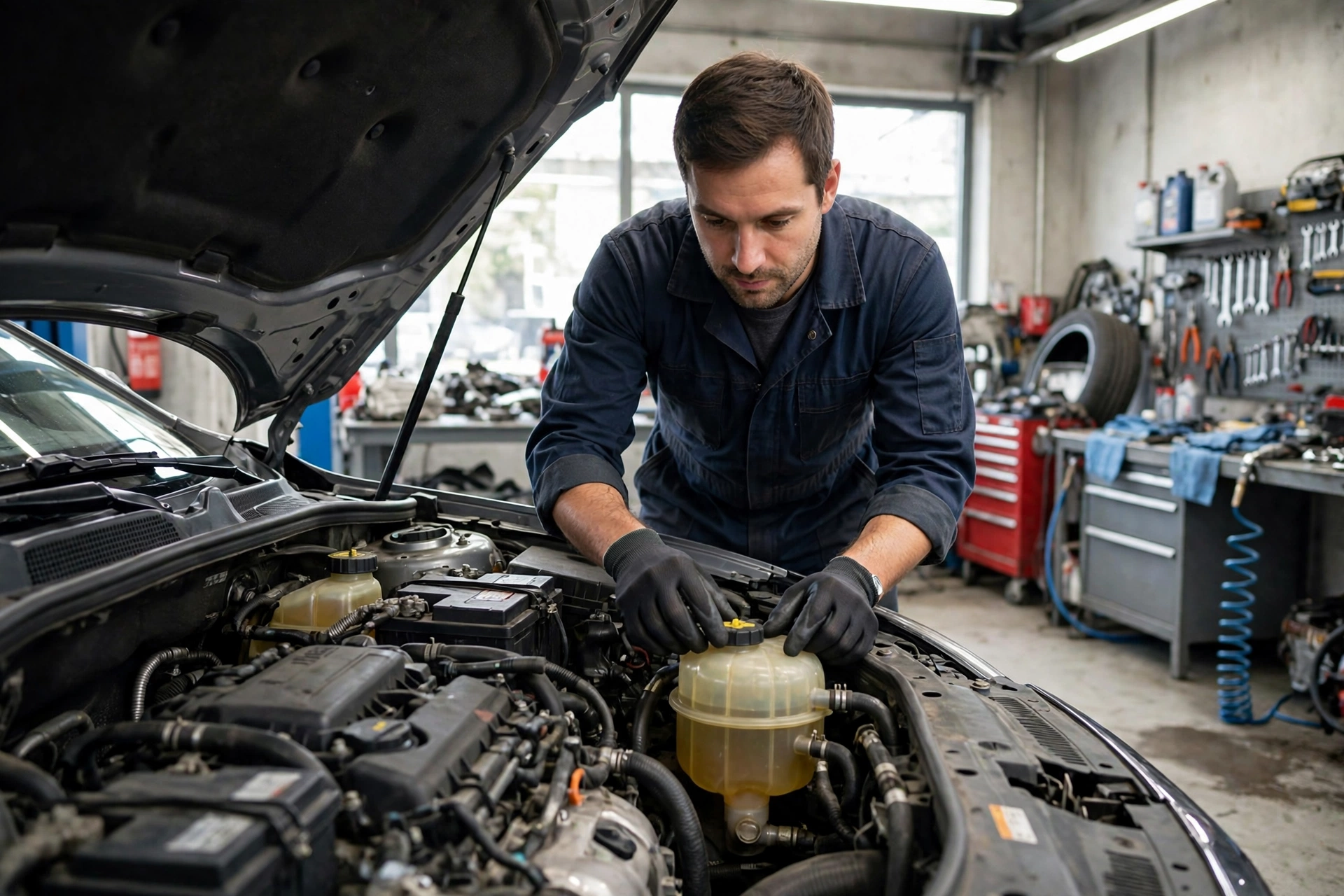
Once the engine is cool, open the hood and look for the cause. Check the coolant reservoir level against the cold and hot marks. Look under the car for puddles of green, orange, pink, or yellow fluid, which usually means a coolant leak. Check the hoses for cracks or swelling. If the coolant is low and there is no obvious leak, you can top it up with a 50/50 mix of coolant and water. If you are not sure what to do when your car overheats after pulling over, calling roadside assistance is always the safe choice.
7. Decide whether to drive on or call for help
If the gauge has returned to normal, the coolant is topped up, and there is no active leak, a short, careful drive to the nearest garage may be fine. Watch the gauge the whole way. If the temperature climbs again within minutes, steam keeps rising, or you hear knocking, stop and call for a tow. Do not gamble on a long drive home.
What Causes a Car to Overheat?
Once you know what to do when your car overheats in the moment, it helps to understand why it happened. Most overheating traces back to the cooling system:
- Low coolant. The most common cause. Coolant carries heat away from the engine, so a low level means the engine cannot shed heat fast enough.
- Coolant leak. A cracked hose, a damaged radiator, or a leaking water pump lets coolant escape. Look for coloured puddles under the car.
- Faulty thermostat. The thermostat controls coolant flow. If it sticks shut, coolant cannot circulate and the engine heats up fast.
- Broken water pump. The pump moves coolant through the engine. If it fails, coolant stops circulating even when the level is fine.
- Radiator problems. A blocked, damaged, or dirty radiator cannot cool the fluid properly. Bugs, leaves, and road grime can block airflow.
- Cooling fan failure. The fan pulls air through the radiator, especially in slow traffic. If it stops working, the car may overheat in traffic but be fine on the highway.
- Low engine oil. Oil also cools and lubricates the engine. Very low oil makes the engine run hotter.
- Broken serpentine belt. One belt often drives the water pump and the fan. If it snaps, cooling stops.
- Blown head gasket. A serious failure that lets combustion gases into the cooling system. White smoke from the exhaust and milky oil are warning signs.
For more detail on the causes above, see AAA’s guide to car overheating.
What NOT to Do When Your Car Overheats
Knowing what to do when your car overheats also means knowing what not to do. These mistakes turn a small problem into a big repair bill:
- Do not keep driving. Hoping the gauge will come back down is the most expensive mistake. A few more minutes in the red can warp the cylinder head.
- Do not open a hot radiator cap. Pressurised coolant can spray out and cause severe burns. Wait until the engine is fully cool.
- Do not pour cold water into a hot engine. The sudden temperature shock can crack hot metal parts.
- Do not pour cold water over a hot engine either. Same reason — thermal shock can crack the engine block or cylinder head.
- Do not ignore it once it cools down. Overheating has a cause, and it usually comes back. Get the cooling system checked before your next long drive.
- Do not add coolant to a hot engine and drive off. Topping up a hot system is dangerous, and if there is a leak, the coolant will just run out again.
How to Prevent Your Car from Overheating
Prevention beats panic. The best answer to what to do when your car overheats is to stop it happening in the first place:
- Check the coolant level every month. It takes a minute. Top up with the right coolant for your car — your owner’s manual lists the specification.
- Watch the temperature gauge. Glance at it during every drive. A gauge creeping above normal is an early warning.
- Service the cooling system on schedule. Most makers recommend a coolant flush every 30,000 to 50,000 miles or every few years. Follow your manual, and use a car maintenance checklist to stay on top of it.
- Inspect hoses and belts. Look for cracks, swelling, or fraying when you check the oil. Replace worn parts before they fail.
- Keep the radiator clean. Clear leaves and bugs from the front grille so air can flow through.
- Fix small leaks early. A small puddle under the car today is a breakdown on the highway tomorrow.
- Keep your car cool in summer. Heat is hardest on the cooling system, so summer is when most overheating happens. Shade, coolant checks, and a healthy A/C system all help.
These habits are the other half of what to do when your car overheats: prevention now saves you from the emergency later. If cold weather is on the way, prepare your car for winter and follow a winter car maintenance checklist so your cooling system is ready for freezing temperatures.
Can You Drive a Car That Is Overheating?
If you are wondering what to do when your car overheats and whether you can keep driving, the short answer is usually no. Driving an overheating car can cause serious engine damage in minutes. The only time a short drive is reasonable is when the gauge has returned to normal, you have topped up the coolant, there is no active leak, and the nearest safe place or garage is only a few minutes away. Drive slowly, watch the gauge constantly, and stop immediately if the temperature rises again.
In every other case — steam still rising, coolant pouring out, knocking sounds, or the gauge climbing again — call for a tow. When in doubt, the safest version of what to do when your car overheats is to call for a tow — it costs far less than a new engine.
Quick Summary
- Pull over safely with your hazard lights on.
- Turn off the A/C and turn the heater on full while you find a place to stop.
- Turn off the engine as soon as you are stopped.
- Move everyone away from traffic.
- Wait at least 30 minutes before touching the hood or any cap.
- Check for leaks and top up coolant only when the engine is cool.
- Drive on only if the gauge is normal and there is no leak; otherwise call for a tow.
- Get the cooling system checked before your next long drive — the quick summary of what to do when your car overheats is simple, but the cause still needs fixing.
Frequently Asked Questions
How long should I wait before opening the hood?
Wait at least 30 minutes. The standard advice for what to do when your car overheats is to wait at least 30 minutes before touching the hood or checking coolant. If the hood still feels hot, wait longer. Never open the radiator cap while the engine is hot.
Can I put water in my car if it overheats?
Yes, but only when the engine is cool, and only as a temporary fix. Use a 50/50 mix of coolant and clean water in the reservoir. Plain water alone can get you to a garage, but it does not protect against corrosion or freezing, so replace it with the right coolant soon.
Why does my car overheat but the coolant is full?
A full reservoir does not mean the coolant is circulating. A stuck thermostat, a broken water pump, a failed cooling fan, or a blown head gasket can all cause overheating with a full coolant level. These need a mechanic to diagnose. That is why knowing what to do when your car overheats matters even when the reservoir looks full — the problem is circulation, not level.
Is it safe to drive my car after it overheats once?
It can be, if the cause was simple — like a low coolant level — and the gauge stays normal afterwards. But have the cooling system checked before any long drive. If it overheats again, do not keep driving it; get it towed to a garage.
What does it mean if my car overheats in traffic but not on the highway?
That usually points to the cooling fan. At highway speed, air flows through the radiator naturally. In slow traffic, the fan has to do that job. If the fan or its sensor has failed, the car overheats in traffic and cools down again on the open road.
Conclusion
Now you know what to do when your car overheats: pull over, turn off the engine, wait at least 30 minutes, and never open a hot radiator cap. Most overheating comes down to the cooling system, and catching it early is the difference between a cheap top-up and an engine rebuild. Check your coolant regularly, watch the gauge, and keep a simple car maintenance checklist — a few minutes of checks can save you a tow, a repair bill, and a very bad day on the road. If you are shopping for a car, a used car inspection checklist can help you spot cooling-system problems before you buy.