

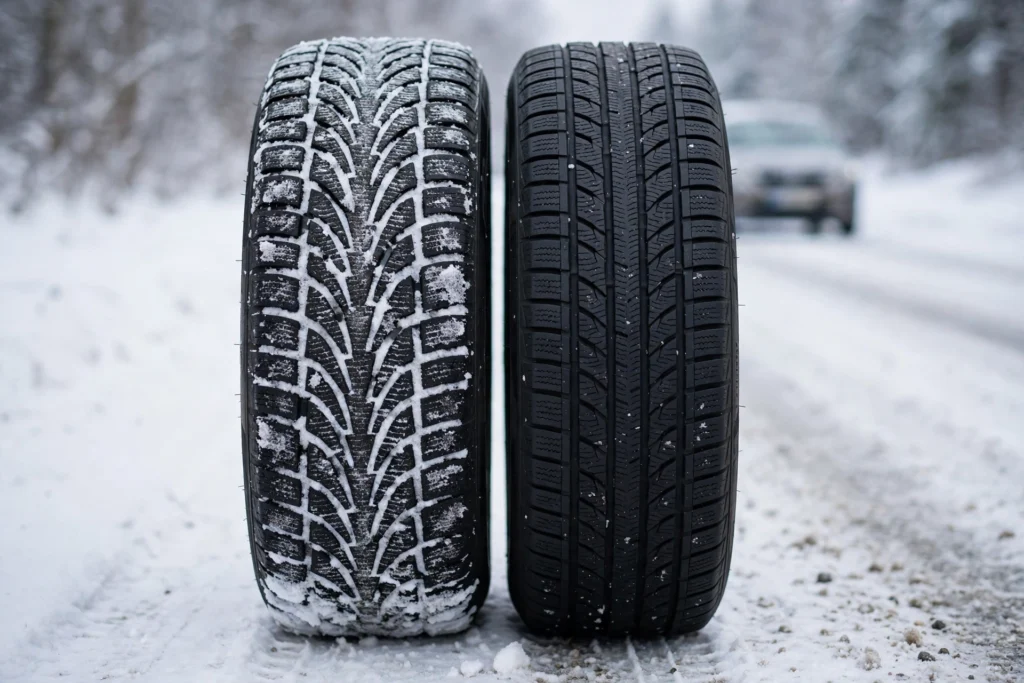
If you drive where winters bring snow, ice, and freezing temperatures, you have probably asked yourself the same question every autumn: winter tyres vs all-season tyres — which should I choose? The short answer is that winter tyres grip far better in snow and ice, while all-season tyres are more convenient and cheaper if your winters are mild. That trade-off is the heart of the winter tyres vs all-season tyres decision. The right choice depends on where you live, how much snow you drive in, and how much you value safety over convenience. This guide compares them honestly, so you can decide before the first snowfall.
Table of Contents
Quick Summary
- Winter tyres are made for cold weather: softer rubber and deeper tread give them far better grip on snow and ice.
- All-season tyres are a compromise: decent in most conditions, but noticeably weaker in real winter weather.
- Winter tyres stop shorter and handle better on snow, ice, and cold wet roads.
- All-season tyres save you the cost and hassle of swapping tyres twice a year.
- If your area gets regular snow and temperatures below freezing, winter tyres are the safer choice.
Winter Tyres vs All-Season Tyres: The Key Differences
In the winter tyres vs all-season tyres comparison, the two types may look similar at a glance, but the rubber, the tread pattern, and the way they behave in the cold are very different.
Rubber compound
Winter tyres use a softer rubber compound that stays flexible in freezing temperatures. That flexibility is what lets the tyre grip the road when it is cold. All-season tyres use a harder compound built to last longer and work in summer heat — but as the temperature drops, that rubber gets stiffer, and stiffer rubber grips less.
Tread design
Winter tyres have deeper tread grooves and thousands of tiny slits called sipes. Those sipes act like hundreds of small biting edges that grip snow and ice, and the deep grooves clear slush and water away from the contact patch. All-season tyres have a shallower tread that is quieter and wears more slowly, but it cannot bite into snow the same way.
The three-peak mountain snowflake symbol
The easiest way to tell a true winter tyre is the three-peak mountain snowflake symbol moulded into the sidewall. This mark means the tyre has passed a test for traction in severe snow. All-season tyres usually carry the M+S (mud and snow) mark instead, which is a much weaker standard. When you compare winter tyres vs all-season tyres in the shop, look for the snowflake — it tells you the tyre is genuinely built for winter.

Winter Tyres vs All-Season Tyres in Snow and Ice
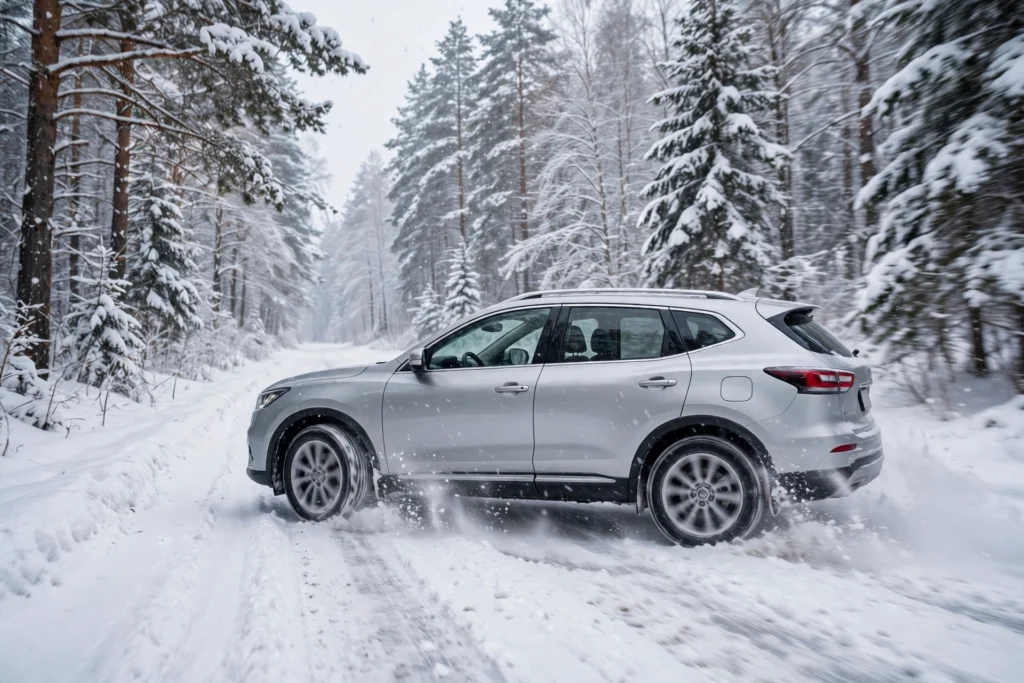
On snow and ice, the difference is not subtle. In tests run by tyre makers and motoring organisations, winter tyres consistently stop in a much shorter distance than all-season tyres on snow-covered roads, and the gap grows on ice. A car on all-season tyres can slide noticeably further before stopping, and that extra distance is often the difference between stopping safely and hitting something.
Handling tells the same story. A car on winter tyres turns in more sharply, climbs a snowy hill with less wheel spin, and feels more stable when you brake in a corner. With all-season tyres, the same car feels vague and slippery. If you regularly drive on untreated roads, through slush, or before the ploughs have been out, the winter tyres vs all-season tyres comparison is not really close in these conditions.
That said, winter tyres also help on cold, dry roads: once the temperature falls below around 7°C (45°F), their softer compound still grips better than the harder all-season compound, even with no snow on the ground.
How Do All-Season Tyres Perform in Summer?
In the winter tyres vs all-season tyres comparison, all-season tyres earn their keep in the warmer months. Their harder compound resists wear in summer heat, they are quieter on the motorway, and they handle well in rain. A winter tyre used through a hot summer, by contrast, wears out quickly and takes longer to stop on a hot, dry road.
This is why all-season tyres are the default choice for many drivers. If your winters are mild, with only a few light snowfalls a year, all-season tyres give you acceptable performance all year round without the cost and effort of a seasonal swap. That convenience is the strongest argument on the all-season side of the winter tyres vs all-season tyres debate.
Cost Comparison: Winter Tyres vs All-Season Tyres
Winter tyres cost more up front, because you are buying a second set of tyres — and ideally a second set of wheels, so the swap is quick and cheap. But the maths is not as one-sided as it looks. When your winter tyres are on the car, your summer or all-season tyres are not wearing down, so each set lasts longer because it is only used for part of the year. When you compare the total cost of winter tyres vs all-season tyres over several years, the gap is smaller than most drivers expect.
The real extra costs are the swap, storage space, and the second set of wheels if you buy them. Against that, weigh the value of shorter stopping distances — a single avoided crash pays for many sets of winter tyres.
Which Tyres Should You Choose?
Your local climate should make the winter tyres vs all-season tyres decision for you:
- Regular snow and freezing temperatures: Choose winter tyres. If snow sits on your roads for weeks and you drive before the ploughs, winter tyres are the safer choice.
- Occasional light snow, mostly cold rain: All-season tyres may be enough, especially if you can avoid driving on the worst days.
- Mild winters, rare frost: All-season tyres are the practical choice. Winter tyres would wear quickly and give you little benefit.
- Mountain roads or rural driving: Choose winter tyres. Remote roads are cleared last, and a slide in the mountains is a serious problem.
Also think about your car. If you drive an electric car, tyre choice affects range and grip in winter too — see our guide on tyre care and when to change them for electric car owners. And whatever you choose, check your pressures regularly in cold weather: cold air lowers tyre pressure, which hurts grip and fuel economy, as our article on tyre pressure warning lights explains.
Can You Use Winter Tyres All Year Round?
Technically yes, but it is a bad idea. Winter tyres wear out fast in warm weather because their soft compound is not built for heat. They also handle worse and stop slower on hot, dry roads than all-season tyres. Using winter tyres in summer wastes money and gives you less grip, not more, so the winter tyres vs all-season tyres question is really about using each tyre in the season it was made for. Swap winter tyres off when the weather warms up in spring — usually when daytime temperatures stay above 7°C (45°F). For more on timing the swap, read our guide on Tyre Care And When To Change Them For Winter.
When to Switch to Winter Tyres
The usual rule is to fit winter tyres when temperatures regularly fall below 7°C (45°F), which in many parts of the US is sometime in late autumn. Do not wait for the first snowfall — by then, tyre shops are booked solid and popular sizes sell out. Getting the timing right is the final step in the winter tyres vs all-season tyres decision. If you want a full cold-weather checklist, our guide on How to Prepare Your Car for Winter covers tyres, battery, fluids, and everything else your car needs before the cold arrives.
Tips for Storing Your Off-Season Tyres
Good storage makes your tyres last longer. Clean each tyre, let it dry, and store it in a cool, dry place out of direct sunlight. If the tyres are on wheels, stack them flat; if they are off the wheels, stand them upright. Keep them away from solvents and oils, and mark each tyre with its position so you can rotate them next season.
Frequently Asked Questions
Are winter tyres really worth it?
If you drive in regular snow and freezing temperatures, yes — the winter tyres vs all-season tyres gap in braking distance and handling on snow is large, and it directly affects your safety. In mild climates, all-season tyres are usually enough.
Do I need winter tyres on all four wheels?
Yes — always fit winter tyres on all four wheels. Fitting them only on the front or only on the rear creates a dangerous grip imbalance that can make the car spin or slide in a corner.
Can all-season tyres handle snow?
They can handle light snow, but in the winter tyres vs all-season tyres comparison for heavy snow, winter tyres are clearly safer. If you face heavy snow, winter tyres are the better choice — and our Winter Driving Tips for New Drivers will help you stay safe while you learn how your car behaves on snow.
How long do winter tyres last?
A set of winter tyres used for one season a year typically lasts three to five winters, depending on mileage and storage. Because they are only on the car for part of the year, your other tyres last longer too.
Do winter tyres affect fuel economy?
Winter tyres can slightly increase fuel use because their softer compound creates more rolling resistance. The difference is small, and it is a fair price for the extra grip. Keeping your tyres at the right pressure — check the NHTSA winter driving tips for cold-weather reminders — helps keep fuel economy in check.
Conclusion
The winter tyres vs all-season tyres decision comes down to your climate and how much you drive in snow. Winter tyres are clearly better in snow, ice, and freezing temperatures — they stop shorter, grip harder, and give you more control when it matters most. All-season tyres are more convenient and make sense if your winters are mild and snow is rare. If you live somewhere with a real winter, fit winter tyres before the cold sets in, keep them on all four wheels, and store them properly in spring. Your car — and everyone in it — will be safer for it.
[…] fuel over its life. It is a smart trade that pays for itself. If you drive in cold weather, compare Winter Tyres vs All-Season Tyres: Which Is Better for Your Car? before you […]
[…] driving help, see our guide on How to Prepare Your Car for Winter, learn the difference in Winter Tyres vs All-Season Tyres, and check How Long Does a Car Battery Last? 7 Signs It’s Time for a New […]
[…] stay flexible in cold weather and grip far better than worn all-season tyres. Read our guide on winter tyres vs all-season tyres to decide what suits your […]