

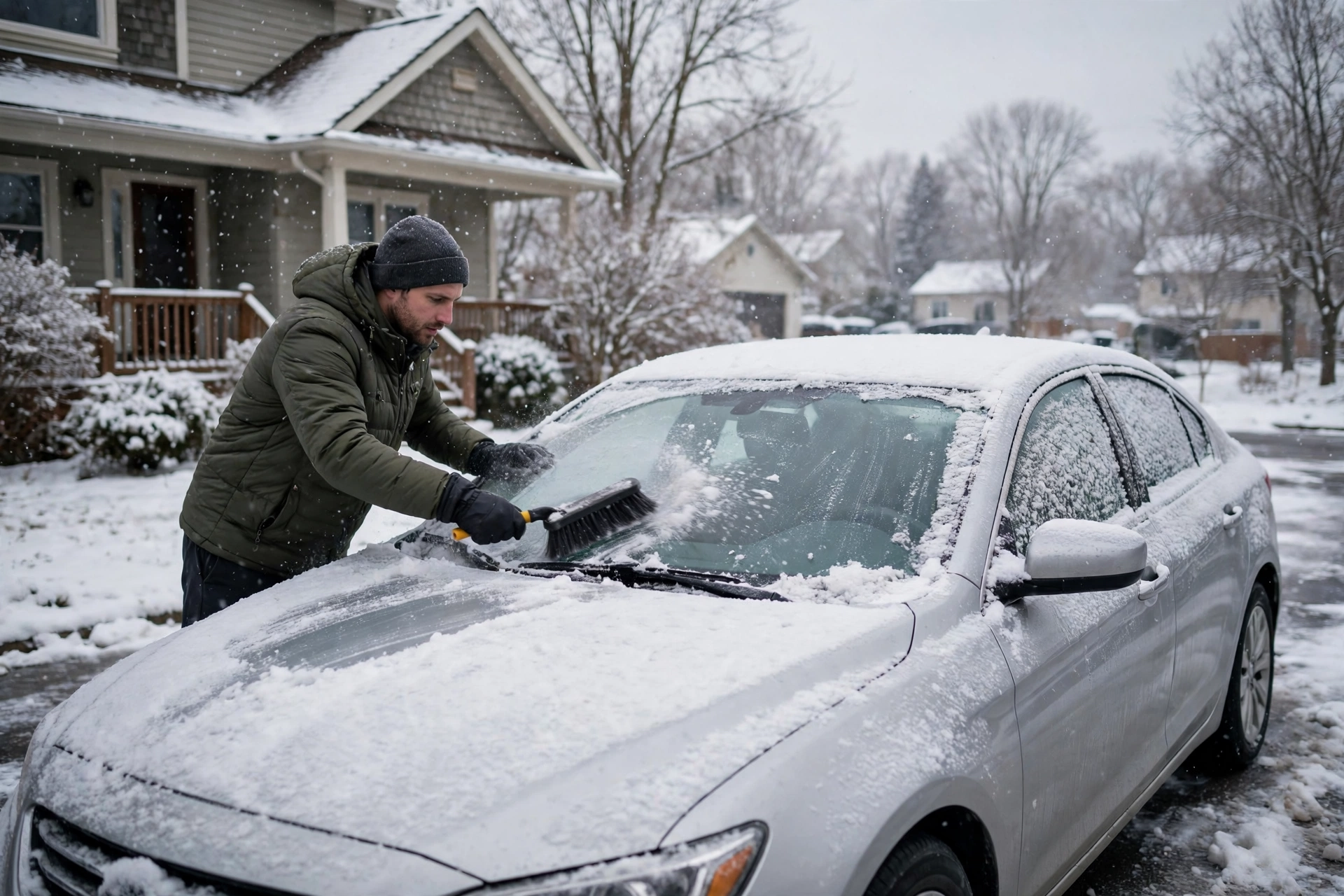
Winter arrives fast, and a car that ran fine in October can leave you stranded in January. So how to prepare your car for winter? Start early, work through a simple checklist, and fix small problems before the first freeze. This guide walks you through every step — tyres, battery, fluids, wipers, brakes, lights and a winter emergency kit — so your car starts on cold mornings and keeps you safe on icy roads.
Table of Contents
Why Winter Is Hard on Your Car
Cold weather punishes every part of a car, which is why learning how to prepare your car for winter matters. Engine oil thickens, a battery loses cranking power as the temperature falls, and rubber parts — tyres, belts, hoses and wiper blades — stiffen and crack. Road salt speeds up rust underneath the car.
The good news is that most winter breakdowns are preventable, and knowing how to prepare your car for winter is the first step. An hour of checks in autumn covers the biggest risks, and you do not need to be a mechanic. If a check reveals something serious, a garage visit now is far cheaper than a tow truck later.
How to Prepare Your Car for Winter: The 10-Step Checklist
Follow these steps in order to learn how to prepare your car for winter. Each one takes only a few minutes, and together they cover the systems winter hits hardest.
1. Check Your Tyres
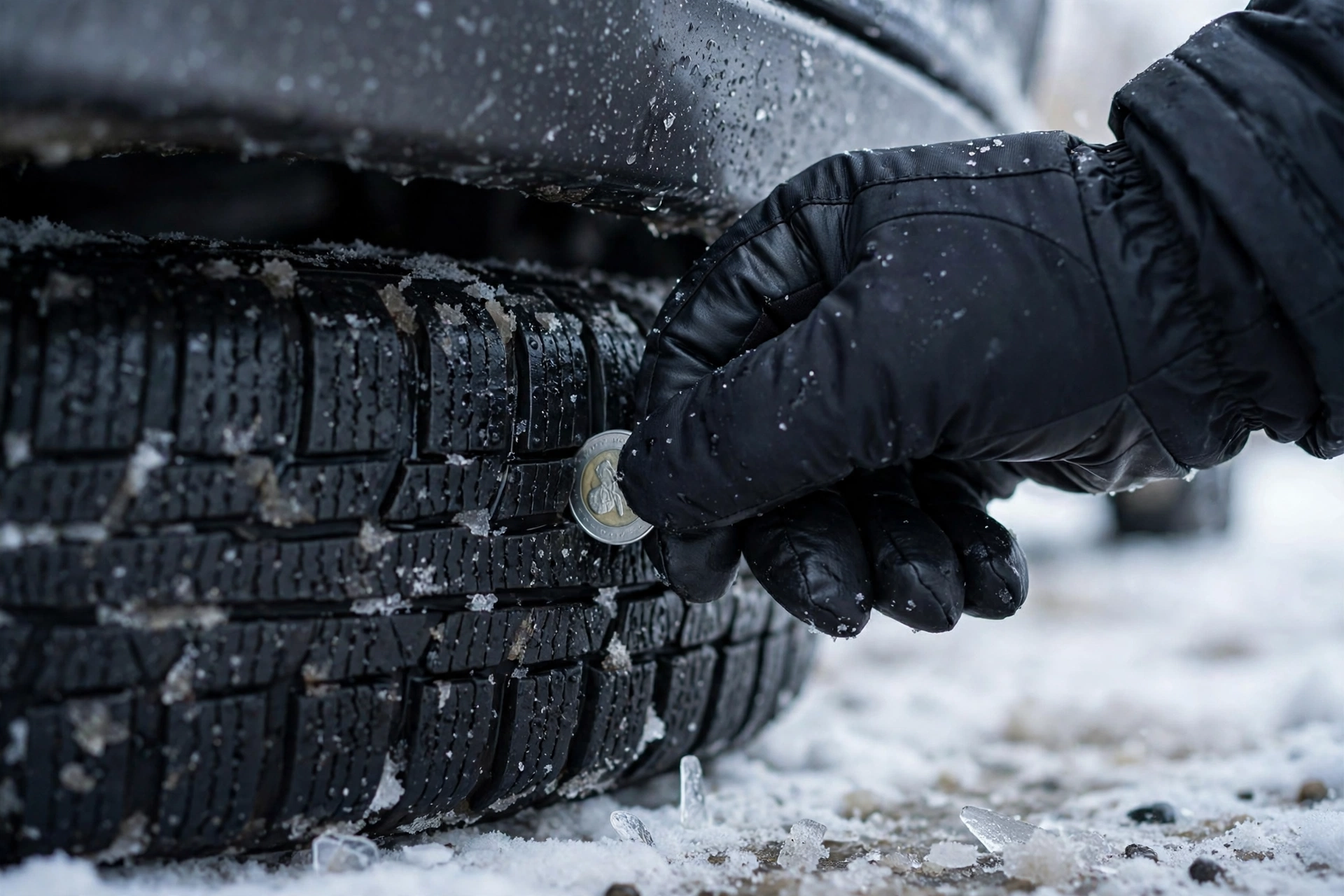
Tyres are your only contact with the road, and grip is everything on snow and ice — a key part of how to prepare your car for winter. Start by checking tread depth. The legal minimum in most US states is 2/32 of an inch, but for winter driving you want at least 4/32 of an inch. Try the penny test: push a penny upside down into the tread. If you can see the top of Lincoln’s head, the tread is too shallow for winter.
Next, check tyre pressure. Cold air shrinks, so pressure drops about 1 PSI for every 10 degrees Fahrenheit the temperature falls. Check pressure when the tyres are cold and inflate to the number on the driver’s door sticker — not the number on the tyre sidewall. If your tyre pressure warning light comes on during a cold snap, low pressure is often the cause.
If you live where snow stays on the ground for months, consider winter tyres. Their softer rubber stays flexible in the cold, and their tread pattern grips snow far better than all-season tyres. Four is much safer than two. For more on seasonal tyre care, see our guide to tyre care for winter.
2. Test the Battery
Cold is the battery’s worst enemy, so testing it is a must when you learn how to prepare your car for winter. A battery that is three or more years old deserves a test before winter — most auto parts stores will test it for free.
Look for the warning signs yourself: slow cranking on cold mornings, headlights that dim when you start the engine, or a battery case that looks swollen or cracked. Clean any white or green corrosion off the terminals with a wire brush, and make sure the connections are tight. A loose terminal can cause the same symptoms as a dead battery. For the full list of symptoms, read our guide to battery warning signs.
3. Top Up and Check Your Fluids
Fluids keep the engine running and the car safe to drive. Check these four before winter:
- Coolant/antifreeze: Make sure the level is right and the mix is correct — usually a 50/50 mix of antifreeze and water. Weak coolant can freeze inside the engine and crack it. A garage can test the freeze point in minutes.
- Engine oil: Cold weather thickens oil, so check the level and consider switching to the winter-grade oil listed in your owner’s manual. Many cars use a thinner oil in winter, such as 5W-30 instead of 10W-30.
- Windshield washer fluid: Fill the reservoir with winter washer fluid rated for freezing temperatures. Summer fluid can freeze in the lines and crack the reservoir.
- Brake fluid: Check the level and look for leaks around the wheels. Brakes matter even more on icy roads, where stopping distances grow.
4. Replace Worn Wiper Blades
Wipers work hardest in winter — clearing snow, slush and road spray — so replacing worn ones is part of how to prepare your car for winter. If they streak, skip or leave bands of water, replace them. Winter wiper blades have a rubber boot that stops ice from clogging the frame, and they are a cheap upgrade that makes a real difference.
While you are there, check the rear wiper if your car has one, and make sure the defroster works on both the front and rear windows.
5. Check Brakes, Lights and the Heating System
Press the brake pedal. It should feel firm, not soft or spongy. Listen for grinding or squealing, which means the pads are worn. On icy roads you need every bit of braking power, so do not put this check off.
Walk around the car and check every light: headlights, brake lights, indicators and fog lights. Short winter days mean you drive in the dark more often, and other drivers need to see your brake lights in snow and fog. Replace any blown bulbs right away.
Finally, test the heater and defroster before you need them. Turn the heater on full and check that hot air comes through quickly. If it blows cold or smells sweet, the coolant level may be low.
6. Inspect Belts, Hoses and the Exhaust
Open the bonnet and look at the belts and hoses as part of how to prepare your car for winter. Belts should not have cracks or frayed edges, and hoses should feel firm, not soft or swollen. Cold makes old rubber brittle, and a snapped belt in winter can leave you stranded with no power steering or charging.
Check the exhaust for leaks, too. A leaking exhaust can let carbon monoxide into the cabin — and in winter you drive with the windows closed and the heater on, so the risk is higher.
7. Keep the Fuel Tank at Least Half Full
In winter, try not to let the tank drop below half when you learn how to prepare your car for winter. A fuller tank leaves less room for condensation, which is moisture that can freeze in the fuel lines. It also means you have enough fuel to keep the heater running if you get stuck in traffic or stranded in a storm.
8. Wash and Wax the Car
Road salt is the biggest cause of winter rust. Wash the car regularly through winter, including the underside, to remove salt. A coat of wax before the first snow adds a layer of protection to the paint and makes snow and ice easier to brush off.
9. Pack a Winter Emergency Kit
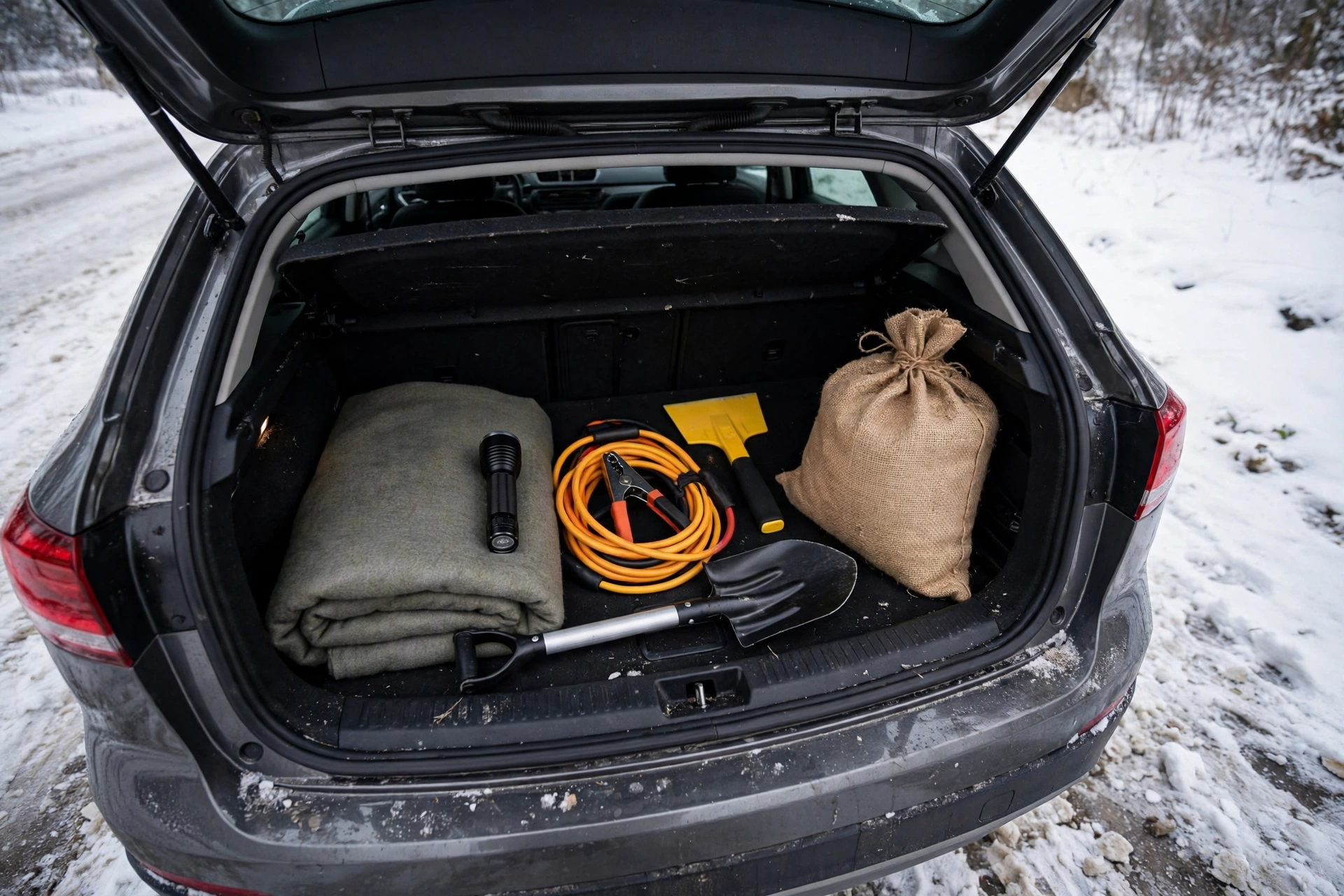
Even a well-prepared car can get stuck, so packing a kit is part of how to prepare your car for winter. Keep a small kit in the boot all winter. It should include:
- A warm blanket and extra gloves
- A flashlight with spare batteries
- Jumper cables
- An ice scraper and a small shovel
- A bag of sand or cat litter for traction
- A phone charger and some snacks and water
10. Plan for the First Cold Snap
Do the whole checklist before the temperature drops, not after — that is the whole point of learning how to prepare your car for winter. Pick a dry weekend in late autumn and work through it in one go. If your car is parked outside, a windscreen cover or even an old towel across the glass saves you scraping time on frosty mornings. For official cold-weather driving advice, see the NHTSA winter driving tips.
Quick Summary: How to Prepare Your Car for Winter at a Glance
- Check tyre tread (at least 4/32 inch) and pressure; consider winter tyres.
- Test the battery, clean the terminals, and replace it if it is weak or old.
- Check coolant, oil, washer fluid and brake fluid.
- Fit fresh wiper blades and winter washer fluid.
- Test brakes, lights, heater and defroster.
- Inspect belts, hoses and the exhaust for cracks and leaks.
- Keep the fuel tank at least half full.
- Wash off road salt and protect the door seals.
- Pack a winter emergency kit in the boot.
Frequently Asked Questions About How to Prepare Your Car for Winter
When should I start preparing my car for winter?
Start in late autumn, before the first frost, as part of how to prepare your car for winter. Tyres, batteries and fluids are easier and cheaper to fix while the weather is still mild, and garages get busy once the cold arrives.
Do I really need winter tyres?
It depends on where you live. If your area gets regular snow and temperatures stay below about 45°F (7°C) for months, winter tyres are worth it — they stop shorter and grip better than all-season tyres in the cold. If you only get a few light snowfalls a year, good all-season tyres with deep tread are usually enough.
Why does my tyre pressure light come on in cold weather?
Tyre pressure drops as the temperature falls, about 1 PSI for every 10°F. The warning light often appears on the first cold morning even though nothing is wrong with the tyre. Check the pressure and top it up to the number on the door sticker.
How often should I wash my car in winter?
Wash it every couple of weeks, or after any drive on salted roads. Pay attention to the underside, wheel arches and door sills, where salt collects and rust starts.
What should I do if my car will not start on a cold morning?
First, check that the battery terminals are clean and tight. Turn off the heater, lights and radio, then try again. If the engine turns over slowly or just clicks, the battery is likely too weak and needs a jump start or replacement — a problem you can prevent when you know how to prepare your car for winter. If jump-starting works, drive the car for at least 20 minutes or get the battery tested the same day.
Conclusion
Learning how to prepare your car for winter is one of the simplest ways to avoid breakdowns, repair bills and stressful mornings. Check the tyres and battery, top up the fluids, fit fresh wipers, test the brakes and lights, and pack an emergency kit. Do it once in autumn and you can drive through winter with confidence. For more cold-weather driving advice, read our winter driving tips before the snow arrives.
[…] If cold weather is the cause, read how to prepare your car for winter. […]
[…] How to Prepare Your Car for Winter […]
[…] How to Prepare Your Car for Winter […]
[…] How to Prepare Your Car for Winter […]
[…] winter tyres vs all-season tyres decision. If you want a full cold-weather checklist, our guide on How to Prepare Your Car for Winter covers tyres, battery, fluids, and everything else your car needs before the cold […]
[…] Cold weather makes weak batteries fail faster, because cold thickens engine oil and cuts a battery’s cranking power at the same time. That is why autumn is the best time to check yours — read our step-by-step guide to preparing your car for winter. […]
[…] One of the best things you can do is rotate your tyres every 6,000 miles, and do an EV tyre tread check at the same time. This means moving the front ones to the back and the back ones to the front. On most cars, the front tyres do all the steering and most of the braking, so they wear out much faster. By swapping them, you make sure all four tyres wear down at the same speed. This lets you replace the whole set at once, which often gets you a better deal at the shop. For a full seasonal routine, see How to Prepare Your Car for Winter: A Complete Step-by-Step Guide. […]
[…] reading: For more cold-weather driving help, see our guide on How to Prepare Your Car for Winter, learn the difference in Winter Tyres vs All-Season Tyres, and check How Long Does a Car Battery […]