

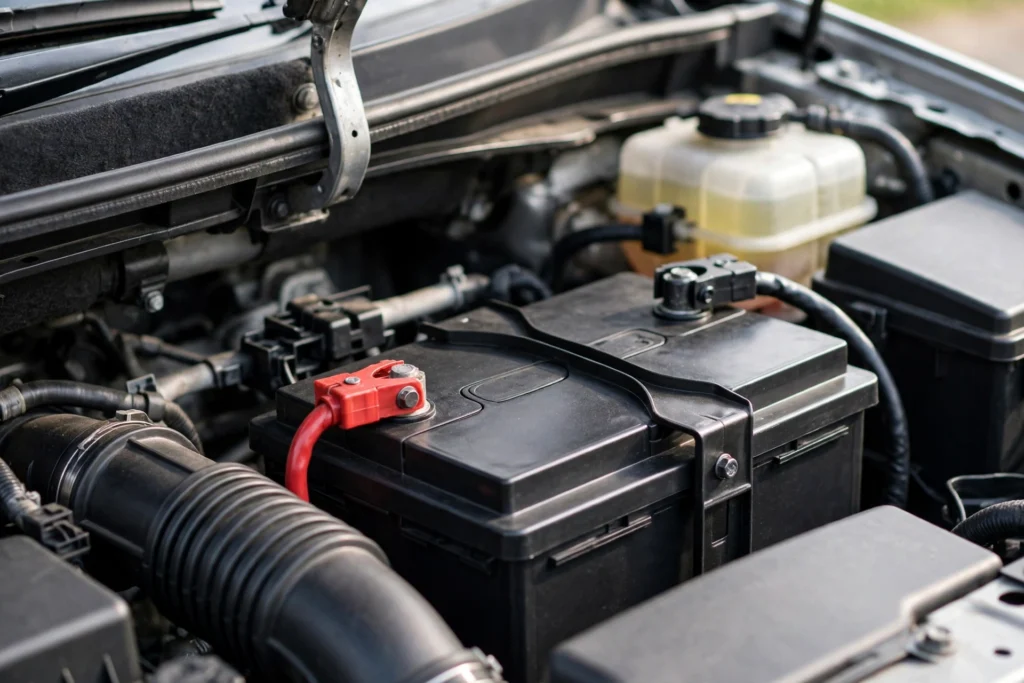
How long does a car battery last? For most drivers, the answer is 3 to 5 years. A battery in a mild climate with regular highway driving can reach 5 years or a little more, while one in a very hot climate may only last 3 years. Either way, a car battery is a wear-and-tear part — it will not last the life of the car, and it usually gives you warning signs before it fails completely.
Table of Contents
The trouble is that many drivers only think about their battery on the morning it will not start the car. That morning often comes in the middle of winter, when cold weather makes an old battery’s job much harder. Knowing how long does a car battery last, and what shortens its life, helps you replace it on your schedule — not on a freezing morning in a parking lot.
In this guide, we cover the average lifespan, the factors that shorten it, the 7 warning signs, and the habits that help a battery last longer.
How Long Does a Car Battery Last on Average?
Most car batteries last 3 to 5 years. A battery that is 4 years old is not necessarily bad, but it is past its prime, and it deserves a test before winter arrives.
So how long does a car battery last in a hot climate? Often just 3 years. Heat is the biggest enemy of a battery: high temperatures speed up the chemical reactions inside it and slowly damage its internal parts. That is why batteries in hot southern states often fail after 3 years, while the same battery in a cooler climate can last 5 years. Cold weather does not usually damage a battery, but it does expose a weak one — a cold engine needs more power to start, and a cold battery delivers less of it.
Battery type matters too. A standard flooded lead-acid battery usually lasts 3 to 5 years. An AGM (absorbent glass mat) battery, found in many newer cars with start-stop systems, often lasts 4 to 7 years. Your driving pattern matters as well. A car driven daily on longer trips keeps its battery well charged. A car that sits for weeks, or only makes short trips, drains the battery faster than the alternator can recharge it.
What Affects How Long a Car Battery Lasts
Several everyday factors decide the answer to how long does a car battery last. The good news is that you can control most of them.
Heat. Summer heat is the number one killer of car batteries. Under-hood temperatures can climb well above the outside temperature, and that heat slowly breaks down the battery’s plates. Parking in the shade or a garage in summer helps more than most drivers realise.
Short trips. Starting the engine uses a big burst of power. If your trips are only a few minutes long, the alternator never gets time to fully recharge the battery. Over weeks and months, the battery slowly runs down. A weekly longer drive of 20 to 30 minutes helps keep it topped up.
Vibration. A loose battery bounces around as you drive, and that shaking can damage the plates inside. Make sure the battery hold-down clamp is tight and the battery cannot move.
Parasitic drain. Lights left on, a faulty glove-box light, or an aftermarket accessory can slowly drain a battery overnight. If your battery keeps going flat, something may be drawing power while the car is off.
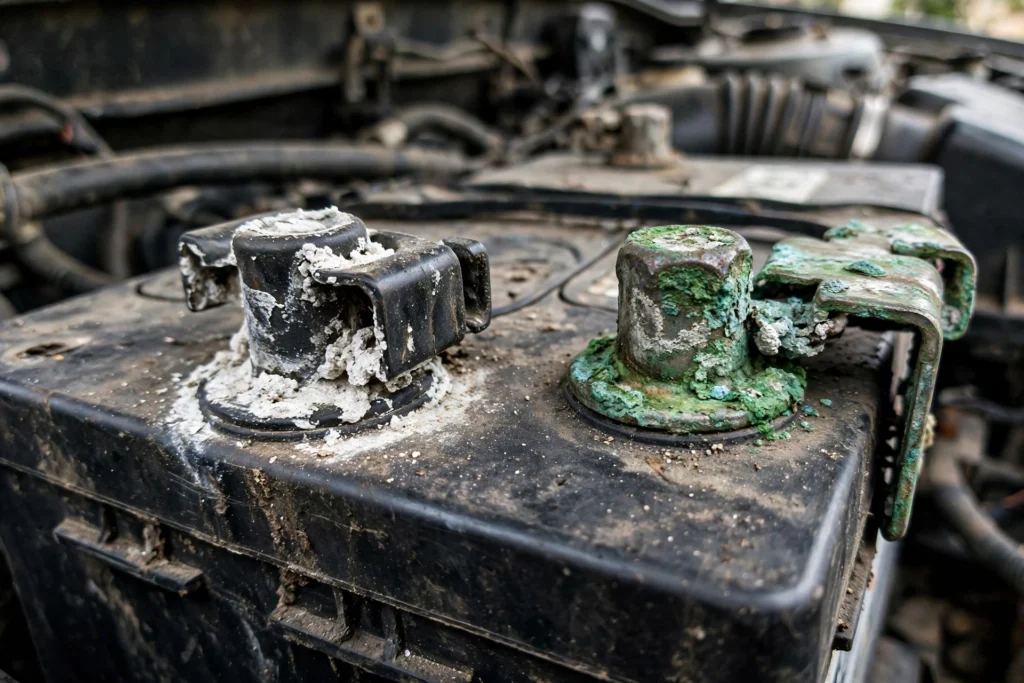
Corrosion. Corrosion on the terminals adds resistance and makes it harder for power to flow. A crusty white or green coating on the terminals is a sign the battery needs cleaning — or is nearing the end of its life.
7 Signs Your Car Battery Is Dying
A dying battery almost always warns you first. How long does a car battery last once the warning signs appear? Not long — days or weeks, not months. Watch for these 7 signs:
- Slow engine crank. The engine turns over slowly, or sounds tired when you turn the key. This is the classic early warning.
- Clicking sound. You turn the key and hear a rapid clicking noise instead of the engine starting. The battery has enough power for the starter solenoid, but not enough to turn the engine.
- Dim headlights. Headlights and dashboard lights look dim, especially when the engine is idling. They may brighten when you rev the engine.
- Dashboard warning light. The battery warning light means the charging system has a problem. It may be the battery, the alternator, or a loose connection.
- Corroded terminals. A white, blue, or green crust on the battery terminals is corrosion. It blocks the flow of power and is common on older batteries.
- Swollen or cracked case. A battery case that bulges or cracks has been damaged by heat or overcharging. Replace it right away.
- Old age. If your battery is 4 or 5 years old and showing any of the signs above, it is time to test it. A battery that old can fail with little warning.
If you notice any of these signs, do not wait. How long does a car battery last once the warning signs appear? Think weeks, not months. A battery test at an auto parts store is usually free and takes only a few minutes. For step-by-step testing methods you can do yourself, see our guide on How to Test a Car Battery at Home. You can also read our full list of Car Battery Warning Signs Every Owner Must Watch For to catch problems early.
How Long Does a Car Battery Last in Winter?
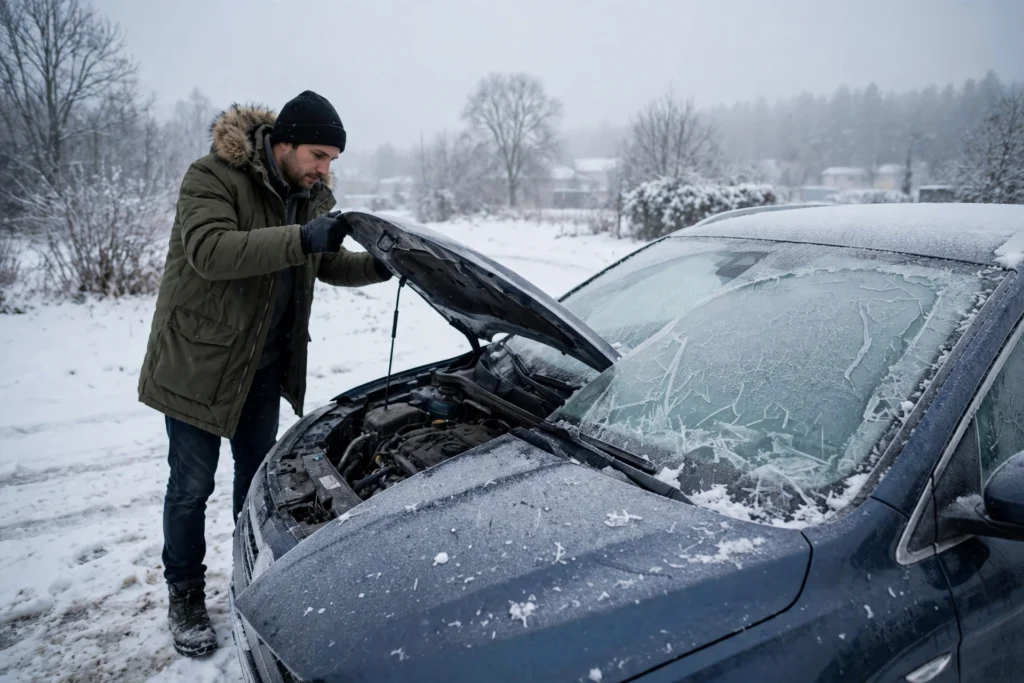
Winter is when weak batteries fail. Cold weather thickens engine oil, so the starter motor needs more power to turn the engine over. At the same time, a cold battery can deliver less power — at freezing temperatures, a battery may lose around a third of its cranking power. That combination is why so many batteries die on the first really cold morning of the year.
How long does a car battery last through a cold winter? It depends on its age and health going into the season. A healthy 2-year-old battery will usually start a car fine in the cold. A 4-year-old battery that was already weak in summer may not survive the first frost. This is why autumn is the best time to test your battery, before the cold arrives.
If you live somewhere with cold winters, have your battery tested every autumn once it passes 3 years old. Clean terminals and a full charge before winter also help. Our guide on How to Prepare Your Car for Winter covers battery checks along with the other cold-weather jobs worth doing before the snow arrives.
How to Make Your Car Battery Last Longer
You cannot make a battery last forever. With good care, how long does a car battery last? Up to a year longer than average. These simple habits decide it:
- Drive longer trips. Take the car for a 20 to 30 minute drive at least once a week so the alternator can fully recharge the battery.
- Turn off accessories. Switch off the lights, heater, and radio before you turn off the engine, so the battery is not drained at the next start.
- Keep the terminals clean. Check the terminals twice a year. If you see corrosion, clean it with a wire brush and a mix of baking soda and water, then tighten the connections.
- Secure the battery. Make sure the hold-down clamp is tight so the battery does not vibrate and shake while you drive.
- Park in the shade or a garage. Keeping the car out of extreme heat in summer protects the battery from its worst enemy.
- Unplug accessories. Phone chargers and dash cams left plugged in can slowly drain a battery, especially in a car that sits for days.
- Test it every year. After 3 years, test the battery each autumn. A free test at an auto parts store tells you exactly how much life is left.
When Should You Replace Your Car Battery?
How long does a car battery last before you should replace it? Replace your battery when it fails a load test, shows a swollen case, or keeps dying even after a full charge. Do not wait for it to leave you stranded. A battery that needs a jump start more than once is telling you it is finished.
Many drivers replace the battery at 4 years as preventive maintenance, especially before winter — cheaper and far less stressful than a tow truck on a cold morning.
When buying a replacement, match the size and type your car needs — check your owner’s manual or ask the parts store to look it up. A battery with a higher cold cranking amps (CCA) rating is a good choice if you live in a cold climate. Plan the replacement around the answer to how long does a car battery last in your climate — usually 3 to 5 years — and you will never be caught out. For more on choosing the right battery and what to check, the AAA guide to car batteries is a useful reference.
How Much Does a New Car Battery Cost?
To judge the cost, ask yourself: how long does a car battery last? A $150 battery that lasts 5 years costs about $30 a year. A new car battery in the US usually costs roughly $100 to $250 for a standard car, before installation. AGM batteries for newer cars with start-stop systems cost more. Prices vary by size and brand, so check with a local auto parts store for an exact price. Many stores install the battery free and recycle your old one.
If you are buying a used car, the battery is one of the things worth checking before you hand over any money. An old or weak battery can be a sign the car was not maintained well, and it is a cost you will face soon after buying. Our guide on How to Buy a Used Car Safely Without Getting Scammed explains what else to check before you buy.
Frequently Asked Questions
How long does a car battery last without driving?
A car battery can go flat in 2 to 4 weeks if the car is not driven, depending on the car’s electronics and the battery’s age. Modern cars draw a small amount of power even when off, for the alarm, clock, and computer memory. If you leave a car parked for a month or more, use a trickle charger or disconnect the battery.
How long does a car battery last in a car that sits unused?
In a car that sits unused, a battery typically lasts 3 to 6 months before it is too flat to start the engine, and it can be permanently damaged if left flat for long. A trickle charger is the safest option for winter storage.
Can a car battery last 10 years?
It is rare, but possible in ideal conditions — a mild climate, regular long drives, and a high-quality AGM battery. Most drivers should plan on 3 to 5 years and treat anything beyond that as a bonus.
How long does a car battery last in a new car?
The same 3 to 5 years as any other battery. A new car’s battery is not special — heat, short trips, and age wear it down just like any other. Check the date on the battery case so you know when its clock started.
How long does a car battery last after a jump start?
A jump start does not fix a dying battery — it only gets the car going once. If the battery dies again within a few days, or needs another jump, it has reached the end of its life and should be replaced.
How do I know if my car battery is dying?
The most common signs are a slow engine crank, dim headlights, a clicking sound when you turn the key, and corrosion on the terminals. A free load test at an auto parts store gives a clear answer in minutes.
Quick Summary
- How long does a car battery last? Most last 3 to 5 years; AGM batteries can last 4 to 7 years.
- How long does a car battery last in a car you rarely drive? Only a few months without a trickle charger.
- Heat is the biggest killer; cold weather exposes a weak battery.
- Short trips, vibration, corrosion, and parasitic drain all shorten battery life.
- Warning signs include slow cranking, clicking, dim lights, and corroded terminals.
- Test your battery every autumn once it is 3 years old, and replace it before winter if it is weak.
- Simple habits — longer drives, clean terminals, a tight hold-down — can add a year or more to its life.
Conclusion
So, how long does a car battery last? For most drivers, 3 to 5 years is the honest answer, with heat, driving habits, and battery type deciding where in that range you land. Five years is a good run — and that is how long a car battery lasts when it is looked after. The best approach is simple: know the age of your battery, watch for the warning signs, and test it every autumn once it passes 3 years old. Replacing a battery on your own schedule costs less and causes far less stress than a dead battery on a cold morning. If your battery is 4 or 5 years old and starting to struggle, get it tested this week — and if it fails the test, replace it before winter does the job for you.
[…] electric car battery is a chemical device, and cold weather slows down the chemical reactions inside it. When the […]
[…] For more warm-weather help, see our guide on How to keep a car cool in summer as temperatures rise. Car dashboard covers work best alongside a sunshade, so also read How to Keep a Car Cool in Summer. Extreme heat can also shorten your car battery’s life, so read How Long Does a Car Battery Last? 7 Signs It’s Time for a New One. […]
[…] more than three years old, learn how to test a car battery at home before winter sets in, and know how long a car battery lasts so a weak one does not leave you […]