

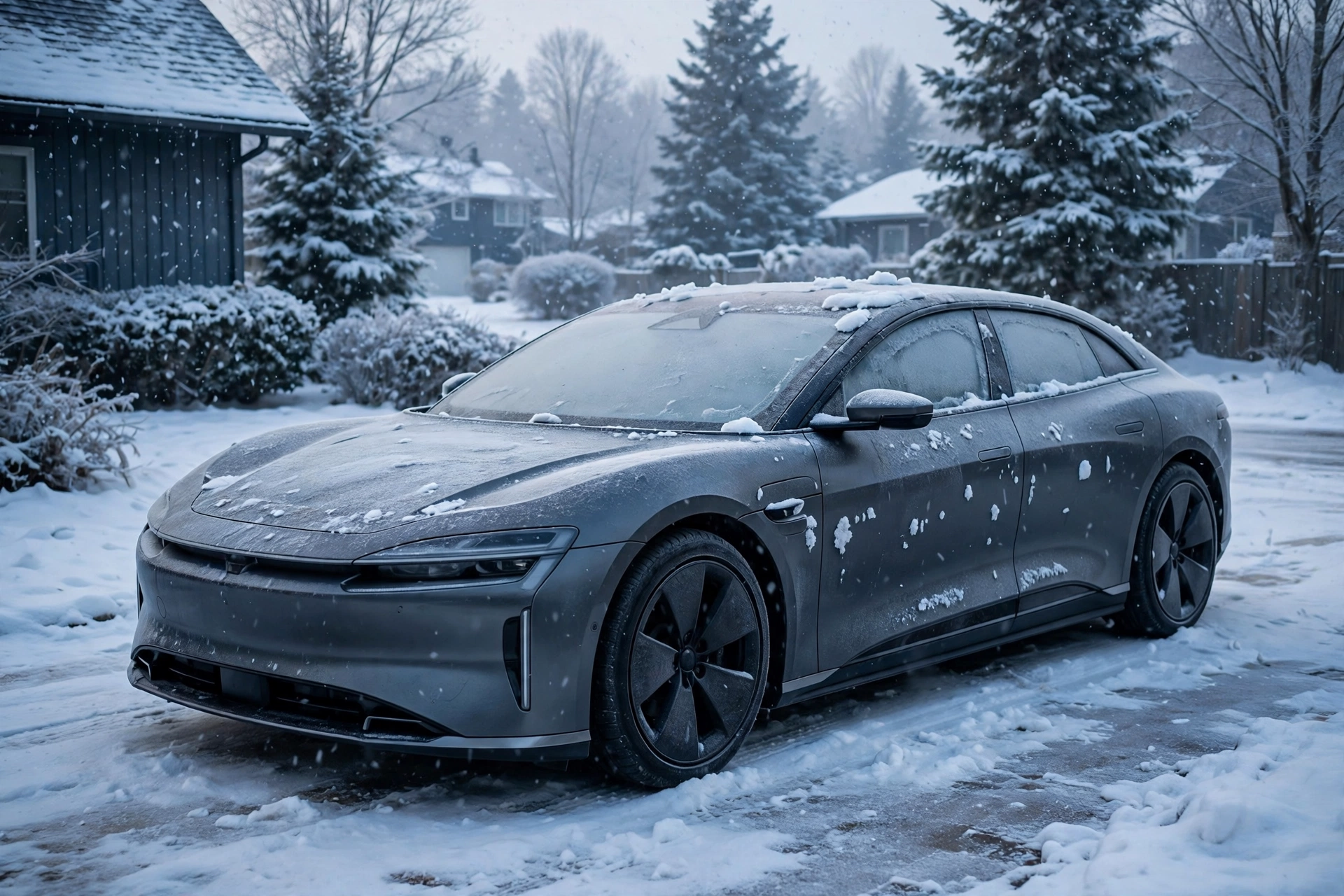
If your electric car suddenly shows far fewer miles than it did in summer, you are not imagining it. EV range in winter can drop by 20 to 40 percent when temperatures fall, and in very cold snaps the loss can be even bigger. The good news is that most of that lost range is not permanent damage — it is your battery working harder in the cold, and a few simple habits can win much of it back.
Table of Contents
In this guide, you will learn exactly why EV range in winter shrinks, how much range you can expect to lose at different temperatures, and seven practical fixes that protect your range without costing you comfort.
Why EV Range in Winter Drops So Much
An electric car battery is a chemical device, and cold weather slows down the chemical reactions inside it. When the battery is cold, it cannot release energy as quickly or as fully as it can on a warm day. That is the single biggest reason EV range in winter falls — the battery simply holds back some of its power until it warms up.
The second reason is heating. A petrol car gets cabin heat for free from its engine, but an electric car has to spend battery power to warm you up. Running the heater, heated seats, heated steering wheel and the defroster all draw from the same battery that drives the wheels. On a short trip, heating can use a surprisingly large share of your energy, which is why EV range in winter suffers most on short journeys.
There are a few smaller factors too. Cold air is denser, so your car pushes through more air resistance. Winter tyres have higher rolling resistance than summer tyres, and snow and slush on the road add drag. If your car sits outside overnight, it may also spend energy keeping the battery warm while parked. None of these is a fault — they are simply the cost of driving electric in cold weather.
How Much EV Range in Winter Do You Actually Lose?
The exact loss depends on your car and battery size, but testing gives a clear picture. According to the US Department of Energy, cold weather can cut an EV’s driving range noticeably, and real-world tests back that up.
- Around 0°C (32°F): expect roughly 10 to 20 percent less range than in mild weather.
- Around -7°C (20°F): expect roughly 20 to 30 percent less range, especially with the heater running.
- Around -18°C (0°F) or colder: expect 30 to 40 percent less range, and charging will also be slower.
- Short trips under 10 miles: the percentage loss is often worst here, because warming the cabin and battery eats a big share of a small amount of energy.
- Long highway trips: the loss is usually smaller in percentage terms, because the battery warms up and stays warm once you are moving.
7 Ways to Protect EV Range in Winter
You cannot change the weather, but you can change how much of it your car has to fight. These seven fixes are the ones that make the biggest difference to EV range in winter, and most of them cost nothing.
1. Precondition While Plugged In
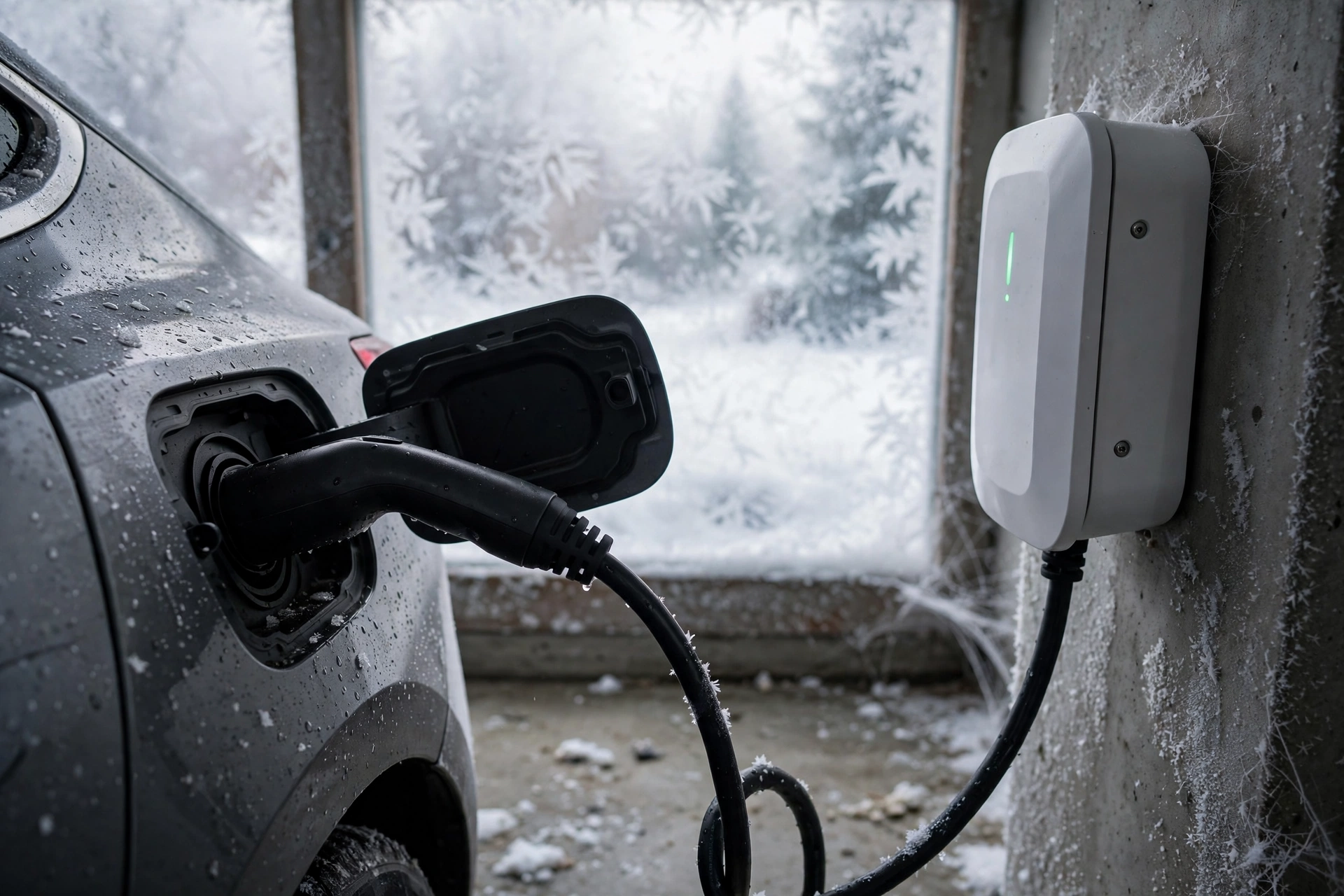
Preconditioning means warming the battery and the cabin while your car is still plugged into the charger, so the energy comes from the wall instead of the battery. Most EVs let you schedule this from the car’s app or infotainment screen — set a departure time and the car will be warm and ready when you leave. This one habit can recover a noticeable chunk of your EV range in winter, because a warm battery is an efficient battery.
2. Use Heated Seats Instead of Blasting the Heater
Heated seats and a heated steering wheel warm you directly and use far less energy than heating the whole cabin. Try setting the cabin temperature a few degrees lower than usual and letting the seat heaters do the work. Many drivers find 19 or 20°C with seat heaters on is just as comfortable as 22°C with the heater blasting — and it saves real range.
3. Park Indoors or in a Garage When You Can
A car parked in a garage starts the day several degrees warmer than one left outside overnight, so the battery needs less energy to reach its working temperature. If you have no garage, even parking out of the wind helps. Keeping your EV plugged in overnight is even better, because the car can keep the battery at a healthy temperature using mains power.
4. Keep Your Charge Between 20 and 80 Percent
Cold batteries charge more slowly, and a nearly empty battery in freezing weather is the worst combination. Try to keep your charge above 20 percent in winter and top up more often, even if that means shorter, more frequent charging sessions. Charging to 80 percent for daily driving is still the right habit — it keeps the battery healthy and leaves room for regenerative braking, which works best when the battery is not full.
5. Drive Smoothly and Use Eco Mode
Gentle acceleration, steady speeds and early, gentle braking all stretch your range in any season, and they matter even more in winter. Eco mode softens throttle response and limits heater output, which can add a few percent back to your EV range in winter. Regenerative braking also helps, though it may be limited when the battery is very cold — another reason to precondition first.
6. Check Your Tyre Pressure Often
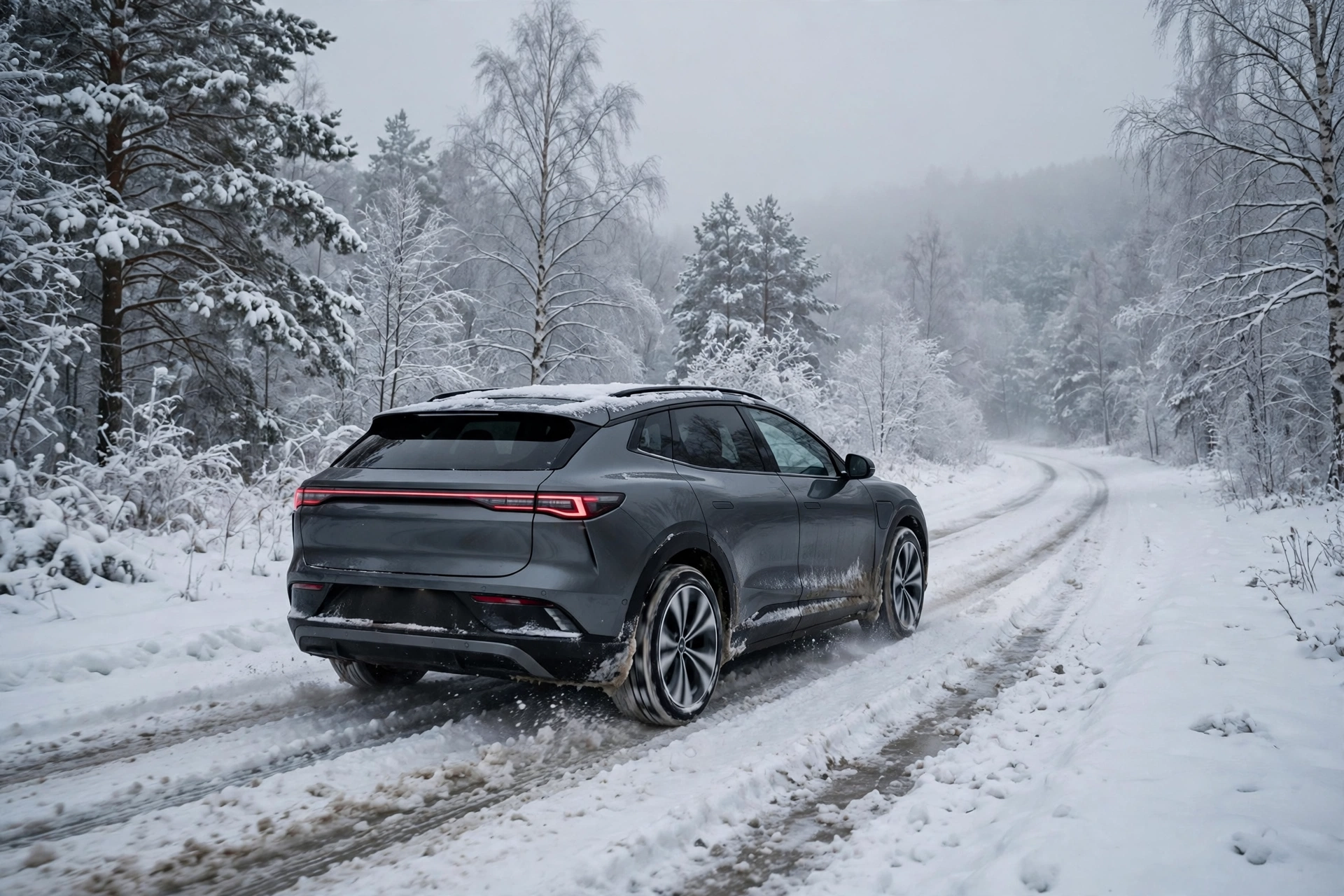
Cold air makes tyre pressure drop — roughly 1 PSI for every 10°F (about 5.5°C) the temperature falls. Under-inflated tyres increase rolling resistance and wear out faster, which quietly eats into your range. Check your pressures at least once a month in winter and inflate to the number on your door sticker, not the number on the tyre. Fitting proper winter tyres also helps, because their softer compound grips better in the cold and keeps you safer on snow and ice.
7. Plan Charging Stops on Longer Trips
In winter, always plan your charging stops before you leave, and add a buffer. If a charger is 150 miles away and your winter range is 180 miles, that margin is thinner than it looks. Use your car’s built-in route planner if it has one, because many EVs automatically pre-heat the battery on the way to a fast charger, which can cut charging time dramatically in cold weather.
Does EV Range in Winter Damage the Battery?
This is the question many new EV owners worry about, and the answer is reassuring: normal winter driving does not damage your battery. Lithium-ion batteries are designed to work in cold weather, and the range loss you see is temporary. When spring arrives, your range returns.
What does matter is charging a very cold battery at high speed. That is why most EVs limit fast-charging power when the battery is cold, and why preconditioning before a fast-charging stop is so useful. Leaving a car parked for weeks in extreme cold at a very low charge is also best avoided — if you are going away, leave it plugged in or at around 50 percent charge.
Frequently Asked Questions
How much EV range in winter do you lose?
Most EVs lose 20 to 40 percent of their rated range in cold weather, depending on temperature and how much you use the heater. At freezing point the loss is usually 10 to 20 percent, and in very cold conditions below -18°C it can reach 40 percent. Short trips lose the most in percentage terms.
Why does my EV lose range in winter?
Cold slows the chemical reactions inside the battery, so it cannot deliver as much energy. At the same time, heating the cabin and defrosting the windows draw power from the same battery. Together, these two effects explain most of the winter range drop.
Does preconditioning really help EV range in winter?
Yes. Warming the battery and cabin while plugged in means that energy comes from the charger, not the battery. A warm battery is also more efficient and accepts fast charging much better. Set a departure time in your car’s app and let it do the work.
Should I charge my EV to 100 percent in winter?
For daily driving, no — 80 percent is still the right target, and it leaves room for regenerative braking. Charge to 100 percent only before a long trip, and try to time it so the car finishes charging just before you leave, so the battery is warm when you go.
Is winter range loss permanent?
No. EV range in winter comes back when temperatures rise. The battery is not damaged by normal cold-weather driving — the loss is a temporary effect of cold chemistry and heating demand, not wear.
Quick Summary
- EV range in winter typically drops 20 to 40 percent in cold weather, mostly because cold slows the battery and heating the cabin uses power.
- The loss is temporary — your range returns in spring, and winter driving does not damage the battery.
- Precondition while plugged in, use heated seats instead of full cabin heat, park indoors, keep your charge above 20 percent, drive smoothly, check tyre pressures and plan charging stops.
- Expect slower fast charging in the cold, and let your car pre-heat the battery on the way to a charger when it can.
Conclusion
Losing range in winter is one of the most frustrating surprises of owning an electric car, but it is also one of the easiest to manage. Once you understand why EV range in winter falls — a cold battery plus the cost of heating — the fixes become obvious: warm the car while it is plugged in, heat yourself rather than the whole cabin, keep the battery charged and the tyres at the right pressure, and plan ahead on longer trips.
Do those things and your winter driving will feel far closer to your summer driving, with no range anxiety and no wasted energy. Winter does not make an EV a bad car — it just asks a little more of the driver, and now you know exactly what to do.