

Learning how to tell if tyres need replacing is one of the most useful skills a driver can have. Your tyres are the only part of your car that touches the road, and when they lose grip, braking distances grow and the risk of a blowout rises. The good news is that you can spot most worn tyres in about five minutes, with no tools beyond a coin and a quick look at the sidewall.
Table of Contents
In short: check the tread depth, look for cracks, bulges and uneven wear, and check the tyre’s age. If the tread is at or below the legal limit, the wear indicators are flush, or the tyre is cracked, bulging or more than six years old, it is time for new tyres. This guide walks you through each check step by step, so you know exactly how to tell if tyres need replacing before a worn tyre puts you at risk.
How to Tell If Tyres Need Replacing: 7 Warning Signs
Work through these seven signs one tyre at a time, including the spare if your car has a full-size one. A tyre only needs one of these signs to be worth replacing, so do not wait for two or three to appear together.
1. Tread worn down to the legal limit
Tread depth is the first thing to check when you want to know how to tell if tyres need replacing, because the tread is what grips the road and clears water away in the rain. In the United States, the legal minimum tread depth is 2/32 of an inch. Most tyre makers and safety experts recommend replacing tyres at 4/32 of an inch instead, because wet-weather grip drops sharply below that point and stopping distances can grow by a large margin on a wet road.
You can measure tread depth with a cheap tread depth gauge from any auto parts store, or use the penny test described below. Check the depth in several places across the tread, not just in the middle, because a tyre can be worn on one edge and fine in the centre. This hands-on check is the core of how to tell if tyres need replacing, and it works on any car.
2. Tread wear indicators are flush with the tread
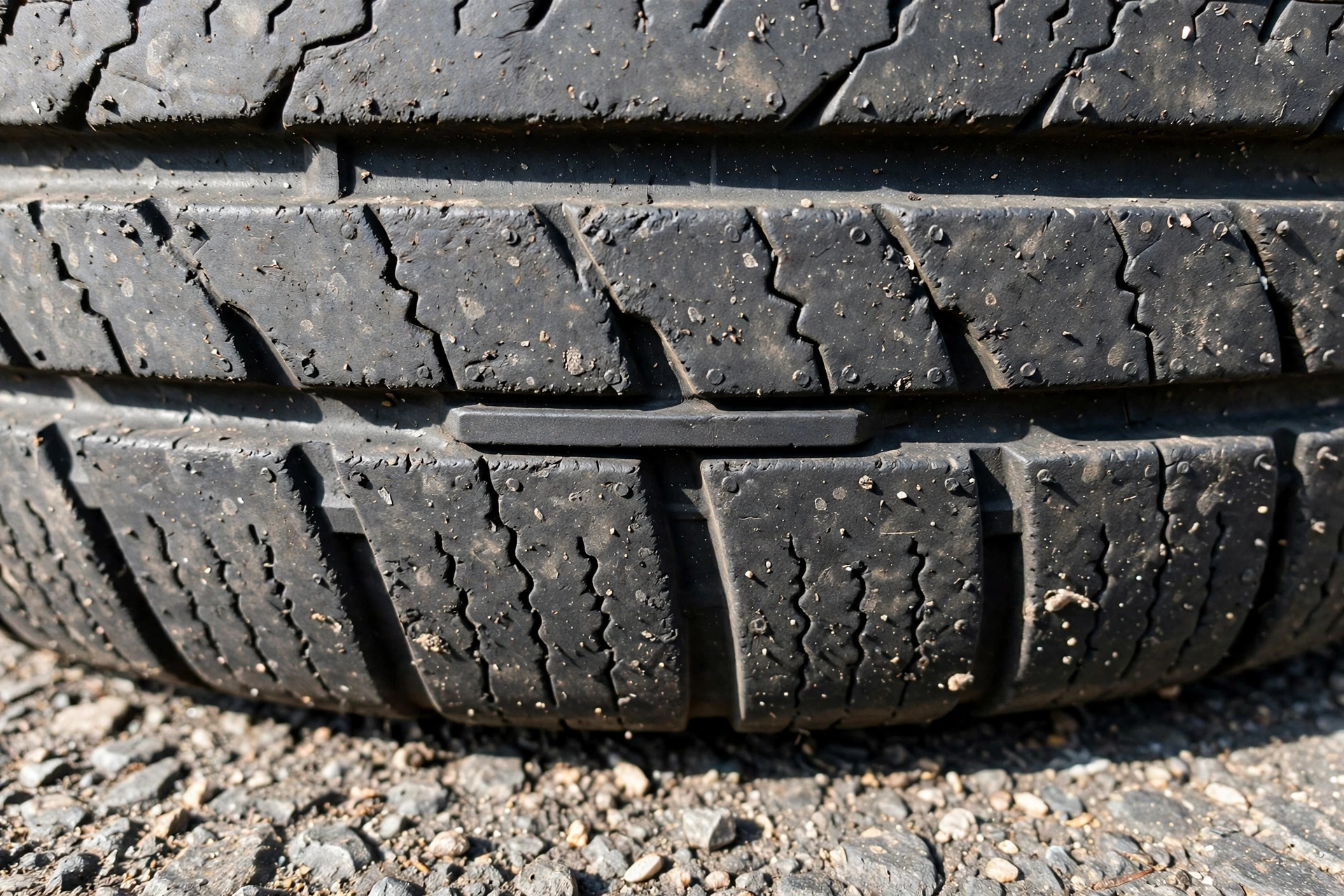
Every modern tyre has small raised bars built into the main tread grooves. These are called tread wear indicators, and they sit at the legal minimum depth. When the tread wears down to the level of these bars, the tyre is at the legal limit and must be replaced. The wear indicator is one of the simplest answers to how to tell if tyres need replacing, because it needs no tools at all — just run your finger across the tread and feel whether the bars are level with the surface.
3. Cracks in the sidewall
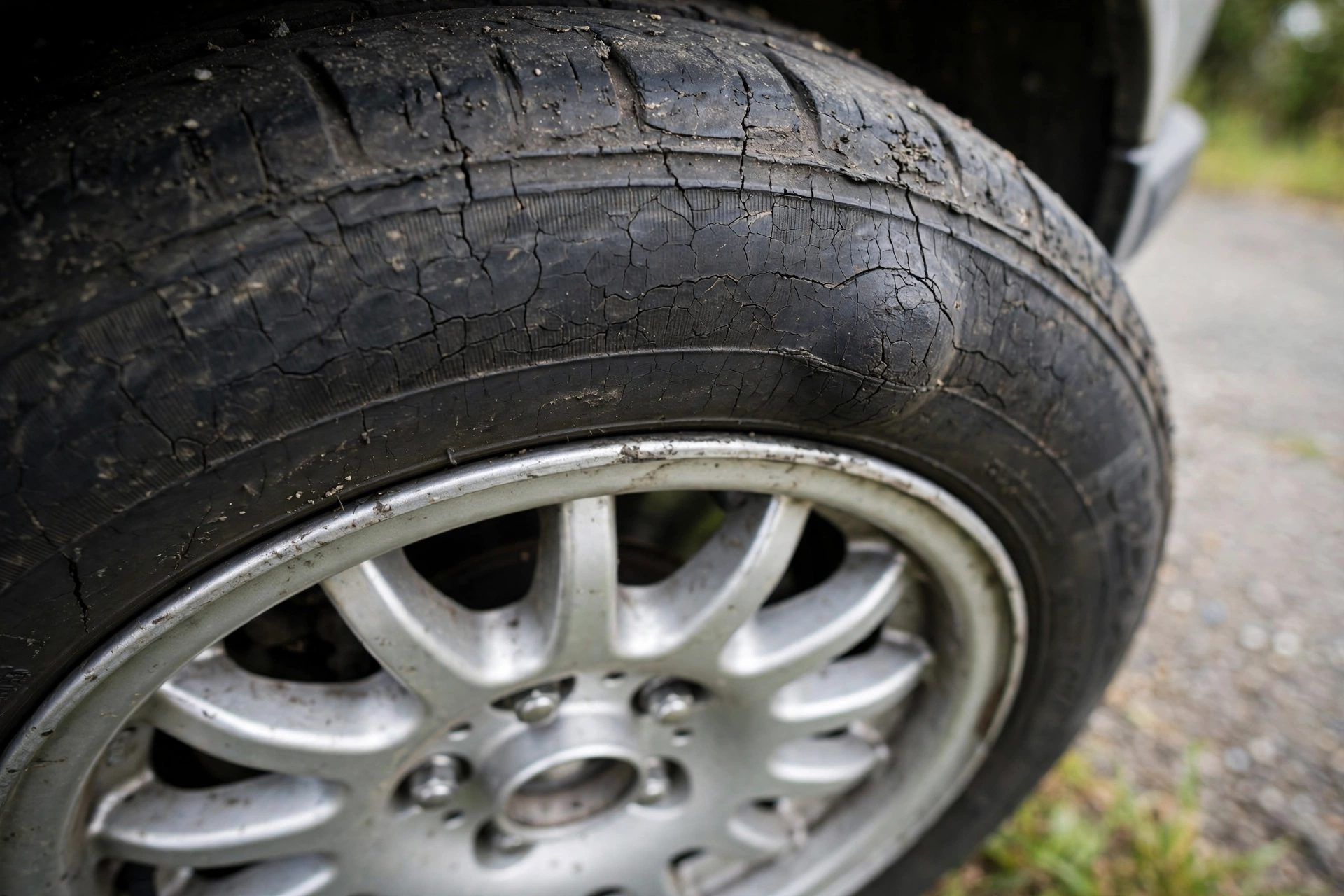
Small cracks in the sidewall, sometimes called dry rot, appear as tyres age or sit in strong sunlight. Cracks are an easy visual clue when you are learning how to tell if tyres need replacing. Fine surface cracks on an old tyre may only need a professional inspection, but deep cracks that you can feel with a fingernail, or cracks that show the cords underneath, mean the tyre should be replaced right away. Cracks weaken the sidewall, which is the part of the tyre that flexes every time the wheel turns.
4. Bulges or blisters on the sidewall
A bulge or blister on the sidewall means the internal structure of the tyre is damaged, usually after hitting a pothole or a kerb. The bulge is a weak spot where air is pushing against the outer rubber, and it can burst without warning. A tyre with a bulge should not be driven on any further than the nearest tyre shop, and only at low speed. This is one of the few tyre problems where there is no safe temporary fix.
5. Uneven wear across the tread
If one edge of the tread is worn smooth while the other still looks fine, or if the centre is worn but the edges are not, the tyre is wearing unevenly. The usual causes are wrong tyre pressure, wheels out of alignment, or worn suspension parts. Uneven wear is a subtler sign, and it is one more reason to learn how to tell if tyres need replacing rather than waiting for a warning light.
Check your pressures monthly — a tyre pressure warning light can also point to a slow leak — and have the alignment checked if a new tyre starts wearing unevenly. A tyre worn unevenly may still have legal tread in places, but it will not grip the road evenly, especially in the wet.
6. Vibration or noise while driving
A vibration through the steering wheel, or a humming or thumping noise that grows with speed, can point to a worn or damaged tyre. It can also mean a wheel is out of balance or a tyre has a flat spot from sitting still for a long time. If you feel a vibration, work through the visual checks above — that is how to tell if tyres need replacing or whether the problem is balance instead.
If the vibration started suddenly, or after you hit a pothole, stop and inspect the tyres before driving on. If the vibration is steady and the tyres look worn, have them checked by a tyre shop — balancing may fix it, but a damaged tyre will need replacing.
7. The tyre is old, even if the tread looks fine
Even a tyre with plenty of tread can be unsafe if it is old. Rubber hardens with age, which reduces grip and makes cracks more likely. Age is the sign most drivers miss when learning how to tell if tyres need replacing, because an old tyre can look almost new. Most tyre makers recommend a professional inspection once a tyre passes six years, and replacement at ten years no matter how much tread is left. You can find the tyre’s age on the sidewall, as explained in the next section.
How to Check Tyre Age with the DOT Code
Every tyre has a Department of Transportation (DOT) code stamped on its sidewall. The last four digits of that code are the tyre’s birthday: the first two digits are the week of the year, and the last two are the year. A code ending in 2319 means the tyre was made in the 23rd week of 2019. If the code has only three digits, the tyre was made before the year 2000 and should be replaced without question.
Check all four tyres, because they are not always the same age. A car that had one tyre replaced after a puncture can easily have three tyres from one year and one from another. Reading the DOT code takes a minute, and it completes the picture of how to tell if tyres need replacing. If any tyre is over six years old, ask a tyre professional to inspect it, even if the tread looks good.
The Penny Test: A 30-Second Tread Check
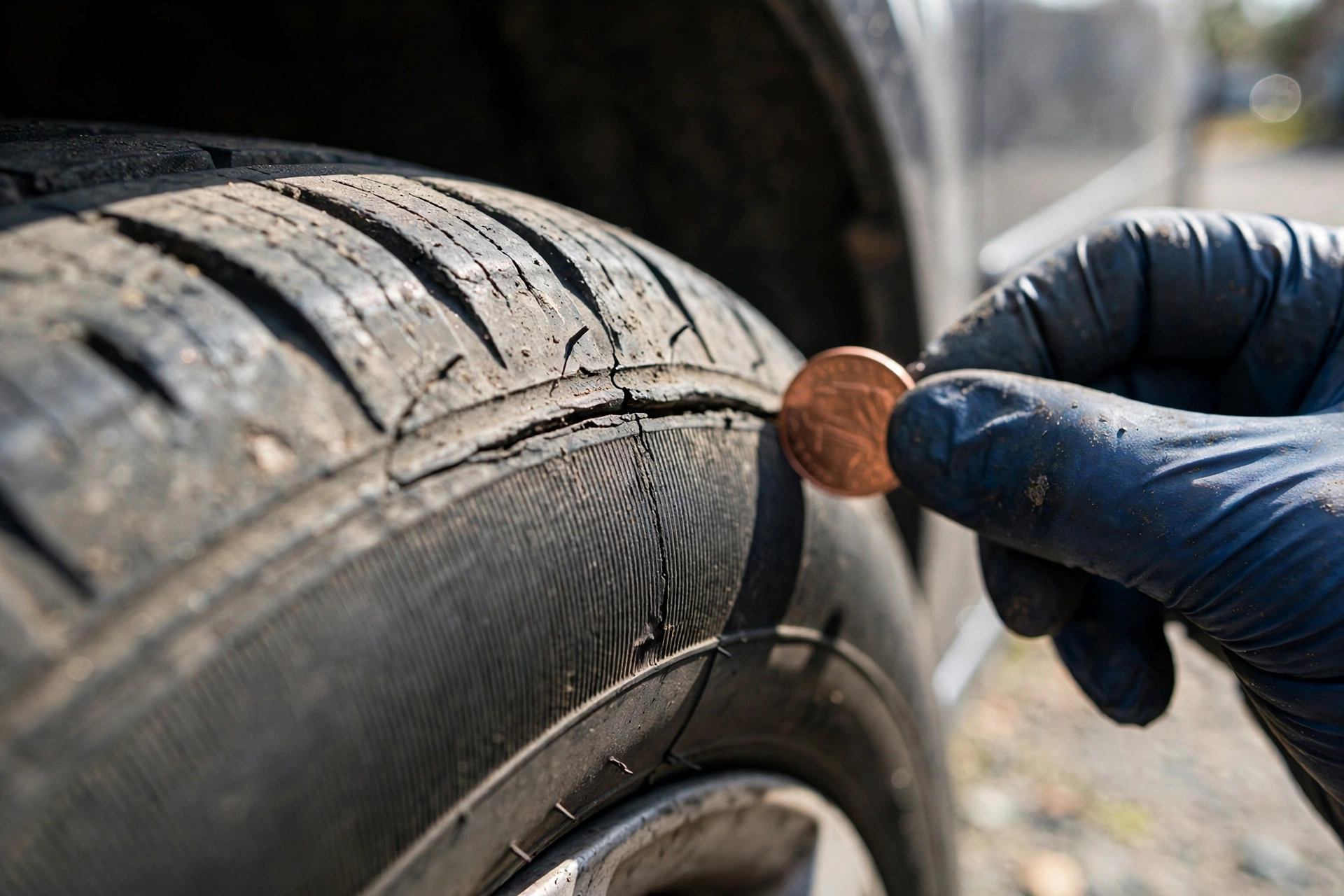
The penny test is the most famous shortcut for how to tell if tyres need replacing, and it costs nothing. Take a US penny and place it into a tread groove with Lincoln’s head pointing down into the tyre. If you can see the top of Lincoln’s head, the tread is below 2/32 of an inch and the tyre is at or past the legal limit. Repeat the test in several grooves across the tyre and on all four tyres.
For a stricter check, use a quarter instead: if you can see the top of Washington’s head, the tread is below 4/32 of an inch, which is the point most experts suggest replacing the tyre. Do this check once a month and before any long trip — it takes less than a minute per tyre.
How Often Should You Check Your Tyres?
A monthly check takes five minutes, and it is the habit that makes knowing how to tell if tyres need replacing second nature. Add a tyre check to your regular car maintenance schedule by mileage, so it happens alongside oil changes and other routine work. Also check your tyres before a long road trip, after hitting a large pothole, and whenever the seasons change — cold weather drops tyre pressure, which speeds up wear. A quick look at the tread, sidewalls and pressures each month will catch most problems while they are still cheap to fix.
What to Do When Your Tyres Need Replacing
Once you know how to tell if tyres need replacing, the next step is choosing the right replacements. Match the size, load rating and speed rating printed on your old tyre’s sidewall, or check the sticker on the driver’s door jamb. Replace tyres in pairs on the same axle so both sides grip evenly, and replace all four if your car has all-wheel drive. If you drive through snow, this is also the time to weigh up winter tyres vs all-season tyres for your climate.
Have the wheel alignment checked when new tyres are fitted, especially if the old ones wore unevenly. Keep the receipt and note the fitting date — it makes the next age check much easier. And if you are buying a used car, add the tyres to your used car inspection checklist, because a set of worn tyres is a real cost the seller may not mention. Spotting worn tyres on a car you are about to buy is exactly how to tell if tyres need replacing before you pay, not after. For official safety advice, see the NHTSA tyre safety guidance on tread depth, pressure and age.
Quick Summary
To sum up, how to tell if tyres need replacing comes down to four checks: tread depth, visible damage, uneven wear and age.
- Tread at or below 2/32 of an inch, or wear indicators flush with the tread, means replace now.
- Cracks, bulges or blisters on the sidewall mean replace now — do not keep driving on a bulging tyre.
- Uneven wear points to pressure or alignment problems; fix the cause and replace the tyre if the tread is low.
- Tyres over six years old need a professional inspection, and tyres over ten years old should be replaced whatever the tread looks like.
- The penny test and the DOT code let you check tread and age at home in minutes.
Frequently Asked Questions
How do I know if my tyres need replacing or just rotating?
Rotation evens out wear between the front and rear tyres, but it cannot restore worn tread. If the tread is near the limit, knowing how to tell if tyres need replacing matters more than rotation — a rotated worn tyre is still a worn tyre. Rotate tyres every 5,000 to 8,000 miles if the tread is healthy, and replace them when any of the seven signs above appear.
Can I replace just one tyre?
You can, but it is not ideal. A single new tyre next to a worn one can make the car pull to one side and grip unevenly in the wet. Replacing tyres in pairs on the same axle is the safer and more common advice, and all four is best on all-wheel-drive cars.
How long do tyres last?
Most tyres last three to five years or roughly 25,000 to 50,000 miles, depending on driving style, climate and how well pressures are kept. Mileage, climate and driving style all matter, so the checks above are a better guide than a calendar alone when deciding how to tell if tyres need replacing. Low-mileage cars can still have old tyres, so check the DOT date, not just the miles.
Is it safe to drive on tyres with cracks?
Fine surface cracks on an older tyre should be inspected by a professional as soon as you can, and deep cracks mean the tyre should be replaced before your next drive. Cracked rubber is weaker rubber, and a sidewall crack can lead to a sudden blowout at speed.
Do I need to replace all four tyres at once?
Not always. On most two-wheel-drive cars, replacing a pair on the same axle is enough. On all-wheel-drive cars, mismatched tread depths can strain the drivetrain, so replacing all four is usually recommended. Ask your tyre shop if you are unsure — they can measure the tread on each tyre and advise.
Conclusion
Worn tyres rarely fail without warning — they show it in the tread, the sidewalls and the way the car feels on the road. Now that you know how to tell if tyres need replacing, make the five-minute check part of your monthly routine, along with checking your oil and coolant. Checking tread, sidewalls and age is how to tell if tyres need replacing before a small problem becomes a dangerous one, and a new set of tyres is far cheaper than the accident a worn one can cause.