
Learning how to drive in snow for beginners starts with one simple rule: slow down and stay smooth. Snow cuts your tyres’ grip, doubles or even triples your stopping distance, and turns small mistakes into skids — but with the right technique, winter driving is a skill anyone can learn.
Table of Contents
The short answer: drive at about half your normal speed on snow, brake gently and early, keep at least 8 seconds behind the car ahead, and steer smoothly without sudden moves. Before you set off, clear all the snow off your car, check your tyres, and make sure your lights work.
In this guide, you will learn how to drive in snow for beginners step by step — from preparing your car, to the nine techniques that matter most, to handling a skid and getting unstuck.
Before You Drive in Snow: Prepare Your Car
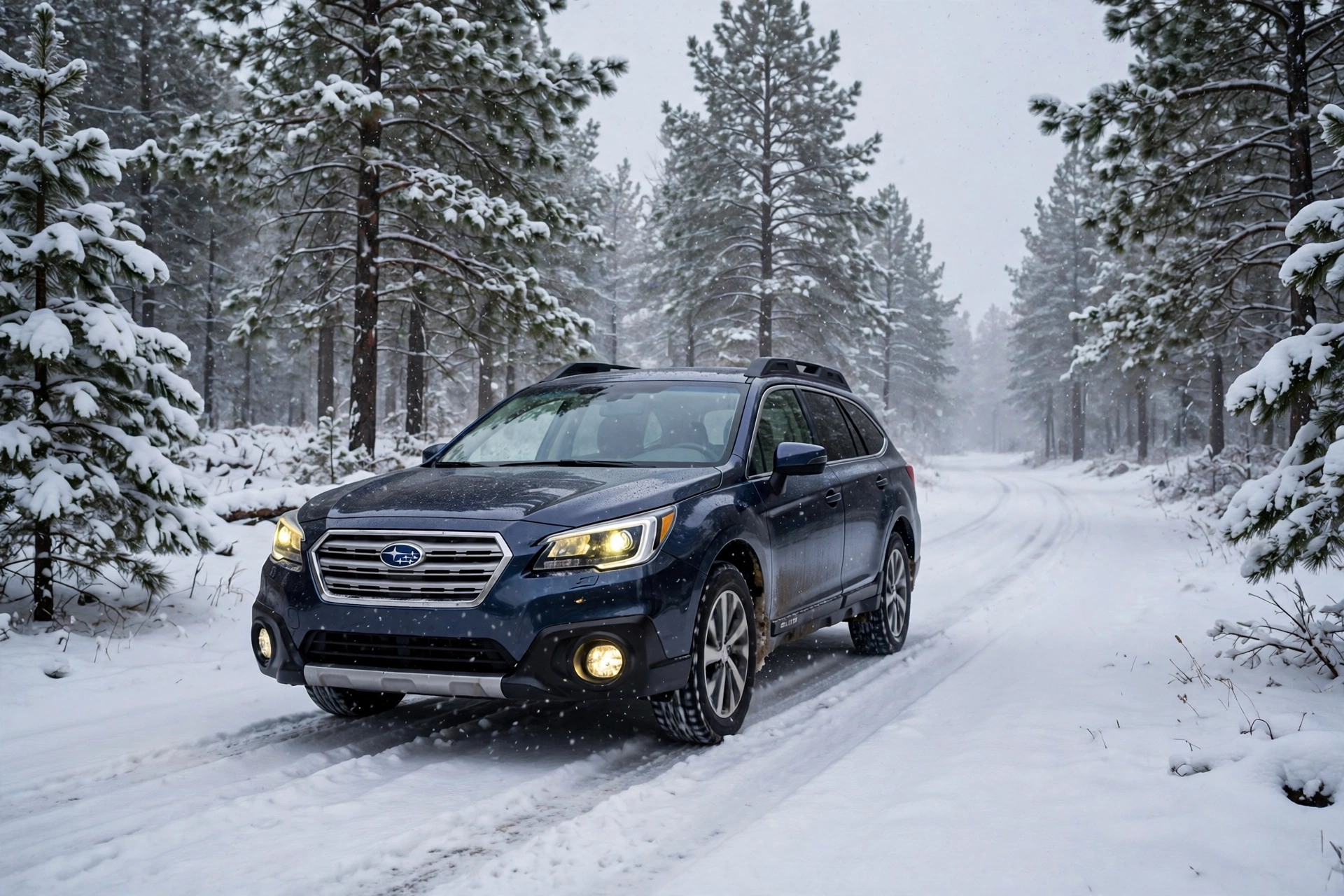
Good snow driving starts before you turn the key, and preparation is the first lesson in how to drive in snow for beginners.
- Clear all the snow off your car. Clear the roof, bonnet, boot, lights, mirrors, and number plates — not just a small patch on the windscreen. Snow sliding off the roof can block your view or hit the car behind you, and in some US states it is illegal to drive with snow piled on your car.
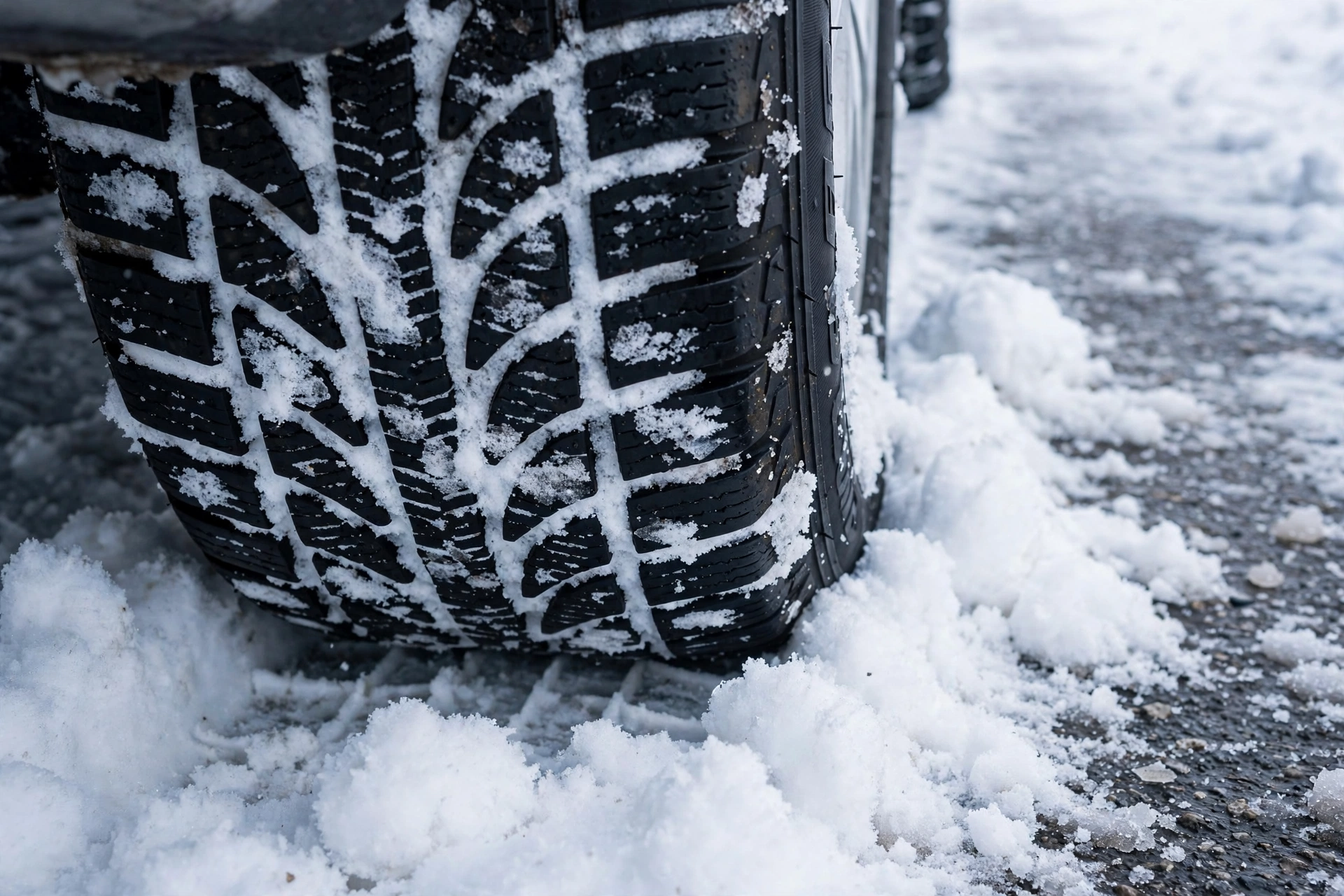
- Check your tyres. Tyres are the only part of your car that touches the road, so they matter most in snow. Check the tread depth — at least 4/32 of an inch is a good minimum for winter — and check the pressure, because cold air lowers it. If you drive in snow regularly, winter tyres are worth the money; they stay flexible in cold weather and grip far better than worn all-season tyres. Read our guide on winter tyres vs all-season tyres to decide what suits your car.
- Top up fluids and check your battery. Fill the windscreen washer fluid with a winter mix that will not freeze, and make sure your wipers are in good shape. Cold weather is hard on batteries — if yours is more than three years old, learn how to test a car battery at home before winter sets in, and know how long a car battery lasts so a weak one does not leave you stranded.
- Pack a small winter kit. Keep a scraper, a small shovel, a torch, a blanket, a phone charger, and a bag of sand or cat litter in the boot. They take up little space and can save the day if you get stuck.
- Plan your route. Stick to main roads, which are gritted and cleared first, and avoid steep hills when you can. If a blizzard is forecast, ask whether the trip can wait — the safest snow drive is the one you do not take.
For a full seasonal checklist, see our guide on how to prepare your car for winter.
How to Drive in Snow for Beginners: 9 Essential Tips
These nine tips are the core of learning how to drive in snow for beginners. They are simple, they work together, and they will keep you in control on slippery roads.
1. Slow Down — A Lot
Speed is the biggest factor in snow crashes. On snow, drive at about half the speed you would on a dry road, and even slower on ice. Posted speed limits assume dry roads — in snow, they are a maximum, not a target. Slowing down is the first and most important rule of how to drive in snow for beginners.
2. Leave a Much Bigger Gap
On dry roads, the 2-second rule works. On snow, give yourself at least 8 seconds behind the car ahead — ten if the road is icy. Pick a fixed object, like a signpost, and count from the moment the car ahead passes it. That extra space is your safety margin if you need to stop suddenly.
3. Brake Gently and Early
Braking is where most beginners get into trouble in snow. Brake early, gently, and in a straight line — never brake hard while turning. If your car has ABS, press the brake firmly and steadily and let the system do its work; do not pump the pedal. If you feel the pedal pulsing, that is the ABS working, not a fault. The key part of how to drive in snow for beginners is planning your stops long before you reach them.
4. Accelerate Slowly and Smoothly
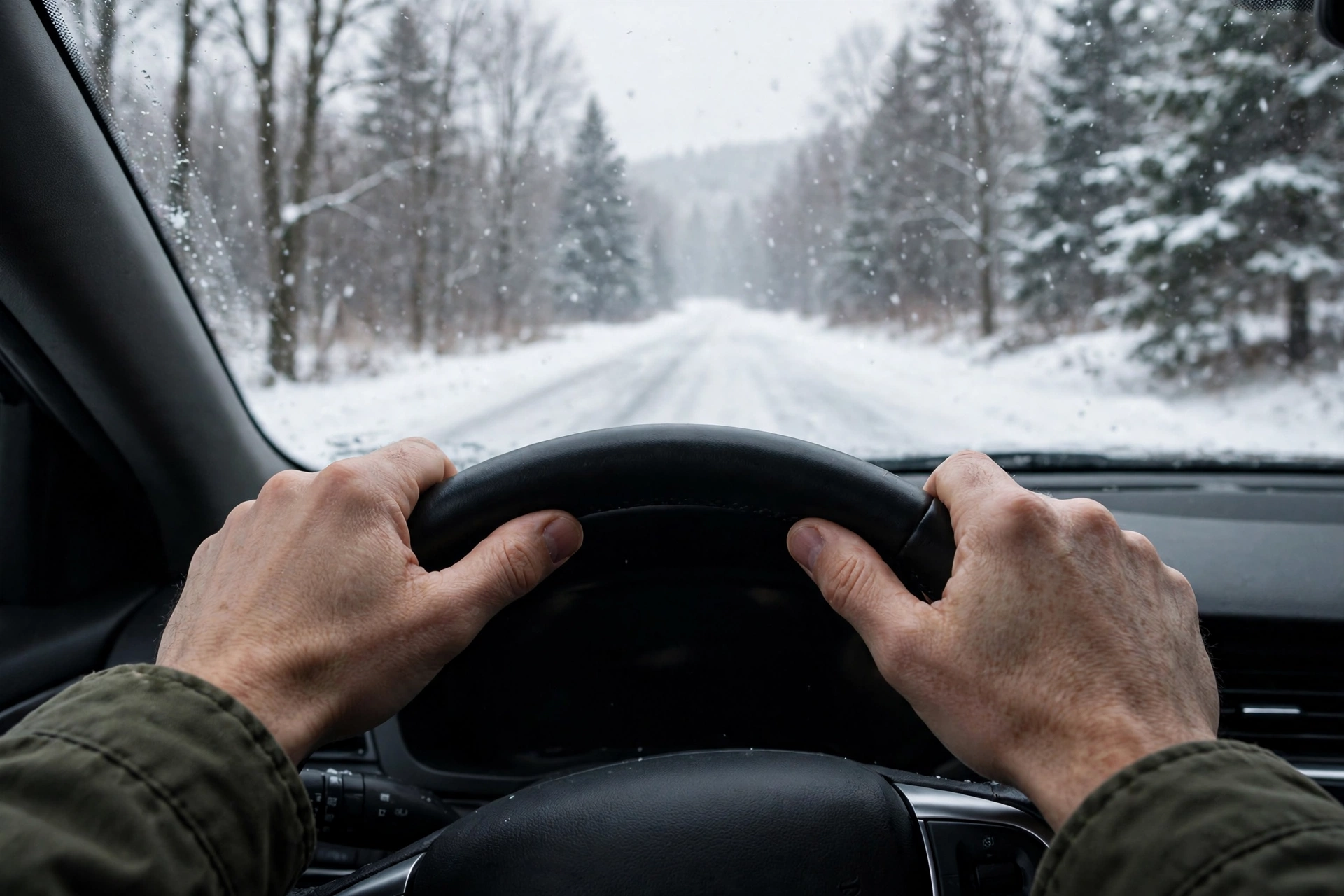
Press the accelerator gently, as if there were an egg between your foot and the pedal. Hard acceleration spins the wheels and digs you into the snow instead of moving you forward. If your car has a snow or winter driving mode, use it — it softens throttle response and helps the tyres find grip.
5. Steer Smoothly — No Sudden Moves
Turn the wheel slowly and steadily. Sudden steering on snow breaks the tyres’ grip and sends the car sliding. Look well ahead to where you want to go, not down at the bonnet, and make your turns wide and gentle. Smooth hands are the habit at the heart of how to drive in snow for beginners.
6. Use Low Gears on Hills
Going downhill in snow, use a low gear so the engine helps slow the car instead of relying on the brakes alone. Going uphill, build a little momentum on the flat before the slope, then keep a steady speed — do not stop halfway up if you can avoid it, and never spin the wheels trying to power up.
7. Keep Your Lights On
Turn your headlights on in falling snow, even during the day. They help other drivers see you through the whiteout, and they make your car easier to spot in mirrors. Make sure your lights are clear of snow before you leave. It is a small step, but keeping your lights on is part of how to drive in snow for beginners that many people forget.
8. Watch for Black Ice
Black ice is a thin, nearly invisible layer of ice that looks like a wet patch on the road. It forms most often on bridges, overpasses, shaded stretches, and early in the morning. If the road ahead looks shiny or wet when the temperature is near freezing, assume it is ice: lift off the accelerator, do not brake suddenly, and keep the wheel straight.
9. Stay Calm If You Start to Slide
If the back of the car starts to slide, the instinct is to yank the wheel — do not. Ease off the accelerator, look and steer gently in the direction you want the front of the car to go, and wait for the tyres to grip again. Panic makes a small slide into a spin; calm, small corrections fix most slides.
What to Do If Your Car Skids in Snow
Even careful drivers skid sometimes, so knowing the recovery is part of learning how to drive in snow for beginners.
- Front-wheel skid (understeer): The car keeps going straight even though you are turning. Ease off the accelerator and the brake, straighten the wheel slightly, and wait for grip to return before steering again.
- Rear-wheel skid (oversteer): The back of the car swings out. Ease off the accelerator, steer gently in the direction you want to go, and do not brake hard.
- In both cases: Keep your eyes on where you want the car to go, not on the obstacle you are trying to avoid. Your hands follow your eyes. If your car has stability control, leave it switched on — it brakes individual wheels to help you stay on course, and it works faster than any driver can.
Practise in an empty, snow-covered car park before you need these skills on a real road.
What to Do If You Get Stuck in Snow
Getting stuck is common when you are learning how to drive in snow for beginners, and it is not the end of the trip.
- Do not spin the wheels. Spinning digs the tyres deeper and polishes the snow underneath into ice. Stop, take a breath, and try the rocking method instead.
- Rock the car free. Turn the steering wheel straight, then gently drive forward a few inches, then reverse a few inches, repeating the motion. Each rock builds momentum until the car rolls out.
- Add grip under the tyres. Clear snow away from the drive wheels with your hands or a shovel, then put sand, cat litter, or even your floor mats under the tyres for traction.
- Call for help if you are stuck for long. If you cannot get out after a few tries, stay with the car, keep the exhaust pipe clear of snow, and call roadside assistance. Running the engine with a blocked exhaust pipe can let carbon monoxide into the cabin.
Common Mistakes When Driving in Snow
Avoid these five mistakes, and you will already be safer than most drivers on a snowy road. Dodging them is a big part of how to drive in snow for beginners.
- Driving at normal speed. Snow changes everything about how your car behaves. Slow down before you think you need to.
- Following too closely. Tailgating in snow leaves you no room to stop. Keep that 8-second gap.
- Using cruise control. Cruise control can cause the wheels to spin when the car hits a slippery patch, and it reacts slower than you do. Switch it off in snow.
- Braking while turning. Brake in a straight line before the corner, then steer through it. Braking and turning at the same time asks too much of the tyres.
- Forgetting the car behind you. Check your mirrors often. A driver following too closely behind you is a risk too — if you need to stop, give them warning with an early, gentle brake.
Frequently Asked Questions
Is it safe for a beginner to drive in snow?
Yes, as long as you slow down, keep a big gap, and drive on main roads in daylight when possible. The first time you drive in snow, choose a short, familiar route and avoid heavy snowfall or ice. If conditions are severe, wait — there is no shame in staying home.
What speed should I drive in snow?
There is no single safe speed, because it depends on how deep the snow is and how icy the road feels. A good rule when you are learning how to drive in snow for beginners is half your normal speed, and slower still on untreated roads. If other cars are passing you, let them — driving at a speed you can control matters more than keeping up.
Should I use snow chains or winter tyres?
Winter tyres are the better everyday choice if you drive in snow regularly — they grip better in all cold conditions and need no fitting. Snow chains give the most grip in deep snow but are slow to fit and only suit low speeds. Check your local rules: some mountain roads require chains by law.
What should I do if my car starts sliding on ice?
Ease off the accelerator, do not brake hard, and steer gently in the direction you want to go. Look where you want the car to go, and wait for the tyres to find grip. The most important thing when you are learning how to drive in snow for beginners is to stay calm and avoid sudden moves.
How do I stop my windscreen from fogging up in snow?
Use the demister on full heat with the air conditioning on — the air con dries the air even in winter. Keep the inside of the glass clean, and crack a window slightly if the fog keeps coming back. It is a small comfort trick, but it helps when you are learning how to drive in snow for beginners in cold, damp weather.
Quick Summary
Here is the whole guide on how to drive in snow for beginners in seven lines:
- Slow down to about half your normal speed and keep at least 8 seconds behind the car ahead.
- Brake early and gently, in a straight line; accelerate and steer smoothly.
- Clear all snow off the car, check tyres, battery, and washer fluid before you leave.
- Use low gears on hills, keep headlights on, and switch cruise control off.
- If you skid, ease off the pedals, steer where you want to go, and stay calm.
- If you get stuck, rock the car gently and add grip under the tyres — never spin the wheels.
- When in doubt, wait out the worst of the weather. The trip can wait; your safety cannot.
Conclusion
Learning how to drive in snow for beginners is mostly about changing your habits: slower speeds, gentler inputs, bigger gaps, and a calm head when things go wrong. That is how to drive in snow for beginners in one sentence: slow, smooth, and calm. The techniques in this guide are simple, but they work — and they get easier every time you practise them.
Before your next winter trip, run through the preparation checklist, check your tyres, and remember the golden rule: smooth and slow wins in snow. If you want a trusted official source, the NHTSA winter driving tips page is worth a read — and if you drive an electric car, remember that cold weather affects range too, so read our guide on EV range in winter before a long snowy journey. Stay safe out there.