

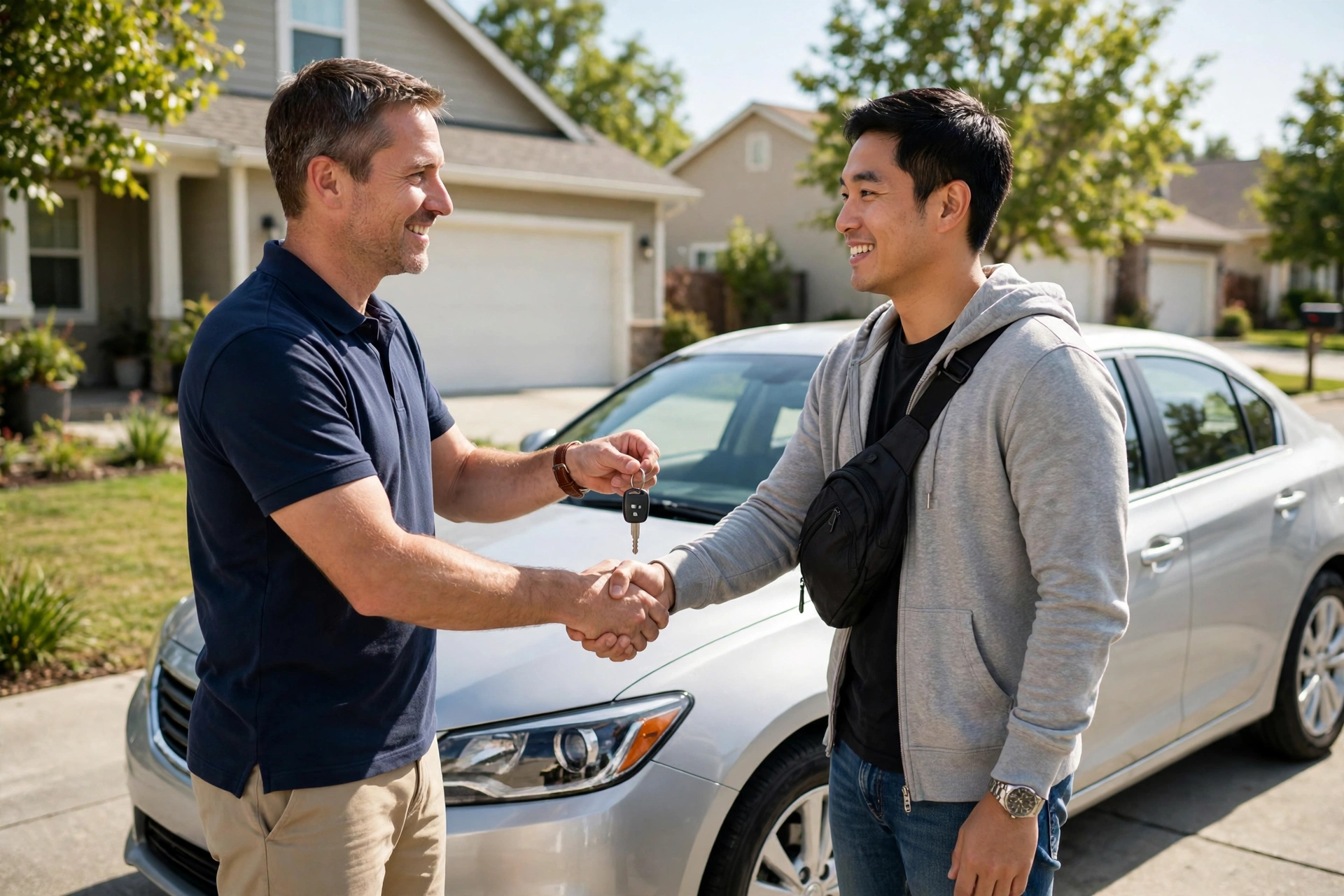
Buying a car from a stranger can save you thousands compared with a dealership, but it also means there is no warranty, no return policy and no salesperson to complain to if something goes wrong. That is why knowing how to buy a used car from a private seller the right way matters so much.
The short answer: research the car’s fair price, inspect it in daylight, check its history and title, get a mechanic’s opinion, and pay with a traceable method at the bank. Do those five things and a private sale is usually safe, straightforward and cheaper than the dealer lot. That is the short version of how to buy a used car from a private seller — the rest of this guide fills in the detail step by step.
Table of Contents
Why Buying From a Private Seller Is Different
A dealership has to follow consumer-protection rules, and most states give you at least some comeback if a dealer hides a fault. A private seller does not. In most states, a private sale is “as is” unless the seller put a written promise in the bill of sale. That single fact shapes everything about how to buy a used car from a private seller: you must do the checking yourself, because once the money changes hands, the car is yours, faults and all.
The upside is real. Private sellers have no showroom rent, no sales staff and no reconditioning mark-up to recover, so the same car often costs 10 to 20 percent less than at a dealer. The downside is that you are the quality-control department. That is the trade-off at the heart of how to buy a used car from a private seller: a lower price in exchange for more responsibility. The nine steps below walk you through the whole process so you get the saving without the nasty surprise.
9 Steps to Buy a Used Car From a Private Seller
Step 1: Set Your Budget and Research Fair Prices
Before you look at a single car, decide what you can actually spend, including tax, title transfer, registration and insurance. Knowing how to buy a used car from a private seller starts with knowing what the car is worth, so research comes before shopping. A good rule is to keep at least $500 to $1,000 aside for the first service, because even a good used car usually needs fresh oil, filters or tyres soon after you buy it.
Then research prices for the exact year, model and trim you want. Check Kelley Blue Book, Edmunds and a few local listings for the same car, and note the range rather than a single number. If a seller’s asking price is far below that range, treat it as a warning sign, not a bargain — the first rule of how to buy a used car from a private seller safely is that a price that looks too good usually is.
Step 2: Find Honest Listings
The best private-seller listings share a pattern: several clear photos taken in daylight, the mileage, the VIN or at least the full trim, a description of recent work, and a reason for selling. Vague one-line adverts with a single blurry photo deserve a pass.
Good places to look include Facebook Marketplace, Craigslist and local classifieds, but be careful on all of them. Part of how to buy a used car from a private seller is learning to read a listing the way a dealer would: good photos, full details and a clear reason for selling. Never send a deposit before you have seen the car in person, never pay through gift cards or wire transfers, and never agree to buy a car the seller says is “in another state” and will ship to you. Real private sellers let you see the car first.
Step 3: Ask the Right Questions Before You Visit
A short phone call before you travel saves wasted trips. Asking the right questions is the cheapest part of how to buy a used car from a private seller — it costs nothing and can save you a wasted journey. Ask the seller: how long have you owned the car, why are you selling it, has it ever been in an accident, do you have service records, is the title clean and in your name, and has the car ever failed an emissions test?
Listen to how they answer as much as what they say. A seller who answers openly and offers records is a good sign. One who dodges questions, rushes you or cannot explain who owns the car is not.
Also ask whether the car has any liens on it, and confirm the name on the title matches the seller’s driving licence. If the seller says they are “selling it for a friend”, walk away — that is a classic title-jumping setup and a common scam in private sales.
Step 4: Inspect the Car Like a Pro
Always inspect the car in daylight, on dry ground, with a cold engine. A careful inspection is the part of how to buy a used car from a private seller that saves you from buying someone else’s problem. A warm engine can hide hard starting and smoke, so ask the seller not to start it before you arrive. Walk around the car and look for mismatched paint, uneven panel gaps and rust along the sills and wheel arches — all signs of past accident repair.

Check the tyres for uneven wear, look under the car for leaks, and open the bonnet to check the oil and coolant. The oil should be amber or dark brown, not milky or gritty, and the coolant should be clean, not rusty. Inside, test every switch: lights, wipers, windows, air conditioning and the heater. A full inspection checklist is worth printing before you go — see our Used Car Inspection Checklist for every item to check, and take it with you so nothing gets skipped.
Step 5: Take a Proper Test Drive
A five-minute drive around the block tells you almost nothing, and a proper test drive is one of the most overlooked parts of how to buy a used car from a private seller. Plan a 20 to 30 minute test drive that includes a cold start, slow town driving, a stretch at motorway speed and a hill if you can find one. Listen for knocks, grinding brakes and whining from the transmission, and feel for pulling to one side, vibration through the steering wheel and a spongy brake pedal.
Pay attention to how the car shifts gears and how it behaves at idle after the drive. Turn the radio off for the whole drive — you need to hear the car, not the music. Our full guide on how to test drive a used car explains all nine checks to run before you buy.
Step 6: Check the Car’s History and Title
A clean-looking car can hide a written-off past, outstanding finance or a rolled-back odometer, so never skip the paperwork checks. Checking the paperwork is the step most first-time buyers skip, and it is also the step that defines how to buy a used car from a private seller safely. Run the VIN through the free NHTSA recall checker and buy a history report from Carfax or AutoCheck, then compare the mileage and accident history with what the seller told you.
Then look at the physical title. It should be in the seller’s name, with no lienholder listed and no “salvage” or “rebuilt” brand unless the seller disclosed it. Match the VIN on the title with the VIN plate on the dashboard and the driver’s door jamb — all three must agree. If you are unsure how to read a title or a recall report, our guide on how to check car recalls by VIN walks through the free methods.
Step 7: Get a Pre-Purchase Inspection
Even if you followed every step above, a pre-purchase inspection by an independent mechanic is the best money you will spend in the whole deal, and the single best investment in how to buy a used car from a private seller with confidence. For roughly $100 to $200, a mechanic puts the car on a lift, checks the brakes, suspension, leaks and tyres, and scans for stored fault codes. Many sellers will agree to it if you pay for it and choose a shop near them, and a seller who refuses is telling you something.
Take the inspection report with you to the negotiation. Real faults give you honest leverage to lower the price, and a clean report gives you the confidence to pay the asking price. If the mechanic finds a serious problem such as a failing transmission or heavy rust, walk away — the inspection has just saved you thousands.
Step 8: Negotiate and Agree on a Fair Price
Private sellers usually expect some negotiation, and negotiating well is a normal part of how to buy a used car from a private seller — sellers expect it, so do not feel awkward about it. Your research from step one is your best tool. Start with the fair-market range, point to real issues the inspection found, and make a specific offer rather than a vague lowball. A calm, polite approach works far better than pressure, and most sellers respond well to a buyer who clearly knows the car’s value.
Agree the final price in writing — a simple text or email works — before you pay anything. If you are new to haggling, our guide on how to negotiate used car price shows six steps that work with private sellers as well as dealers.
Step 9: Pay Safely and Transfer the Title
Never pay in cash if you can avoid it. The final step in how to buy a used car from a private seller is the paperwork — and it is the step that protects you after the sale. The safest payment method is a cashier’s cheque or a bank transfer completed together at the seller’s bank, where the bank can confirm the funds and the title can be signed in front of a witness. If you must pay cash, meet at your bank, count it there, and get a signed receipt.
Then finish the paperwork on the spot. Both parties sign the title, the seller fills in the odometer reading and the sale price, and you both sign a bill of sale with the date, the VIN, the price and both names. Take the signed title and bill of sale with you, then register the car and transfer the title at your DMV within your state’s deadline — usually 10 to 30 days. Our guide on the documents needed to buy a used car lists every paper to bring and keep.

Red Flags That Mean Walk Away
No matter how much you like the car, walk away if the seller will not let you inspect it in daylight, refuses a test drive or a mechanic’s inspection, cannot show a title in their own name, asks for payment by gift card or wire transfer, pressures you to decide today, or offers a price far below market value with a rushed story. Knowing how to buy a used car from a private seller also means knowing when to walk away. These are the same warning signs that appear in almost every private-sale scam, and no bargain is worth the risk.
Also be wary if the seller cannot answer basic questions about the car’s history or gets defensive when you ask. Honest sellers expect questions and welcome inspections; dishonest ones try to rush you past them.
Payment Methods Ranked by Safety
Not all payment methods are equal in a private sale. Choosing the right payment method is the last safety check in how to buy a used car from a private seller. Safest is a bank transfer or cashier’s cheque completed together at the bank, because both sides get a record and the funds are verified. Next is a cash payment counted at the bank with a signed receipt. Least safe are wire transfers to someone you have never met, gift cards, cryptocurrency and any payment sent before you have seen the car — these are effectively impossible to recover if the deal turns out to be a scam.
If you are financing the car, talk to your lender first: some lenders will not finance a private-party sale, while others will issue the cheque directly to the seller. Check your credit and your loan options early — see what credit score you need to buy a car before you start shopping.
Quick Summary
- The whole approach to how to buy a used car from a private seller is simple: check first, pay second.
- Buying privately is cheaper, but the sale is almost always “as is” — you do the checking.
- Research fair prices first, then find a listing with clear photos and a full description.
- Ask about ownership, accidents, service records and the title before you visit.
- Inspect in daylight with a cold engine, and use a full checklist so nothing is skipped.
- Test drive for 20 to 30 minutes, including motorway speed, with the radio off.
- Run a history report, check the VIN on the title, dashboard and door jamb, and confirm there is no lien.
- Pay about $100 to $200 for an independent pre-purchase inspection — it is the best money in the deal.
- Negotiate from real market prices and real faults found in the inspection.
- Pay by cashier’s cheque or bank transfer at the bank, sign the title and bill of sale together, and register the car within your state’s deadline.
Frequently Asked Questions
Is it safe to buy a used car from a private seller?
Yes, it is safe if you follow the steps in this guide. The key parts of how to buy a used car from a private seller safely are a daylight inspection, a history report, a title in the seller’s name, a mechanic’s inspection and a traceable payment at the bank. Skip any of those and the risk rises sharply.
Can I return a car bought from a private seller?
Almost never. In most states a private sale is “as is”, which means the seller does not have to take the car back or pay for repairs unless they put a written warranty in the bill of sale or lied about the car’s condition. That is why the inspection and history checks matter so much before you pay.
What paperwork do I need when buying from a private seller?
You need the signed title, a bill of sale with the date, price, VIN and both signatures, the seller’s driving licence details, and any service records they have. You will then need your own insurance, the title and the bill of sale to register the car at the DMV. A smog or safety certificate is also required in some states.
Should I pay cash for a car from a private seller?
Cash works, but a cashier’s cheque or bank transfer done together at the bank is safer because there is a paper trail and the bank verifies the funds. If you do pay cash, count it at the bank, get a signed receipt, and never hand money over before the title is signed.
How do I know if a private seller is legitimate?
A legitimate seller owns the car, shows a title in their own name, answers questions openly, lets you inspect and test drive the car, agrees to a mechanic’s inspection, and accepts a traceable payment at the bank. If any of those is refused, treat it as a red flag and walk away.
Conclusion
Learning how to buy a used car from a private seller is mostly about slowing down and checking everything before the money moves. That is how to buy a used car from a private seller without the regret that follows a rushed deal. Research the price, inspect the car in daylight, run the history report, get a mechanic’s opinion, and pay safely at the bank. Each step is simple on its own, and together they turn a risky private sale into a smart way to save money on your next car. Follow the nine steps above, keep your paperwork tidy, and you can buy privately with confidence.

