


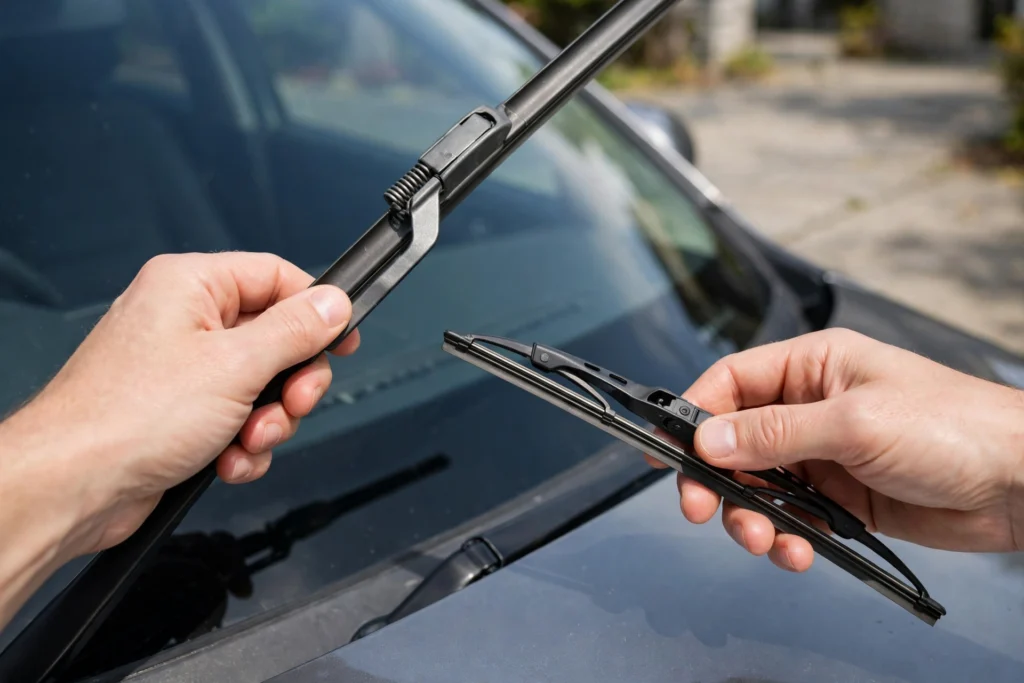
Learning how to change wiper blades is one of the easiest car jobs you can do yourself, and it takes less than ten minutes once you know the steps. Most drivers can learn how to change wiper blades with no tools at all — you just lift the wiper arm, press a small tab, slide the old blade off, and click the new one into place. New blades cost little, yet they make a huge difference: a clear windshield in rain, snow, and road spray is one of the simplest safety upgrades you can buy.
Table of Contents
In this guide, you will learn how to change wiper blades step by step, how to find the right blade size for your car, the different types of blades, and the mistakes that damage windscreens. You will also learn when to replace them and how to make a new set last longer.
How Long Do Wiper Blades Last?
Most wiper blades last between 6 and 12 months. Sun, heat, ice, and road dirt slowly wear down the rubber edge, and once that edge is torn or hardened, the blade stops clearing water cleanly. Cars parked outside in strong sun or freezing winters usually need new blades sooner than cars kept in a garage. Knowing how to change wiper blades starts with knowing when they are worn out.
Before you learn how to change wiper blades, it helps to know the signs that yours are finished. Streaks across the glass, bands of water the blade misses, a skipping or chattering motion, and a loud squeak on a wet windshield all mean the rubber edge is worn out. A blade that leaves a thin film of water is just as dangerous as a broken one, because glare from headlights turns that film into a blinding haze at night.
Windscreen wipers have been standard equipment for decades, yet many drivers forget them until the first heavy rain of the season. Add a wiper check to your regular routine: your car maintenance schedule by mileage is a good place to fit one in, so worn blades get caught before they cause a problem. Check them again before winter, because cold weather is hardest on rubber — our guide to how to prepare your car for winter includes wipers in its cold-weather checklist.

9 Steps: How to Change Wiper Blades
Follow these nine steps in order. The whole job of learning how to change wiper blades is simple once you have done it once, and the second blade always goes faster than the first.
1. Buy the Right Blades First
Do not remove the old blades until you have the new ones in hand. Check your car’s manual, use the fitment guide at the auto parts store, or measure the old blades — the driver’s side and passenger’s side are often different lengths. The section below explains how to measure. Buying the right size first is the most important step in how to change wiper blades without a second trip to the shop.
2. Lift the Wiper Arm Away From the Windshield
With the car parked and the engine off, lift one wiper arm up and away from the glass until it stays upright on its own. Most arms have a spring that holds them in this position. Lift it gently — never let a bare metal arm snap back onto the glass, because it can crack the windshield.
3. Find the Release Tab
Look where the blade meets the arm. You will see a small plastic tab, button, or clip holding the blade in place. The exact design varies by car — some have a push button, some have a small lever you squeeze, and some have a hook that slides off. If you cannot see it clearly, turn the blade so the underside faces you.
4. Remove the Old Blade
Press or squeeze the release tab, then slide the blade down and off the end of the arm, or unhook it from the J-shaped hook. It should come off with gentle pressure. If it sticks, wiggle it slightly instead of forcing it — old blades can seize up after months of heat and dirt. Put a folded towel on the windshield under the arm while you work, so the glass is protected if the arm slips.
5. Check the Arm and Connector
Before fitting the new blade, look at the metal arm and its connector. Wipe away dirt and check that the hook is not bent or rusted. A bent hook is one of the few reasons this job gets difficult, and it is better to spot it now than after you have opened the new blade’s packaging. This quick check is a small part of how to change wiper blades properly, and it saves trouble later.
6. Fit the New Blade
Take the new blade out of its packaging and note which way it faces — the rubber edge should point toward the glass. Slide the blade onto the arm’s hook or connector, following the same path the old one came off. Push it until you hear or feel a click. That click means the blade is locked in place.
7. Lower the Arm Gently
Hold the arm as you lower it back onto the windshield. Do not let it snap down. Once it rests on the glass, check that the rubber edge sits flat against the windshield along its full length, with no gaps at either end.
8. Repeat on the Other Side
Do the same job on the second wiper. Replace both blades at the same time, even if only one looks worn — the pair ages together, and a new blade next to an old one clears unevenly. If your car has a rear wiper, check that one too; the rear blade section below explains how it differs.
9. Test the New Blades
Spray the windshield with washer fluid and run the wipers. They should sweep smoothly and quietly, leaving no streaks or bands of water. If a blade skips or chatters, lift it, check that it clicked fully into place, and try again. A blade that still skips after a proper fit may be the wrong size — measure it again against the old blade. That test is the final step in how to change wiper blades: if the sweep is clean and quiet, the job is done.
How to Find the Right Wiper Blade Size
Wiper blades are sold by length in inches, and the wrong size is the most common reason a new blade does not work well. Getting the size right is the part of how to change wiper blades that most beginners get wrong, so take a minute to measure before you buy. Too short, and it leaves an unwiped patch in your line of sight. Too long, and it can hit the edge of the windshield or the other blade.
The easiest way to find your size is to measure the old blade from end to end with a tape measure, in inches. Measure the driver’s side and the passenger’s side separately — on many cars they are different lengths. You can also look up your car in the fitment chart at an auto parts store or in your owner’s manual, which lists both sizes. Keep the old blade until the new ones are fitted, so you can compare them side by side.

Types of Wiper Blades
There are three main types of wiper blades, and no matter which type you pick, how to change wiper blades stays the same — the fitting method is identical. What changes is performance and price.
- Conventional blades. The classic metal-frame design with a rubber strip. They are the cheapest option and work well, but the exposed frame can collect snow and ice in winter.
- Beam blades. A single curved piece of spring steel with no external frame. They press evenly along the whole blade, work better at speed, and resist ice build-up. They cost more, but they usually last longer.
- Winter blades. Conventional blades wrapped in a rubber boot that stops snow and ice from clogging the frame. They are the best choice if you drive through heavy snow — read our guide to how to drive in snow for beginners for more cold-weather driving advice.
For most drivers, beam blades are the best all-round choice. If you are on a tight budget, conventional blades are fine — just replace them on time. Match the type to your climate rather than buying the most expensive blade on the shelf.
How to Change Rear Wiper Blades
Many hatchbacks, SUVs, and wagons have a rear wiper, and learning how to change wiper blades on the rear window is almost the same job. Lift the rear arm away from the glass, find the release tab, and slide the old blade off. Rear blades are usually shorter and often use a different connector — a small pin or a push-fit clip instead of the front hook — so check the packaging for a rear fitment before you buy.
Rear blades wear out more slowly because they are used less, but they still harden and crack with age. Check the rear blade whenever you replace the front pair, and replace it if it streaks or leaves bands of water on the rear window. The rear blade is also a good practice run if you are still learning how to change wiper blades, because the smaller blade is easier to handle.
Common Mistakes to Avoid
The most common mistake when learning how to change wiper blades is letting the bare wiper arm snap back onto the windshield. The metal arm is spring-loaded and can crack the glass in a second. Always hold the arm, and lay a folded towel on the glass while the blade is off.
- Buying one blade only. Always replace the pair. A new blade next to a worn one clears unevenly and wears out faster.
- Forcing the connector. If the blade will not click in, it is probably the wrong adapter or the wrong way round. Forcing it can bend the arm. Most new blades come with several adapters in the box — check you are using the right one.
- Skipping the test. Always spray washer fluid and run the wipers before you drive. A blade that looks fitted can still be loose.
- Ignoring the washer fluid. Old, dirty washer fluid leaves a film on the glass. Top it up with a proper winter mix before cold weather arrives.
- Running wipers on a dry or icy windshield. Dry glass wears the rubber edge fast, and wipers frozen to the glass can tear when switched on. Clear ice first, and never use the wipers to clear snow.
Wipers are safety parts, just like brakes and tyres. A car that cannot see clearly cannot stop safely either — and if your tyres are worn too, read our guide on how to tell if tyres need replacing before your next long drive.
How to Make Your Wiper Blades Last Longer
Knowing how to change wiper blades is only half the job — looking after them makes each set last longer and keeps your windshield clear between changes.
- Clean the rubber edge. Wipe the blade with a damp cloth every few weeks to remove dirt and grit. A dirty edge is the main cause of streaking.
- Clean the windshield. Bugs, tree sap, and road film wear blades out. Wash the glass regularly and use washer fluid instead of running the wipers dry.
- Park out of the sun when you can. Strong sun hardens rubber over time. Shade or a garage slows that down.
- Lift the blades off the glass in freezing weather. If frost is forecast, lift the wipers upright overnight so they do not freeze to the windshield.
- Do not use wipers as a snow brush. Clear snow and ice with a scraper first, then use the wipers only for water.
These habits cost nothing and can add months to a set of blades. They belong in the same routine as checking your oil and tyres — and just like knowing when to change brake pads, a quick check every few months catches wear before it becomes a safety problem.
Frequently Asked Questions
How often should I change my wiper blades?
Replace wiper blades every 6 to 12 months, or sooner if they streak, skip, squeak, or leave bands of water. Cars parked outside in sun or freezing weather usually need new blades closer to every 6 months.
Can I change wiper blades myself?
Yes. Once you know how to change wiper blades, the job takes under 10 minutes and needs no tools on most cars. Lift the arm, press the release tab, slide the old blade off, and click the new one on. If your car has a special connector, the new blade’s packaging includes the adapters you need.
Do I need to replace both wiper blades at the same time?
Yes, always replace the pair. Both blades age together, and a new blade next to a worn one clears the windshield unevenly. Replacing the pair costs little extra and keeps visibility even on both sides.
What size wiper blades do I need?
Measure your old blades from end to end in inches, or check your owner’s manual or the fitment chart at an auto parts store. The driver’s side and passenger’s side are often different lengths, so measure both. Keep the old blade until the new ones are fitted so you can compare.
Why do my new wiper blades still streak?
New blades streak when the windshield is dirty, the blade is the wrong size, or the blade did not click fully into place. Clean the glass and the rubber edge, check the fit, and test again with washer fluid. If you have just learned how to change wiper blades, double-check the size first — a blade that is even an inch too long can skip. If the streaking stays, the blade may be a poor-quality copy — try a known brand.
Should I check the wipers when buying a used car?
Yes. Worn wipers are a small thing, but they tell you how well the car was looked after. Test them during the test drive along with the lights, tyres, and brakes — our guide to how to test drive a used car lists every check worth doing before you buy.
Quick Summary
- Now you know how to change wiper blades: buy the right size, lift the arm, press the release tab, slide the old blade off, click the new one on, and test with washer fluid.
- Replace wiper blades every 6 to 12 months, or sooner if they streak, skip, or squeak.
- Always replace both front blades at the same time, and check the rear wiper too.
- Measure both blades separately — the driver’s side and passenger’s side are often different lengths.
- Never let a bare wiper arm snap back onto the windshield; hold it and lay a towel on the glass.
- Beam blades are the best all-round choice; winter blades are best for heavy snow.
- Clean the rubber edge regularly and never run wipers on a dry or icy windshield.
Conclusion
Learning how to change wiper blades takes ten minutes, costs little, and makes every rainy drive safer. Buy the right size, fit the pair together, test them with washer fluid, and keep the rubber edge clean. Do that, and your windshield will stay clear through rain, snow, and road spray — and you will never again have to squint through a streaked windscreen on a wet night.


[…] a dirty screen adds glare on top of the fog outside. If your wipers leave streaks, our guide on how to change wiper blades shows how to fit a fresh set in […]