

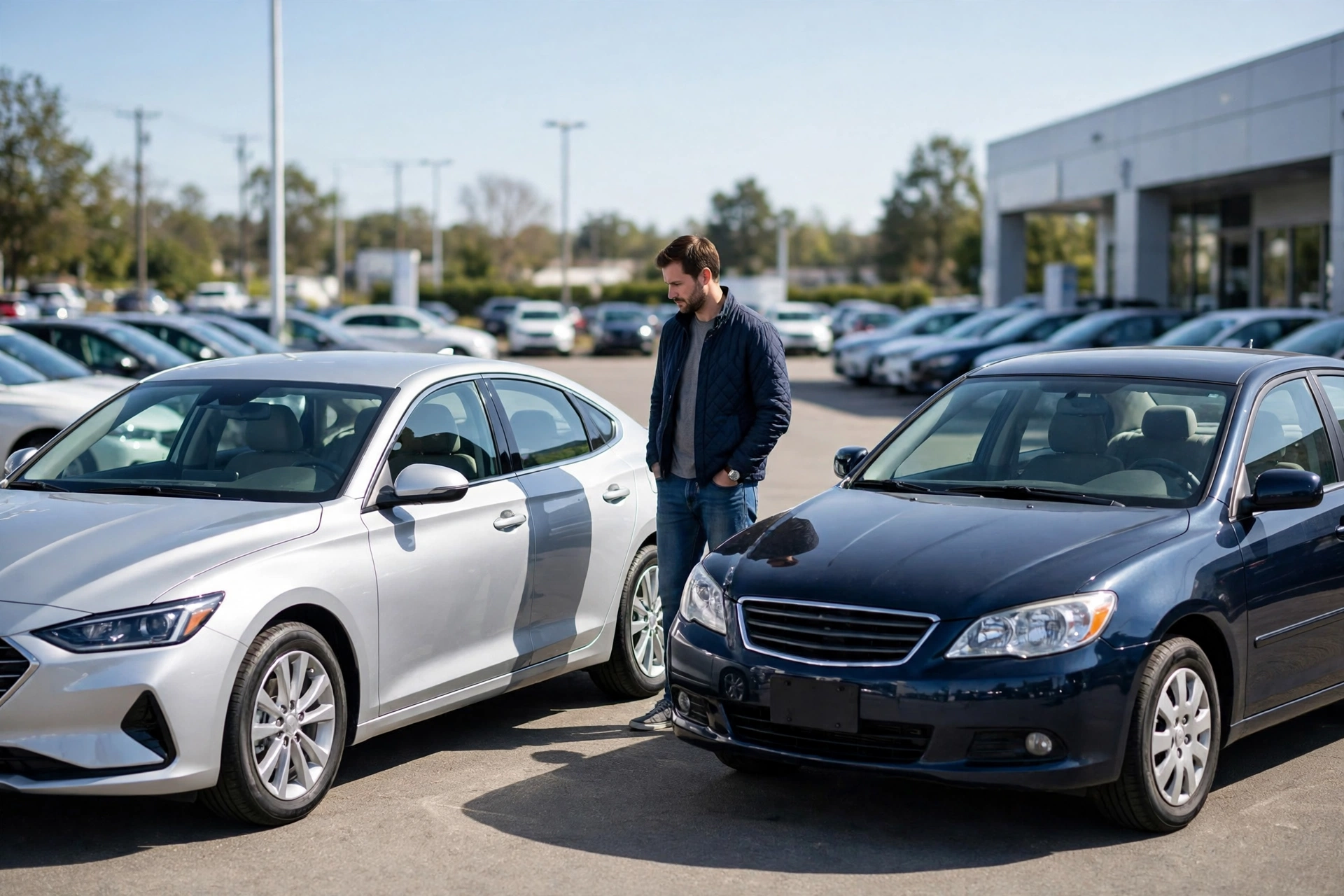
Choosing between a new vs used car is one of the biggest money decisions most drivers make. The short answer is that a new car is better if you want the latest safety tech, a full warranty and predictable costs, while a used car is usually the smarter financial choice because someone else has already paid for the steepest depreciation. There is no single right answer in the new vs used car debate — the best choice depends on your budget, how long you plan to keep the car and how much risk you are comfortable with. This guide compares the two side by side so you can decide with confidence.
Table of Contents
New vs Used Car at a Glance
Here is the short version before we go into detail.
| Factor | New car | Used car |
|---|---|---|
| Upfront price | Highest | Much lower for the same model |
| Depreciation | Steepest in the first 3 years | Much slower after year 3 |
| Warranty | Full factory warranty included | Limited, remaining or none |
| Financing rates | Usually lower APR | Usually higher APR |
| Insurance | More expensive to insure | Cheaper to insure |
| Technology | Latest features standard | Depends on age and trim |
| Repair risk | Very low in the early years | Higher — condition matters |
| Choice | Any model, colour and trim | Limited to what is available |
If money is your main concern in the new vs used car choice, a used car almost always wins. If peace of mind and the newest features matter more, a new car has real advantages. The rest of this guide walks through each factor so you can weigh them for your own situation.
The True Cost of a New vs Used Car
The sticker price is only the start. When you compare a new vs used car, look at the total cost of owning it for the years you plan to keep it: purchase price, taxes and registration, financing interest, insurance, fuel and maintenance.
In any new vs used car price comparison, a new car typically costs far more than the same model a few years old. That gap is the single biggest reason buyers choose used cars. A three-year-old car with modest mileage can cost 30 to 40 percent less than the same model new, yet still have most of its useful life ahead of it.
But a used car can also bring costs a new car does not. Older cars need tyres, brakes and other wear items sooner, and an unexpected repair can wipe out the savings if you buy the wrong car. That is why the inspection and history checks in this guide matter so much — they are what turn a cheap used car into a smart one.
On the other side, a new car has higher taxes and registration fees, which are usually based on the car’s value, and it costs more to insure. Add those up over five years and the price gap between a new vs used car grows even wider than the sticker prices suggest.
Depreciation: Where a Used Car Wins Big
Depreciation is the quiet cost most buyers forget, and it is where the new vs used car comparison is most one-sided. A new car loses value the moment it leaves the dealership. As a rough guide, a new car can lose around a fifth of its value in the first year and roughly half within five years, although the exact figures vary by brand and model.
A used car has already taken that hit. Buy a three-year-old car and the steepest part of the depreciation curve is behind you. Sell it after three more years and you will lose far less money than the person who bought it new.
This is also why depreciation matters less if you keep a car for a very long time. If you buy new and drive the car for ten or twelve years, the early depreciation is spread across many years of use, and the gap between a new vs used car narrows. Depreciation sits at the heart of the new vs used car decision, so short ownership periods punish new-car buyers the most.
Financing a New vs Used Car
Financing changes the maths of a new vs used car purchase. New cars usually qualify for lower interest rates, and manufacturers often offer special deals such as low APR or cashback on new models. Used cars usually carry higher rates, because lenders see older cars as a slightly bigger risk.
Even so, the lower price of a used car usually wins. A smaller loan at a higher rate often costs less overall than a much larger loan at a lower rate. Work out the total interest over the full loan term, not just the monthly payment — a longer loan with a lower monthly figure can cost you far more in the end.
Your credit score matters on both sides. Before you shop, read our guide on what credit score do you need to buy a car so you know where you stand and what rate you can realistically expect.

Warranty and Peace of Mind
A new car comes with a full factory warranty, usually covering the car for several years or a set mileage. If something breaks, the dealer fixes it free. Warranty coverage is one of the clearest differences in a new vs used car comparison, and that certainty is the main thing you are paying for with a new car — for many buyers it is worth the premium.
A used car may still have some factory warranty left if it is only a couple of years old, so always ask how much coverage remains and what it covers. Cars sold as certified pre-owned come with an extended warranty from the manufacturer, which is one reason our certified pre-owned vs used car guide is worth reading before you decide.
Without a warranty, repair costs are yours. Budget for that. Setting aside a small repair fund when you buy a used car turns a surprise bill from a crisis into an inconvenience.
Reliability: New vs Used Car Risk
A new car is the low-risk option. It has no hidden history, no worn parts and no previous owner who skipped oil changes. In the first few years, serious problems are rare, and the warranty covers the ones that do appear.
A used car’s reliability depends entirely on the individual car. In a new vs used car reliability comparison, the real question is not the age on the clock but the car’s history and condition. A well-maintained five-year-old car from a reliable brand can be just as dependable as a new one. A neglected car of the same age can drain your wallet.
That is why you should never buy a used car without checking its history and inspecting it properly. Our guides on how to check car history before buying and how to test drive a used car walk you through exactly what to look for, and you should always check for open recalls on the NHTSA website before you sign anything.
Technology and Safety Features
New cars lead on technology. The latest driver-assistance features, larger touchscreens, wireless phone integration and better fuel economy usually arrive first on new models. If you want the newest safety tech, such as automatic emergency braking and blind-spot monitoring, a new car gives you the full set.
But the gap is smaller than it used to be. In the new vs used car technology race, a used car that is only two or three years old usually has most of the important safety features already, because features that were optional a few years ago are now standard. For many buyers, a lightly used car offers nearly the same technology at a much lower price.
The trade-off is real, though. Buy a car that is eight or ten years old and you will miss out on modern crash-avoidance systems that genuinely reduce accidents. If safety tech is a priority, aim for a used car no more than three or four years old.
Insurance: What a New vs Used Car Costs to Cover
Insurance is cheaper on a used car, for a simple reason: it costs less to replace. A new car’s higher value means higher collision and comprehensive premiums, and some lenders require full coverage for the whole loan term.
A used car gives you more choice. If you buy it outright, you can drop collision coverage once the car’s value falls low enough that the premiums cost more than the payout would be worth. That alone can save hundreds of dollars a year.
Get insurance quotes for both sides of a new vs used car purchase before you buy. The difference is often bigger than buyers expect, and it belongs in your total-cost comparison.
7 Questions to Ask Before You Decide
Work through these seven questions and the right answer in the new vs used car debate usually becomes clear.
- What is your real monthly budget? Include the loan payment, insurance, fuel and a repair fund — not just the payment the dealer quotes.
- How long will you keep the car? Under five years favours used; ten years or more makes new far more reasonable.
- Can you pay cash or do you need financing? Cash buyers get the best used-car deals; financed buyers should compare total interest.
- How many miles do you drive each year? High-mileage drivers wear cars out faster, which favours a newer car with a warranty.
- How important is the latest technology to you? If you must have the newest features, buy new. If you can live one generation behind, buy used.
- Can you handle a surprise repair bill? If a $1,000 repair would break your budget, the warranty on a new car has real value.
- Do you need a specific model or trim? Rare colours and trims are hard to find used — new gives you exactly what you want.
When a New Car Is the Better Choice
A new car makes sense when:
- You plan to keep it for ten years or more.
- You want the latest safety technology and a full warranty.
- You found a strong manufacturer deal with low APR or cashback.
- You drive a lot and need maximum reliability.
- You want a specific model, colour or trim that is hard to find used.
- You simply do not want to deal with inspections, history checks or repair risk.
If several of these apply to you, the extra cost of a new car buys real peace of mind, and that is a fair trade. This is where the new vs used car balance tips toward new.
When a Used Car Is the Smarter Choice
A used car is usually the better buy when:
- Your budget is tight and you want the most car for your money.
- You are a first-time buyer learning the ropes — see our guide to the best used cars for first-time buyers.
- You want a higher trim or a bigger car than you could afford new.
- You can pay cash and avoid interest altogether.
- You are comfortable arranging an inspection and a history check.
- You would rather let someone else pay for depreciation.
For most buyers, a two- to three-year-old used car is the sweet spot: modern features, slower depreciation and a much lower price. This is where a new vs used car comparison usually points to used.
How to Buy a Used Car Without Regret
If you choose the used route, a little care goes a long way. Follow these steps and the risk in a new vs used car purchase drops sharply.
First, set your budget and stick to it. Decide the maximum price before you start looking, and remember to leave room for taxes, registration and insurance.
Second, research the model. Some cars age far better than others. Look up common problems, reliability ratings and real-world running costs for the exact model and year you want.
Third, check the history. A vehicle history report shows accidents, title problems, flood damage and odometer issues. Never skip this step, even on a car that looks perfect.
Fourth, get a pre-purchase inspection from an independent mechanic. It usually costs under $200 and it is the best money you will spend in the whole process. A mechanic can spot worn brakes, leaking seals and hidden accident damage you would never notice.
Fifth, test drive properly. Drive on city streets and at highway speed, listen for unusual noises and test every button and switch. A thorough test drive reveals more than a walk-around ever will.
Finally, negotiate. Used-car prices are almost always negotiable, especially at dealerships and with private sellers. Our guide on how to negotiate used car price shows you how to do it without feeling awkward, and if you are buying directly from an owner, read our guide on how to buy a used car from a private seller first.

Frequently Asked Questions
Is it better to buy a new vs used car as a first-time buyer?
For most first-time buyers, a used car is the better choice. It costs less, insurance is cheaper, and a small scratch or dent hurts far less on a car that is already a few years old. Buy something reliable, get it inspected and keep some money aside for maintenance.
Do used cars cost more to maintain?
Usually yes, but not by as much as people think. A well-chosen used car that has been properly maintained can cost very little extra. That hidden maintenance cost is part of any new vs used car decision, and the expensive used cars are the ones bought without an inspection or a history check.
Is buying a new car ever a good investment?
No — a car is not an investment, because it loses value over time. The only question is how much value you lose. A new car loses value fastest, while a used car loses it slowest. Buy the car for what it does for you, not as a way to make money.
How old should a used car be for the best value?
Two to three years old is usually the sweet spot. The car is still modern, it often has some warranty left, and the first owner has already paid for the worst of the depreciation. Cars in this range give you the best balance of price and condition.
Should I buy certified pre-owned instead of a regular used car?
Certified pre-owned sits between new and used. You pay more than for a regular used car, but you get a manufacturer-backed warranty, a thorough inspection and often roadside assistance. It is a good middle ground if you want used-car prices with new-car peace of mind. You could also compare this option with leasing by reading our lease vs buy a car guide.
Quick Summary
- A new vs used car choice comes down to money versus peace of mind.
- New cars cost more upfront, depreciate fastest and cost more to insure, but they come with a full warranty and the latest features.
- Used cars cost far less, depreciate slower and are cheaper to insure, but they need careful checking before you buy.
- A two- to three-year-old used car is the sweet spot for most buyers.
- Always check the history, get an inspection and test drive before buying used.
The Bottom Line
There is no universal winner in the new vs used car debate — only the right choice for your budget and your life. If you value certainty, the latest safety tech and a full warranty, and you plan to keep the car for many years, a new car is a fair buy.
If you want the most value for your money, are comfortable with an inspection and a history check, and would rather let someone else pay for depreciation, a used car is hard to beat. For most buyers, the smartest move is a two- to three-year-old used car in good condition: modern enough to feel new, cheap enough to leave money in your pocket. Whichever side of the new vs used car decision you land on, take your time, run the real numbers and never skip the checks.

