

Learning how to wash and wax your car at home is one of the easiest ways to keep your paint looking new and protect it from sun, rain, road salt and bird droppings. A proper wash removes the dirt that scratches paint, and a coat of wax seals in the shine for months. In this guide, you will learn how to wash and wax your car in 9 easy steps, what supplies you need, and the mistakes to avoid so you get a swirl-free, showroom finish without paying a detailer.
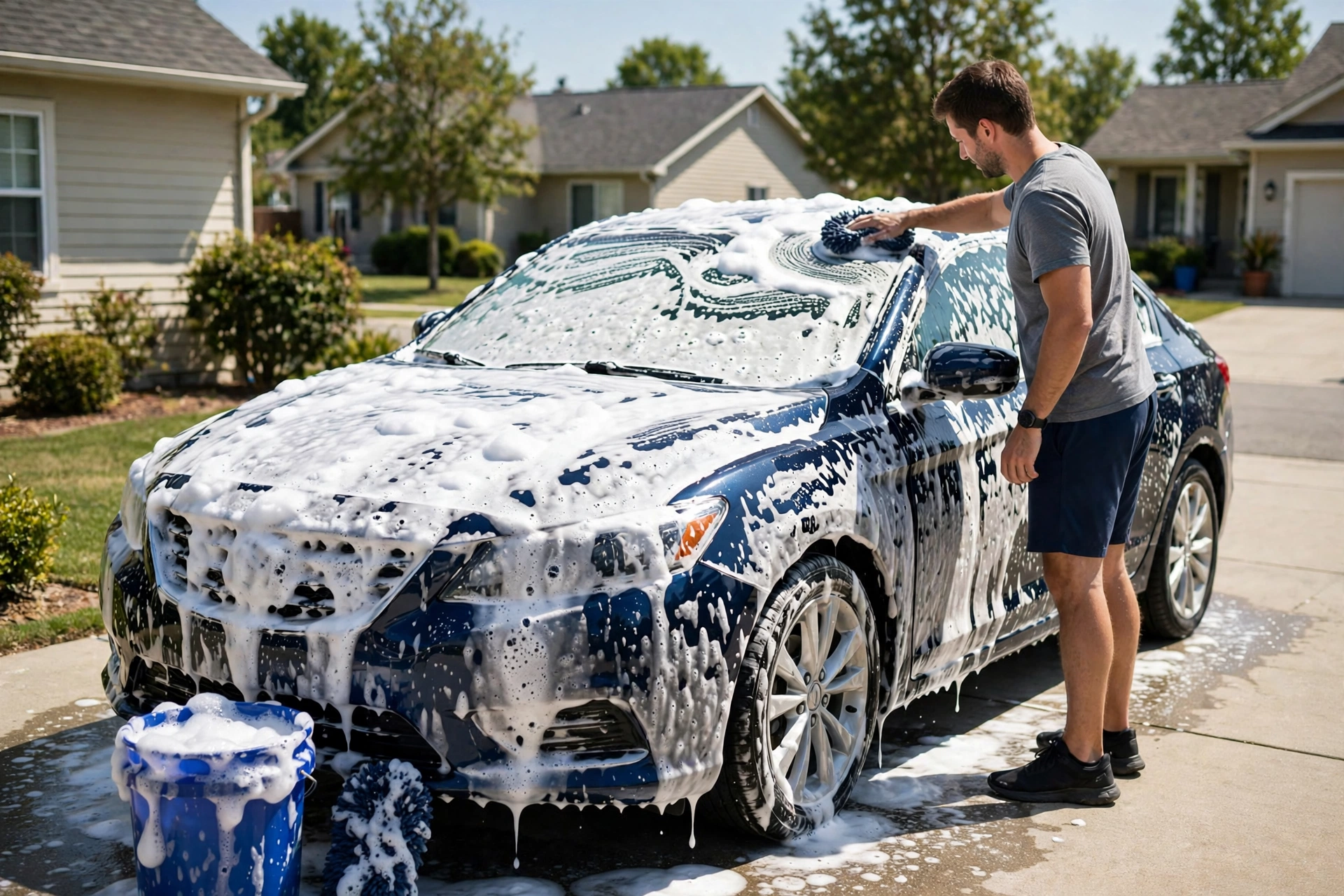
Table of Contents
What You Need to Wash and Wax Your Car
Before you start, gather everything you need to wash and wax your car so you are not running back inside with wet hands halfway through the job. You do not need professional equipment. A basic kit costs less than one professional detail and lasts for many washes.
- Two buckets with grit guards (one for soapy water, one for rinsing)
- Car wash shampoo (never dish soap — it strips wax and dries out trim)
- A microfiber wash mitt
- A garden hose with a spray nozzle, or a pressure washer on a low, wide setting
- Three or four clean microfiber towels for drying and buffing
- A wheel cleaner and a stiff brush for the tyres
- Car wax — paste, liquid or spray, whichever you prefer
- A foam applicator pad and a soft buffing cloth
- A clay bar kit (optional, for rough paint)
- Glass cleaner for the windows at the end
Good supplies make the whole job easier. Cheap sponges trap grit and scratch paint, and old bath towels leave lint and swirl marks. Microfiber is soft, absorbent and cheap, so stock up before you start. Good tools also last for years, and once you know how to wash and wax your car, the whole job takes under two hours.
How to Wash and Wax Your Car in 9 Easy Steps
Follow these steps in order. Washing always comes first, because wax locks in whatever is on the paint — including dirt. Never wax a dirty car.
Step 1: Park in the Shade and Rinse First
The first step in how to wash and wax your car is choosing the right spot. Park in the shade or wait for a cloudy day. Hot sun dries soap and water on the paint before you can rinse it, and that leaves spots and streaks that are hard to remove.
Rinse the whole car from the roof down with plain water. This knocks off loose dust, sand and leaves before your mitt ever touches the paint. Pay extra attention to the wheel arches and the lower doors, where mud and grit collect. That rinse is step one of how to wash and wax your car without scratching the paint, and it takes only five minutes.
Step 2: Wash with the Two-Bucket Method
Fill one bucket with car wash shampoo mixed as the bottle directs, and fill the second bucket with clean rinse water. Dip your mitt in the soapy bucket, wash one panel, then rinse the mitt in the clean-water bucket before reloading it with soap. This is the heart of how to wash and wax your car without adding swirl marks, because the dirt stays in the rinse bucket instead of going back onto the paint.
Work from the roof down, one panel at a time, using straight lines instead of circles. Circular scrubbing is what creates swirl marks. Use light pressure and let the shampoo do the work. A proper car wash is gentle by design — if a spot will not come off, soak it and try again rather than scrubbing harder.
Step 3: Clean the Wheels and Tyres
Wheels are the dirtiest part of the car, so clean them last with a separate brush and mitt. Brake dust is gritty and corrosive, and you do not want it on the same mitt you use for the paint. Spray on wheel cleaner, let it sit for a minute, then scrub the face of the wheel, the spokes and the tyre sidewall.
While you are down at the wheels, check the tread. If the tread looks low or the wear looks uneven, learn how to tell if tyres need replacing before your next long drive. Clean wheels also make the whole car look better, which is why this step belongs in any guide on how to wash and wax your car.
Step 4: Rinse Thoroughly
Rinse the car a second time, again from the roof down, until the water runs clear and no soap bubbles remain. Rinsing is an important part of how to wash and wax your car correctly, because dried shampoo leaves a dull film that wax cannot fix. Check the door jambs, the fuel flap and around the badges, where soap likes to hide.
If your hose has a free-flowing setting with no nozzle, use it for the final rinse. Water without pressure sheets off the paint in a smooth layer, and that means less water left to dry. This sheeting trick is a small detail that makes how to wash and wax your car easier on a warm day.
Step 5: Dry the Car Completely
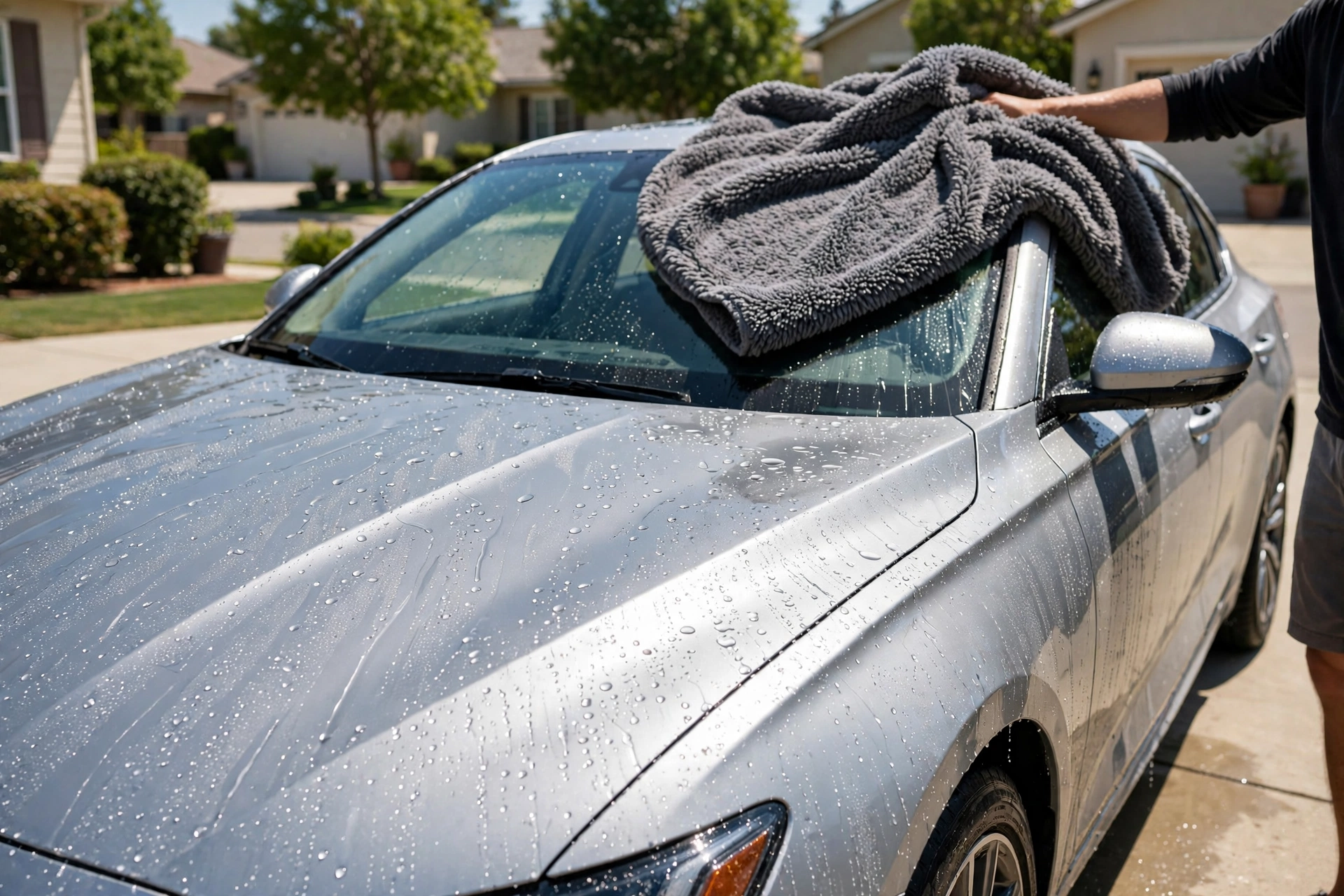
Drying is the step most people skip when they learn how to wash and wax your car, and it is the step that causes most water spots. Tap water contains minerals, and when the water evaporates, the minerals stay behind as spots on the paint and glass.
Lay a large microfiber drying towel flat on each panel and pat or drag it gently. Do not rub hard. Open the doors and boot and dry the jambs too, or water will drip out later and streak your fresh finish. Work quickly, especially on a warm day, so nothing air-dries on the paint.
Step 6: Check the Paint and Clay It If Needed
Run your fingertips lightly over the clean, dry paint. If it feels smooth as glass, skip this step. If it feels gritty or rough, the paint has bonded contamination — tiny bits of tar, tree sap and industrial fallout that washing cannot remove.
Spray a clay lubricant on a small section and glide a clay bar over it in straight lines. Wipe it dry and move on. Claying is an optional step in how to wash and wax your car, but it makes a real difference: wax bonds better to smooth paint, and the shine lasts longer. Do this only once or twice a year, and use a fresh piece of clay if you drop it on the ground. It is not needed at every wash, but once the paint is smooth, the wax step of how to wash and wax your car works much better.
Step 7: Apply the Wax in Thin, Even Layers
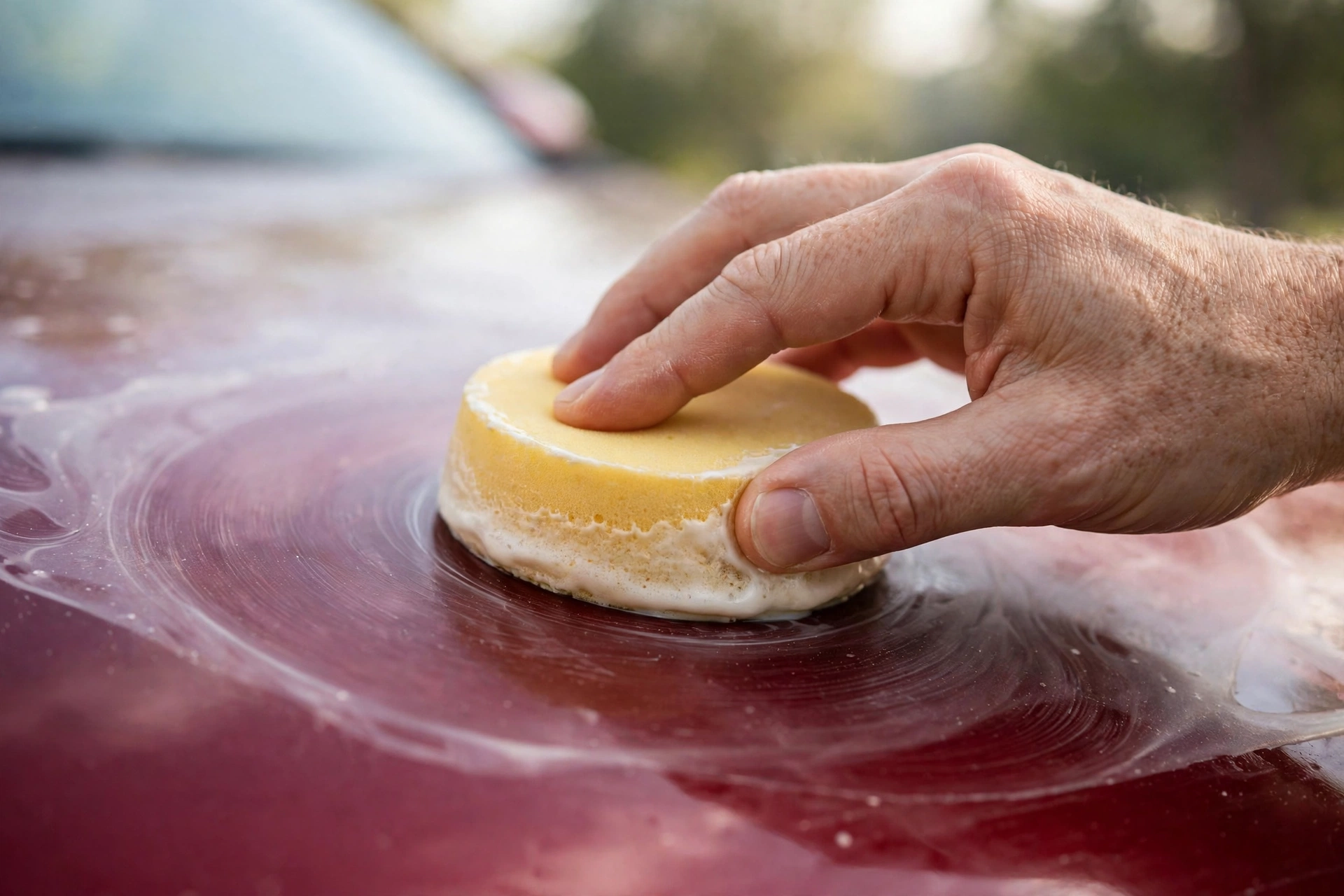
Now comes the waxing half of how to wash and wax your car. Put a small amount of wax on a foam applicator pad and spread it over one panel at a time in straight, overlapping lines. Thin is better than thick. A thick layer does not protect more — it just takes longer to dry and is harder to buff off.
Work in the shade on cool paint. Hot paint makes wax dry too fast and can leave streaks. Cover every painted panel, including the roof and the lower doors, but keep wax off black plastic trim and rubber seals, where it leaves white marks.
Step 8: Let the Wax Haze, Then Buff It Off
Wait for the wax to haze over. Most waxes take 5 to 10 minutes, and the exact time is on the label. Touch it lightly with a fingertip — if it smears, wait a little longer. If it wipes clear, it is ready.
Buff the haze off with a clean, dry microfiber cloth, turning the cloth to a fresh side often. Work panel by panel until the paint feels slick and looks deep and glossy. A good buffing is what gives you that wet, showroom look. Buffing is the most satisfying part of how to wash and wax your car, because this is the moment the shine appears. Step back and check each panel in the light before moving on, because it is much easier to fix a missed spot now than after the wax has fully cured.
Step 9: Do a Final Inspection
Walk around the car in bright light and look for haze, missed patches and white wax marks on the trim. Clean the glass inside and out with glass cleaner, and wipe the door jambs and the fuel flap one last time. While you are inspecting, check the wipers too — learn how to change wiper blades if they streak or chatter, because clean glass and good wipers go together.
If you found any spot you missed, wax just that panel again. That slow look is the finishing touch of how to wash and wax your car the right way. You should now have deep, even shine and paint that feels smooth to the touch.
How Often Should You Wash and Wax Your Car?
Most drivers who follow a routine for how to wash and wax your car should wash every two weeks and wax every three months. That schedule keeps the paint protected through the seasons without turning car care into a chore. Wash more often if you drive on dusty roads, park under trees, or drive through winter road salt.
Wax wears off faster in harsh conditions. Sun, rain, road salt and automatic car washes all shorten its life. A quick test tells you when to re-wax: spray or splash a little water on the hood. If it beads up into round drops, the wax is still working. If the water flattens into a sheet, it is time to wax again. If you drive on salted winter roads, wash more often — see our guide on how to prepare your car for winter for the full cold-weather checklist.
7 Mistakes to Avoid When You Wash and Wax Your Car
Most paint damage from washing is avoidable, and almost all of it comes down to skipping a step in how to wash and wax your car. These are the mistakes that cause swirl marks, scratches and dull paint.
- Washing in direct sunlight. Soap and water dry on the paint before you can rinse, leaving spots and streaks.
- Using dish soap. Dish soap strips wax and protective oils from the paint and trim. Always use a proper car wash shampoo.
- Washing with one bucket. A single bucket carries the dirt from the paint back onto it. Use two buckets, and rinse the mitt between panels.
- Scrubbing in circles. Circular motions create the swirl marks you see in sunlight. Wash and wax in straight lines.
- Waxing a dirty car. Wax seals in whatever is under it. If the paint is not fully clean and dry, you are trapping grit against the paint.
- Applying wax too thick. Thick wax does not protect better. It dries unevenly and is hard to buff off. Thin, even layers win every time.
- Skipping the drying step. Letting the car air-dry leaves mineral water spots on the paint and glass. Dry every panel with a microfiber towel.
Fix these seven habits and your paint will stay brighter for years. Add washing and waxing to your car maintenance schedule by mileage so paint care becomes part of your routine instead of an afterthought.
Quick Summary
- Park in the shade, rinse the car, and wash from the roof down with the two-bucket method.
- Clean the wheels last with a separate brush so brake dust never touches your paint mitt.
- Rinse well and dry every panel with a microfiber towel to stop water spots.
- Clay the paint if it feels rough, then apply wax in thin, even layers.
- Let the wax haze, buff it off panel by panel, and finish with a bright-light inspection.
- Wash every two weeks and wax every three months — more often in winter or dusty conditions.
That is how to wash and wax your car in one afternoon: wash first, dry completely, then wax thin and buff well. Do it regularly and your paint will keep its shine, resist dirt and water, and look newer for longer. While the wheels are clean, check your tread and remember how to rotate tyres every 5,000 to 8,000 miles to keep wear even.
Frequently Asked Questions
Can I wash and wax my car in direct sunlight?
You should not. Sunlight heats the paint, so soap and water dry before you can rinse them off, leaving spots and streaks. If you must wash on a sunny day, work in the early morning or late evening, wash one panel at a time, and rinse often. Knowing how to wash and wax your car also means knowing when not to do it.
How long does it take to wash and wax a car?
Expect about 90 minutes to two hours for a full wash and wax by hand. The wash takes 30 to 45 minutes, drying takes 10 to 15 minutes, and waxing and buffing take 30 to 45 minutes. A spray wax is faster than paste wax, but paste wax usually lasts longer. The first time you learn how to wash and wax your car it may take longer, and that is fine — speed comes with practice.
Should I wax a new car?
Yes. New cars leave the factory with paint protection, but it wears off within a few months, especially if the car sat outside at the dealership. Wait about a month after delivery, wash the car, and apply a coat of wax. There is no need to wait for the paint to cure — modern factory paint is fully cured before the car reaches you.
Can I use dish soap to wash my car?
No. Dish soap is made to cut grease, and it strips wax and protective oils from your paint and trim. It also dries out rubber seals over time. Use a car wash shampoo made for automotive paint. It costs little more and is much gentler on the finish.
How long does car wax last?
Most paste and liquid waxes last about three months, while spray waxes last about four to six weeks. Sun, rain, road salt and automatic car washes shorten that time. The water-bead test is the easiest check: if water still beads on the hood, your wax is working. When the water stops beading, it is time to wax again. Re-waxing on schedule is the simplest part of how to wash and wax your car — it keeps the protection fresh without any extra effort.
The Bottom Line
Now you know how to wash and wax your car the right way: wash gently with two buckets, dry every panel, apply thin wax and buff it to a shine. It takes about two hours, costs less than a professional detail, and protects your paint for months. Pair the wash with a quick under-the-hood check, like how to check engine oil level, and your car will look great and run well too. Make it a habit every few months, and your car will keep its showroom shine for years.


[…] last part to clear, because it is the dirtiest and the furthest from the defroster vents. If you wash and wax your car regularly, add the inside of the glass to the same routine. It takes five minutes and it makes […]